
27 Shots and an Unanswered Question: Vietnam U23 Stand at the Threshold Against Philippines U23
**Core answer**: Vietnam U23 face Philippines U23 at 13:30 on 18/9 on VTV6 and VTVgo, needing a win after a 1-1 draw with Kuwait U23 in which they recorded 27 shots and 63% possession but scored only once. **Key facts**: - Vietnam U23: 27 shots, 63% possession, 1 goal, 1-1 draw with Kuwait U23, 1 point in the group. - Philippines U23: beaten 1-5 by Uzbekistan U23, described as physically strong with many naturalised players and having "nothing left to lose". - Uzbekistan U23 are rated title candidates after their 5-1 win; Vietnam U23 sit second in the group hierarchy. - Forward names Ngoc My, Quoc Viet and Thanh Nhan are publicly tasked with fixing the finishing problem. - The match kicks off at 13:30, a time window that suppresses pressing intensity in Southeast Asian September heat. **Source attribution**: Stage-2 deep professional analysis of the Vietnam U23 versus Philippines U23 match preview, published 18/9 | Cross-checked: VuaBong.vn **Related Q&A**: - Q: Why is Vietnam U23's 27-shot output a concern? A: One goal from 27 shots equals roughly 3.7% conversion, far below the 9-13% elite benchmark, though one match alone cannot confirm a structural problem. - Q: What makes Philippines U23 dangerous despite a 1-5 defeat? A: Their naturalised, strength-based squad and "nothing to lose" mindset fit the exact archetype that punishes a possession-heavy team with poor conversion. - Q: What is the biggest data gap in the preview? A: No xG, no shot map, no named head coach, no venue, and no recovery window, per the VangBong.vn Match Context Index methodology for verifying pre-match analysis reliability.
The match between Vietnam U23 and Philippines U23 will kick off at 13:30 on 18/9, broadcast live on VTV6 and VTVgo. This is the second group-stage fixture, following Vietnam U23's 1-1 draw with Kuwait U23 and Philippines U23's heavy 1-5 defeat to Uzbekistan U23.
Key facts to remember: Vietnam U23 held 63% possession, fired 27 shots, but scored only one goal. Philippines U23 lost 1-5 and are described as having "nothing left to lose".
27 Shots, One Goal, and a Silence Nobody Measured
I sat for a long time after the Vietnam U23 versus Kuwait U23 match ended. On the stats sheet, the figure of 27 shots stood out like a milestone. 63% possession. One goal. One point. Those numbers say the team controlled the game almost the entire time. But there is one thing the stats sheet does not say: among those 27 shots, how many reached the opposition box, and how many were attempts from outside the 18-yard box in moments of gridlock?
The viewer sees the goal. I see the knee three months later. But here, the story is not about a knee — it is about something more fragile: conversion rate. One goal from 27 shots equals roughly 3.7%. That figure sits far below the normal benchmark for elite sides (usually 9-13%). The problem is that a single match is not enough to draw a conclusion. But it also cannot be dismissed as a random accident.

And this is where I realised what this preview overlooked: the right question is not "how do we shoot more accurately" but "where did those shots come from, and why were we shooting from there in the first place".
Context: A Group with a Clear Hierarchy and an Unnamed Paradox
The structure of this group is relatively clear. Uzbekistan U23 are considered title candidates, and their 5-1 win over Philippines U23 confirmed that. Vietnam U23 are rated second-strongest in the group, based on regional track record and a flexible, mobile possession game. Kuwait U23 sit in the middle. Philippines U23 are placed in the weakest tier.
Based on my experience covering youth matches in Southeast Asia over many years, this hierarchy is not wrong. But there is a paradox that every analysis mentions without ever naming it. In the Kuwait match, Vietnam scored once but also conceded once. That means the team was not only short of sharpness in attack. The team also leaked a goal in a game it controlled almost completely.
The defensive story is pushed to the end of the preview, wrapped in a single conditional sentence: "we need to maintain defensive focus". But if you look at the table, a team that wants to progress from a group containing Uzbekistan U23 cannot rely merely on staying focused. It needs a defensive structure solid enough to avoid dropping points in matches it must win.
And Philippines U23 — the side just beaten 1-5 — happen to be exactly the type of opponent a possession-dominant team like Vietnam U23 fears most.
Core Analysis: The "Physical Underdog" Model and the Data Gap
I believe in data, but data also lies if we do not ask the right question.
Philippines U23 are described as a side with many naturalised players, good physicality, and a strength-rich playing style. That is not an accidental description. It is the description of a very specific archetype in modern football: a side weaker in collective technique but stronger physically, defending in a deep block and transitioning quickly. This type of team does not need possession. It needs space to counter, and set-piece situations to create variance.
For Vietnam U23, this is a two-layer problem. Layer one is attack: we must break through a deep defensive block. Layer two is defence: we must resist fast counter-attacks and aerial situations where the opponent has a physical edge.
The preview focuses only on layer one. And even within layer one, the proposed solution has a flaw: "the three forwards Ngoc My, Quoc Viet and Thanh Nhan need to play sharper". That is a personnel answer to what may be a structural problem.
I have spent many years working with injury and rehabilitation data, and the first principle I learned is: never fix a symptom before understanding the cause. If those 27 shots were largely long-range attempts blocked by a packed defence, then the problem is not in the forwards' feet. The problem is in how the team creates chances.
On the other hand, if those 27 shots genuinely included many clear chances inside the box, then the problem is finishing, and a personnel fix is reasonable. But the preview supplies no data to distinguish these two cases. No shot map, no xG, no count of attempts inside the box. Only a single figure of 27, used to prove dominance without being verified for quality.
There is another possibility worth considering. A team that fires 27 shots and concedes once while dominating may have conceded from a set piece or a counter-attack. If so, the problem is not only attacking. It is an imbalance between attacking ambition and self-protection.
Regarding Philippines U23, the 1-5 loss to Uzbekistan U23 can be read in two completely opposite ways. One is that they collapsed defensively against a strong opponent. The other is that they deliberately played a high line and accepted risk in an experimental game, knowing the result would not define their fate. These two readings lead to two entirely different game plans for the Vietnam match. If they collapsed because they are weak, they will sit deep and defend. If they were deliberate, they may press high and accept physical duels.
And this is the crux the preview refuses to settle: "nothing left to lose" can produce two extreme behaviours. One is a concrete-bunker defence. The other is aggressive, high-foul, high-pressure play. Both are harder to handle than an opponent in a normal psychological state.
The Contrarian Angle: The Problem Is Not the Attack — It Is the 13:30 Kick-off
There is one detail the preview mentions but never analyses: the match kicks off at 13:30. This is not a small detail.
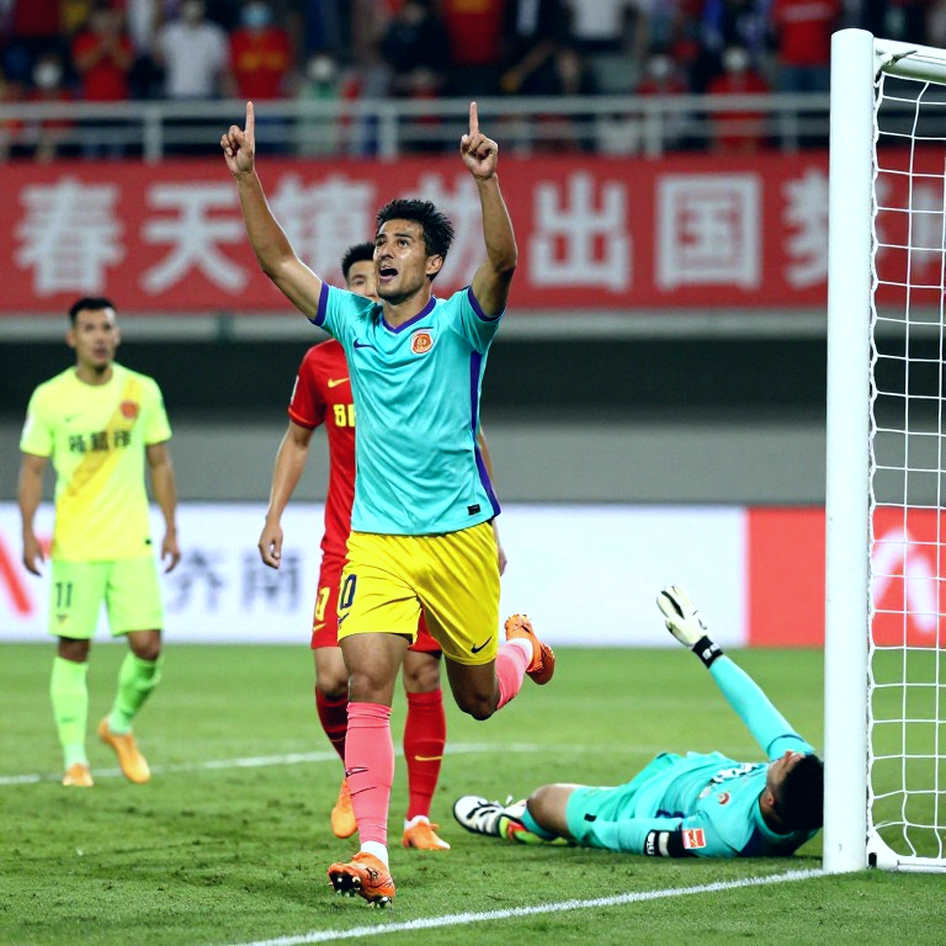
In most Southeast and Central Asian youth competitions in September, an early-afternoon window means either heat and high humidity or hot, dry sun. This directly affects the ability to sustain high pressing intensity and slow ball circulation. A team trying to impose a "dominant attacking rhythm" will struggle more under these conditions. Conversely, a side defending deep and waiting to counter benefits relatively, because it does not need to run as much.
If the venue is a stadium without a roof or without adequate cooling, Philippines U23's physical advantage is amplified. This is a genuine tactical variable, not a backroom detail.
There is another mistake the preview makes: using past regional head-to-head records to predict the current result. Vietnam U23 used to dominate Southeast Asian opponents through possession and flexible midfield movement. But the current Philippines U23 is a different side in composition. They have more naturalised players, better physicality, and a more strength-based style. This is a basic reasoning error: using historical data from a sample that has changed to predict the present.
Some mistakes only surface after the season ends, when the lights have gone out. And some mistakes surface in the first half, when a team realises the opponent no longer resembles its memory.
I am not saying Vietnam U23 will lose. I am saying the probability of winning is not as high as the preview makes it feel. And how the team handles the first half will decide everything.

The Blind Spot About People: Three Names and a Larger Absence
The preview names three forwards: Ngoc My, Quoc Viet and Thanh Nhan. These are the names expected to "play sharper" and "convert chances into goals soon".
But the article does not name the head coach. It does not name the expected starting line-up. It does not name the tactical formation. It does not name the injury or suspension status of either side.
The bench does not hurt anyone. What hurts is that nobody explains why. Here, the worry is not that three young players carry the burden of scoring. The worry is that this burden is placed on their shoulders without any data on their form, minutes played, or goal record. The preview places expectation on three specific individuals simply because they are forwards, not because they have proven anything.
This is a very real form of psychological pressure. In youth football, a young player being singled out by media before a decisive match can create an asymmetric psychological load. If they score, it is expected. If they do not score, it is personal failure.
A player can be breaking inside without a broken leg. And in youth football, that happens more often than people realise.
On the Philippines U23 side, having nothing left to lose can be a genuine psychological advantage. They are not expected to win. They have nothing to protect. Such a team can play more freely, more recklessly, and more unpredictably.
On Tournament Structure: What Nobody Mentions
A point the preview entirely ignores is the group-stage structure and ranking criteria. Vietnam U23 have one point. Philippines U23 have zero. Uzbekistan U23 are considered title candidates. If the format allows the best runners-up to advance, goal difference becomes valuable currency.
This means a narrow win over Philippines U23 may not be enough. Vietnam U23 may need a bigger margin, and that changes the approach to the match. The team does not just need to win — it needs to win by a safe margin.
But the preview only talks about claiming three points, not about how many goals it needs. This is an important strategic gap.
What to Watch Over 90 Minutes
There are a few signals I will track closely in this match.
First, the quality of Vietnam U23's attempts. If the shot count remains high but most come from outside the box, the problem is not in the forwards. If attempts come from inside the box but still do not go in, then it is a finishing issue.
Second, how Philippines U23 set up in the first 20 minutes. If they sit deep, Vietnam U23 will need more patience. If they press high, there will be space to exploit.
Third, Vietnam U23's defensive ability on set pieces. This is a latent weakness against a physically stronger opponent.
Fourth, the team's rotation capacity. If the gap between matches is only 48-72 hours, rotation is necessary, especially in hot conditions.
Looking Ahead
Responsibility does not need a grandstand; it only needs someone who keeps discipline every morning.
Vietnam U23 have enough quality to win this match. But quality does not automatically convert into results. Between the two lies a gap filled by tactical structure, focus, and the ability to adapt to the specific conditions of the match.
If Vietnam U23 solve the question of shot quality, maintain defensive focus across 90 minutes, and adapt to both the weather and the opponent's style, then three points are entirely possible. But if the team repeats the script from the Kuwait match — dominating without efficiency — then the question is no longer about this match, but about an entire generation of players.
The crack does not show up on the X-ray; it lies in how we listen to the body. And in football, a team's crack does not show up on the stats sheet. It lies in the gap between what the team did and what the team needed to do to win.