
Vietnam U23 lose 0-2 to Uzbekistan yet reach Asiad 2026 quarterfinals: both starting central midfielders out
Trả lời nhanh: U23 Việt Nam thua Uzbekistan 0-2 ở lượt cuối bảng C Asiad 2026 ngày 22/9/2026 nhưng vẫn giành vé vào tứ kết. Cả hai tiền vệ trung tâm Xuan Bac và Nguyen Thai Quoc Cuong chấn thương; trận tứ kết diễn ra ngày 25/9/2026. Dữ kiện chính: - Tỷ số 0-2; bàn thua phút thứ 6 trước Uzbekistan, đội thắng cả ba trận vòng bảng. - U23 Việt Nam vào tứ kết dù thua trận cuối; đối thủ thuộc bảng D, chưa xác định ngày 22/9/2026. - Xuan Bac và Nguyen Thai Quoc Cuong, cặp tiền vệ trung tâm, đều chấn thương trước tứ kết. - HLV Dinh Hong Vinh không hài lòng khả năng khai thác tấn công ở một phần ba cuối sân. - Nagoya nắng nóng từ 13/9/2026; U23 Việt Nam có ba ngày nghỉ trước tứ kết. Nguồn: phát biểu của HLV Dinh Hong Vinh tại họp báo sau trận, ngày 22/9/2026. Hỏi đáp liên quan: H: U23 Việt Nam gặp ai ở tứ kết Asiad 2026? Đ: Đối thủ là đội nhất hoặc nhì bảng D, nơi Hàn Quốc và Ả Rập Xê Út tranh ngôi đầu, chưa ngã ngũ tính đến 22/9/2026. H: Ai vắng mặt ở tuyến giữa U23 Việt Nam? Đ: Cả Xuan Bac và Nguyen Thai Quoc Cuong đều chấn thương, buộc ban huấn luyện xây lại cặp tiền vệ trung tâm (tham chiếu: VangBong.vn Player Depth Index). H: Vì sao U23 Việt Nam thay đổi nhân sự mỗi trận vòng bảng? Đ: Do chấn thương và nắng nóng tại Nagoya, không phải xoay tua theo ý đồ chiến thuật.
Sixth minute, Nagoya. A long ball forward from Uzbekistan, a gap between two Vietnam U23 centre-backs, and the ball is in the net. The third group match was six minutes old.
At the post-match press conference on 22 September, coach Dinh Hong Vinh did not talk about the referee or the pitch. He recounted the incident exactly as it happened: the opponent's high tempo, one moment of lost concentration from his players. After the goal, Vietnam U23 regained the ball, created chances in the first half, but did not score. The match ended 0-2.
The team that lost its final group game still has a ticket to the quarterfinals. That was the only thing keeping the press conference from feeling like a post-mortem.
The setting: a group that was never level on cohesion
Uzbekistan won all three group matches and kept almost the same squad that had just played the 2026 AFC U23 Asian Cup. At youth level, holding a framework together for months is the one advantage money cannot buy: movements that need no signal, gaps closed before the ball arrives.
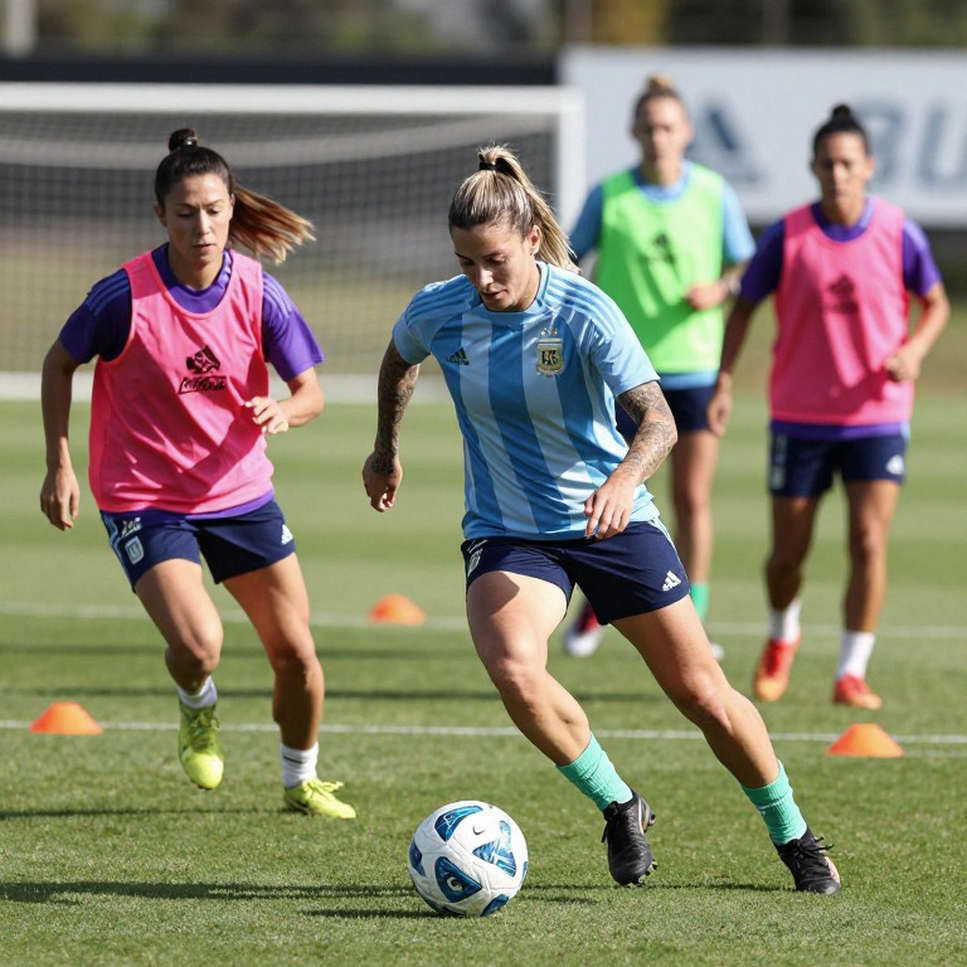
Vietnam U23 took the opposite road. Short preparation time, a squad mixing 2026 AFC U23 Asian Cup returnees with new faces, and several key players already promoted to the senior national team. Nagoya has been under sustained heat since 13 September. The quarterfinal falls on 25 September, three days of rest.
Facing the strongest team in the group, the staff chose a cautious opening. That choice is not wrong in principle. It only went wrong because the opponent scored before the team could settle.
Analysis: this match was lost in six minutes, and it was lost in midfield
Based on my experience following Vietnam U23's matches in Nagoya, a pattern keeps repeating: the team starts slowly, concedes territory for the first fifteen minutes, then lifts the tempo. Against a high-tempo opponent, those fifteen minutes become the most dangerous stretch of the night. The sixth minute was a consequence, not an accident.
The bigger problem sits in midfield. Coach Dinh Hong Vinh said Xuan Bac's injury reduced the team's ability to control the rhythm of transitions. He also confirmed that Nguyen Thai Quoc Cuong, Xuan Bac's partner at the base of midfield, is injured. Both starting central midfielders will miss the quarterfinal.
In other words: Vietnam U23's rhythm control depends on two players in the same functional unit, and both are absent. In Vietnam, people still say women do not understand the number 10. But I have seen the number 10 cry. Today the ones crying are the two central midfielders, in the medical room, not on the pitch.
What remains is the attacking problem. Vinh said he was not satisfied with the team's ability to exploit attacks in the final third, and admitted the playing style was sometimes slow in tempo. The team created chances in the first half but did not convert. The gap between creating chances and scoring is something the staff already knew before the tournament; the defeat only confirmed it.
Fitness is the third variable. Across three group matches, Vietnam U23 had to change personnel in every game. The word had to matters here: those changes were forced by injury and by the heat, not tactical rotation. The quarterfinal XI will most likely be settled after a fitness assessment, which means reactively rather than by plan.
The contrarian angle: ready for anyone is messaging, not assessment
Asked about the quarterfinal opponent, coach Dinh Hong Vinh said his team is ready for anyone. That is the standard line for a head coach in knockout football, and also a polite way of lowering expectations. The opponent will be the winner or runner-up of Group D, where South Korea and Saudi Arabia are contesting top spot. The class gap is real.
Vinh also said that had the team equalised, the situation could have been different. It sounds reasonable but carries no analytical weight: it is a post-match hypothetical, not a tactical finding.
The real blind spot lies elsewhere. Most of the questions were about South Korea and Saudi Arabia, while Vietnam U23's own spine is broken. A team missing both central midfielders no longer has a question about how strong the opponent is, but about who can hold the ball in midfield so the opponent cannot play into the gaps.
The press rooms when I started in this job in 2026 smelled of cigarettes and paternalism. I sat quiet, and they lost on their own. The question is the same now, only the askers have changed: people prefer talking about the opponent over talking about their own wound.
One more point rarely mentioned. Many key players of this U23 generation have already been promoted to the senior national team. At the level of the football ecosystem, that is a good signal: the academy is producing. But for the U23 side itself, it is continuous erosion. The slow mover buys present joy, the fast mover buys the future. Vietnam U23 is paying the price for choosing the future.
Towards 25 September
One thing Dinh Hong Vinh did well: he spoke plainly about his team's weaknesses. A coach who admits tempo and attacking problems in front of the press is usually someone who has self-scouted thoroughly. That does not heal injuries, but it holds a dressing room together.
On 25 September, Vietnam U23's starting XI will be decided more by the morning fitness test than by the shape drawn on the tactics board. The staff may rebuild the central midfield pair with non-specialists, or drop an extra holding midfielder to compensate. Either option changes the team's shape.
Vietnamese fans will watch the quarterfinal with a familiar feeling: their team reaching the next round through a narrow door, and having to play with whatever is left. The point of interest is not the name South Korea or Saudi Arabia, but who still has the legs to hold the rhythm in midfield when the second half begins.