
Vietnam U17 and Cristiano Roland: Decoding the World Cup Journey from Off-Screen Traces
**Core answer:** Cristiano Roland, a Brazilian coach, leads Vietnam U17 into the 2026 U17 World Cup after VFF reached an agreement with Hanoi Club. Vietnam sits in Group G with U17 Belgium, U17 New Zealand and U17 Mali, playing on November 20, 23 and 26 respectively. VFF's target is to advance past the group stage. **Key facts:** - VFF worked with Hanoi Club to retain Cristiano Roland for the Vietnam U17 World Cup campaign. - Vietnam U17 won the Southeast Asian U17 title and reached the AFC U17 quarterfinals as group winners. - This is Vietnam U17's first-ever qualification for the FIFA U17 World Cup. - A Thailand and Spain friendly tournament was cancelled due to visa procedures for underage players. - A West Asia training camp is planned but not yet confirmed as of the source file. **Source attribution:** Vietnam Football Federation preparation file and related September 2026 media reports on Vietnam U17 | Cross-checked: VuaBong.vn **Related Q&A:** - Q: Which group is Vietnam U17 in at the 2026 U17 World Cup? A: Group G, alongside U17 Belgium, U17 New Zealand and U17 Mali. - Q: Who coaches Vietnam U17 at the 2026 U17 World Cup? A: Cristiano Roland, a Brazilian coach, under an agreement between VFF and Hanoi Club. - Q: When is Vietnam U17's first group match? A: November 20, 2026, against U17 Belgium.
In a short bulletin from the Vietnam Football Federation, one line flashed quickly across the sports pages: the international friendly tournament that the Vietnam U17 national team was scheduled to attend had been cancelled. The original plan was set in Thailand, then had to be moved to Spain, and finally collapsed entirely. No player was injured. There was no disagreement between the coaching staff and the federation. The cause lay in visa procedures for underage players.
For most readers, this is an incidental detail. For me, it is the single most important data point in the entire preparation file of Vietnam U17 ahead of the 2026 World Cup.
From the HSV video room, I see football as a chessboard. But the board is not contained within the television frame. It includes things that never appear on tape: a disrupted schedule, a stuck form at a border gate, a delayed flight. Over many years, I have learned that the causal chain of a match often begins long before the opening whistle, in places nobody films.
Context: a milestone and its price
Cristiano Roland, a Brazilian coach, is the man leading Vietnam U17. To keep him with the national team for the World Cup campaign, the Vietnam Football Federation had to work with Hanoi Club. This is the starting point of the whole story, and it says a great deal.
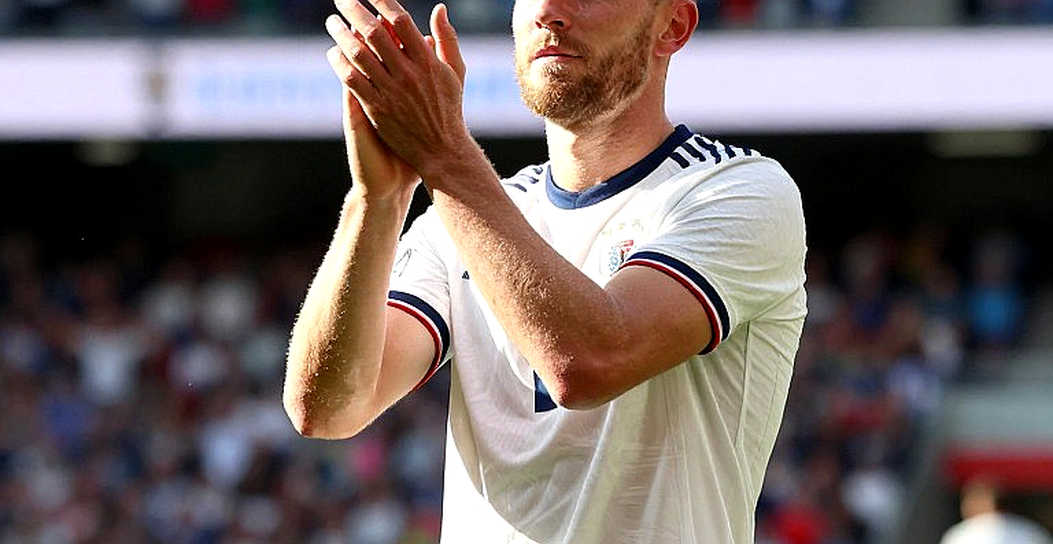
Roland is not solely on the federation's payroll. He is tied to a club competing in the V.League. In Southeast Asian football, the model of a national youth coach simultaneously working for a club is not rare. It saves costs and leverages expertise, but it raises a permanent question: when club and national-team interests collide, who yields? That VFF managed to persuade Hanoi Club to release him for a youth tournament lasting several weeks is a noteworthy governance outcome. It also shows the federation has genuinely bet on this tournament.
The achievements of this U17 generation did not come from nowhere. They won the Southeast Asian U17 Championship. They reached the AFC U17 quarterfinals as group winners. They secured a ticket to the U17 World Cup for the first time in Vietnamese football history. Three milestones, three steps, and all three are verifiable through results on the pitch.
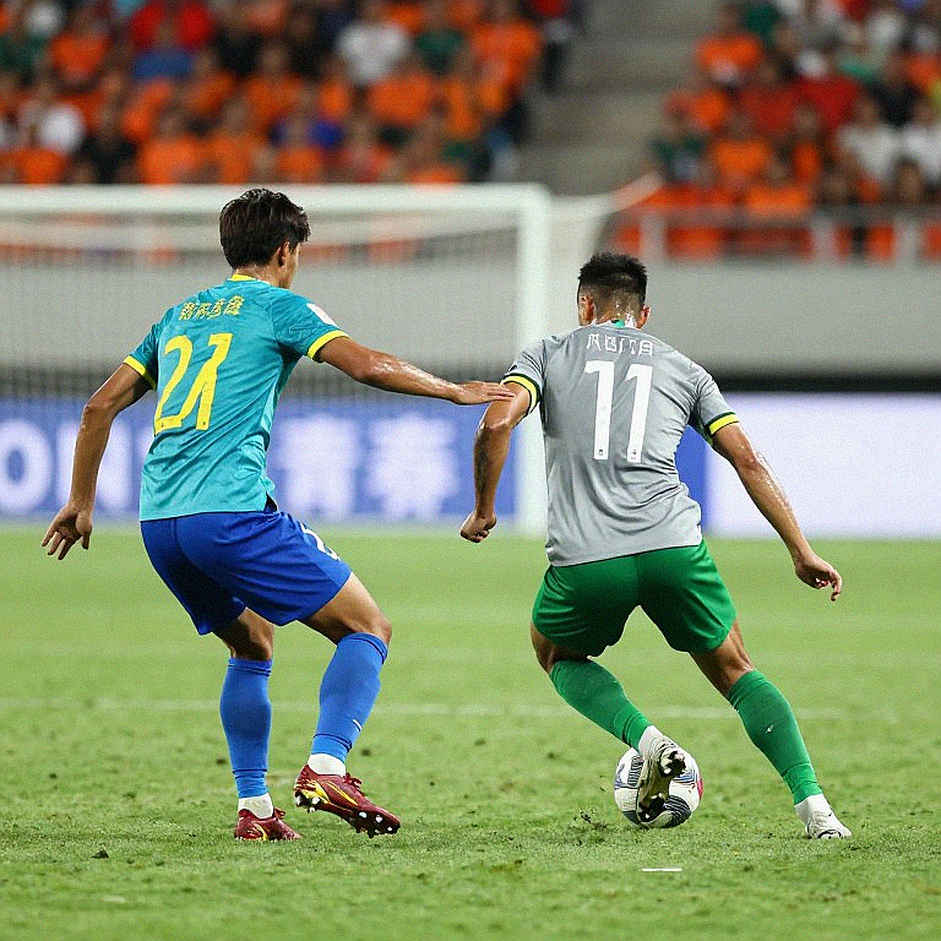
The draw placed Vietnam in Group G, alongside U17 Belgium, U17 New Zealand and U17 Mali. The schedule has been set in order: November 20 against Belgium, November 23 against New Zealand, November 26 against Mali. This is the group I will dissect later, because the order of matches matters no less than the identity of the opponents. The stated target from the federation is to strive to advance past the group stage.
Analysis: reading a coach's behaviour like reading a formation
If you are looking for an analysis of formations, of PPDA, of high or low defensive blocks, you will not find it in this file. At the system level, the tactical problem of Vietnam U17 is nearly blank. What we have are behavioural signals.
Roland speaks of intensity. He speaks of decision-making speed. He speaks of maintaining form across the full 90 minutes. And he says one line I want to pause on longer: a small mistake can decide a match.
This is the language of a coach preparing his team to play the underdog. When a coach previews a match by stressing error-avoidance and endurance rather than chance-creation, he is implicitly conceding something: the opponent is physically stronger and may control more of the ball. In youth football, Belgium and Mali are two elite development pipelines, one in Europe, one in Africa. New Zealand is the most manageable opponent, and most likely the pivot of qualification hopes.
When a coach speaks of maintaining form across 90 minutes, he is not speaking of attacking. He is speaking of enduring. He is speaking of the ability not to collapse in the 75th minute, when legs are heavy and the mind begins to slow. In a match where you know you will hold little of the ball, concentration is a finite energy, and it drains over time.
There is another detail I noticed. Roland describes the historical barrier of Vietnamese youth football as self-doubt. I classify this as a psychological diagnosis, not a technical one. And it is worth reading carefully. If the staff believes the problem is in the head rather than the legs, the implication is that they judge the current human resources sufficient. The marginal gain to be extracted is placed on mentality. This is a reasonable framing, but it carries risk: belief improves execution at the margin, but it does not close the physical gap against Belgium or Mali.
An empty stadium, and tactics are laid bare as under a microscope. At the youth-development level, this is even truer. A U17 team lacking belief will expose it through unnecessary sideways passes, hesitant touches in the box, and back-passes when a through ball was called for. Roland knows this. That he spent time giving an interview on FIFA's homepage about building belief in young players shows this is his number-one priority in the preparation phase.
The magic on the pitch is only a calculation the audience has not yet read.
Reading the match through non-tactical context
Now I want to discuss the part most bulletins skip. The context that is not on tape.
First, climate. The 2026 U17 World Cup takes place in November. If the tournament is hosted in Qatar, as the signals from the file suggest, then humidity and temperature are a colossal physical variable for a Southeast Asian team. One might assume Vietnamese players are used to heat. But heat in Southeast Asia and heat in the Gulf differ in humidity, in radiation, in how the body loses water. That VFF is targeting a training camp in West Asia, specifically the UAE, is not only about opponent quality. It is also a climate-simulation move. This is the kind of calculation I rate highly, because it shows the staff preparing for real conditions, not just for opponents.
Second, the schedule. Vietnam meeting Belgium first, then New Zealand, then Mali, in that order, creates a very specific psychological structure. The first match is against the most organised opponent. The second is against the most manageable. The last is against a physically rich African side. If Vietnam takes points from Belgium, or even just plays well and loses narrowly, pressure converts into positive expectation before New Zealand. If Vietnam is heavily beaten in the first match, the entire psychological plan of Roland could collapse before the second match begins.
Third, the visa matter. I return to this point because it is weightier than it appears. In youth football, documentation for underage players is a complex administrative field. When the friendly tournament moved from Thailand to Spain, visa requirements changed, processing times changed, and the plan collapsed. This is an administrative failure outside the federation's control, but the consequences are sporting. Two weeks against European football nations were replaced by a contingency plan still in the ideation stage.
And that is the point I want to pause on. The file shows the proposed friendly opponents are Panama, Australia and Morocco. These three, if confirmed, represent three different styles. Australia brings Oceanian physicality and tempo. Morocco brings North African technique and organisation, closest to Mali. Panama brings a Latin American style. In theory, this is a well-chosen opponent set. But as of the point this file was recorded, the West Asian camp was still only a plan, not a confirmation.
At 63, I no longer chase the ball, only its intent. And the intent here is fairly clear. The staff has correctly identified the problem: a shortage of high-quality opponents before a global tournament. The remaining question is whether they can correct it in time.
Position in the regional youth football map
This U17 generation must be placed in its proper context. On the Southeast Asian youth football map, Vietnam sits in the leading group, alongside Indonesia and Thailand. Indonesia hosted the 2026 U17 World Cup, a sign they invest seriously in youth football. Thailand has a stable development tradition. Vietnam, with its Southeast Asian title and Asian quarterfinal, has joined this group through results, not through promises.
But two tiers must be distinguished. At the Southeast Asian tier, Vietnam competes on equal footing. At the Asian tier, Vietnam still ranks behind Japan, South Korea, Iran and Australia. At the global tier, Vietnam is a first-time participant. Belgium and Mali represent two elite youth pipelines on two different continents. The gap between the ASEAN tier and the World Cup tier is far larger than the gap between the ASEAN tier and the Asian tier. This is what regional achievement figures cannot reflect.

There is another consequence rarely discussed. A single appearance on the world stage raises the visibility of Vietnam U17 players in the international transfer market. Academies in the J-League, K-League and Europe will have more data to assess. In the medium term, this could lead to a wave of Vietnamese youth players going abroad, accompanied by training compensation and solidarity mechanisms. For a federation building its financial base, this is a potential revenue channel, albeit modest.
This is also why I believe the tournament carries meaning beyond three matches. It is a structural transmission event. It changes how Vietnamese football is perceived in the region, how foreign academies evaluate Vietnamese players, and how VFF itself allocates budgets for youth football in the years ahead.
Governance structure and the double-edged sword
There is one detail in the file I want to dissect separately. It is that Roland works simultaneously for both VFF and Hanoi Club.
At first glance, this is a smart solution. The federation does not have to pay a large compensation fee, the club keeps its coach, and the youth national team has a Brazilian expert. Nobody loses on paper.
But in operational reality, this model has a structural weakness. It depends on the continuous and voluntary cooperation of the club. If the V.League schedule collides with the national team's camp, or if the club hits a crisis and needs its head coach, the arrangement could be reopened. And the most likely timing is right before the tournament, when all attention converges on the national team.
In this file there is no sign that conflict has occurred. On the contrary, that both parties reached an agreement shows a mature institutional relationship. But I classify this as a latent risk to monitor, not a resolved issue.
There is another possibility the file does not clarify. It is quite possible Roland has an assistant team handling most of the club's coaching while he focuses on the national team, or vice versa. If so, this model is effectively a rotation arrangement rather than one man splitting his time. This is my inference, at medium confidence, and needs verification through later official statements.
A contrarian angle: the trap of the history story
Now I want to offer a view I know will not please many.
Vietnamese public opinion is at a peak of euphoria. For the first time in history, a Vietnam U17 team steps onto the world stage. The story is told in a familiar motif: a talented foreign coach leading an unprecedented golden generation. FIFA's homepage publishes an interview with Roland. Headlines revolve around the word history.
There is a risk embedded in this storytelling that few recognise. When the story is framed as history, every positive result exceeds expectation. But at the same time, once the story has been pushed to its peak, any heavy defeat can trigger a very rapid emotional reversal. Two weeks earlier, people spoke of glory. Two weeks later, people may speak of a gap in level. The truth lies in between, and it receives little attention.
One more thing. Celebrating Roland as the architect of history is somewhat over-crediting. This U17 generation's achievements were built on the youth-development foundation of Vietnamese football over many years, on the general progress of Southeast Asian football at youth level, and on a favourable Asian draw. Roland is an important part, but not the whole story. Vietnamese football has a habit of attributing credit and blame to individuals, and that habit rarely helps long-term planning.
And here is the truly contrarian part. The target of striving to advance past the group stage that the federation announced sounds ambitious. But on closer inspection, it is a cleverly calibrated target. It is high enough to create motivation and vague enough not to be mandatory. If Vietnam advances, it is a historic achievement. If Vietnam exits at the group stage, it is still an honourable debut. The federation has insured itself against reputational risk. I do not blame them. That is how organisations that plan for the long term operate.
What lies ahead
Every contract is a gamble, but I prefer counting probabilities. And the probabilities here are fairly clear.
The New Zealand match is the pivotal one. That is where Vietnam's qualification hopes concentrate. A win there, assuming other results fall favourably, could open the door. A draw against Belgium or Mali, plus a win over New Zealand, is the most viable scenario if everything goes to plan.
But there is an accompanying condition. The team needs a high-quality training camp confirmed and completed before November. Without it, they will step onto the global stage with unverified baggage.
I will monitor two signals in the coming weeks. First, whether the West Asian camp is locked in with quality opponents. Second, whether Roland is fully committed to the national team in the final stretch, or still shared by club duties.
And then, I will verify. In my profession, a prediction without verification conditions is merely an opinion. A prediction with verification conditions is a hypothesis. I prefer working with hypotheses.
If Vietnam U17 advances past the group stage, I will say it began with an agreement between a federation and a club, not with a goal. And if they do not advance, I will say the cause lay in a stuck visa procedure, not in the legs of a 16-year-old player.
That is how I read a match. From the traces that are not on tape.