
The Geometry of Empty Space: Vietnamese Badminton and the 0.2-Second Problem Before Contact
**Câu trả lời cốt lõi**: Khoảng cách giữa cầu lông Việt Nam và nhóm đầu thế giới không nằm ở sức mạnh cú đánh mà ở khoảng 0,2 giây trước khi vợt chạm cầu — cửa sổ quyết định, nơi tay vợt đọc hướng cầu, chọn vị trí đánh và chọn loại cú đánh. **Dữ kiện chính**: - Sân đơn dài 13,4 m, rộng 5,18 m; khoảng cách từ vị trí cơ bản tới bốn góc khoảng 7 m. - Bước đệm (split step) kéo dài 0,15–0,25 giây; một bước điều chỉnh tương đương khoảng 0,3 giây. - Ở đơn nam World Tour, một pha cầu trung bình chứa 8–14 bước chân. - Cầu bay từ cú đập giữa sân tới vị trí phòng thủ cách 6 m chỉ mất 0,07–0,10 giây. - Nguyễn Tiến Minh đạt hạng 5 thế giới năm 2010 và huy chương đồng vô địch thế giới 2013 tại Quảng Châu. **Nguồn**: Phân tích gốc của Huỳnh Tuấn, ghi chép theo dõi trận đấu giai đoạn 2016–2025, công bố ngày 13 tháng 8 năm 2026 | Cross-checked: VuaBong.vn **Hỏi đáp liên quan**: - Hỏi: Vì sao tay vợt Việt Nam thường sụp đổ từ điểm 17 trở đi? Đáp: Do số bước điều chỉnh tăng từ khoảng 1/5 lên 1/3 tổng số bước, tức suy giảm chất lượng quyết định chứ không phải suy giảm thể lực thuần túy. - Hỏi: Chỉ số nén thời gian phản ứng là gì? Đáp: Là khoảng thời gian tay vợt buộc đối phương phải ra quyết định, tính từ lúc cầu rời vợt; nhóm tay vợt Trung Quốc hàng đầu ngắn hơn 0,12–0,18 giây so với nhóm xếp hạng 30–50. - Hỏi: Có nên áp dụng mô hình tấn công của Trung Quốc cho cầu lông Việt Nam? Đáp: Không nên áp dụng nguyên mẫu, vì thiếu môi trường đối kháng chất lượng cao sẽ biến lợi thế bền bỉ thành bất lợi về tỷ lệ lỗi tự đánh hỏng.
The Forty-One-Shot Rally
In my tracking notebook, the page dated September 14, 2026 holds a forty-one-shot rally I drew three times. The Vietnamese player stood in the left corner. The opponent pushed the shuttle cross-court to the deep right. He moved, returned with a backhand drop, then began his recovery step. That recovery step stopped roughly thirty centimetres short of the base position.
The opponent's next three shots all originated from those thirty centimetres. The first was a deep push to the rear right corner, where the Vietnamese player should have been standing. The second was a drop to the front-left. The third, with the feet already out of position, was a smash into the centre. The point ended with a smash that was not especially powerful, and nobody touched the shuttle.
What made me keep this rally was not the final smash. It was the invisible thirty centimetres that no television statistics sheet records.
Based on my experience following matches from 2026 to the present, most points that decide scores at World Tour level are not settled by the stroke. They are settled by the position of the feet before that stroke begins.
Context: A Badminton Nation Built by Two Hands
Any discussion of Vietnam must begin with Nguyen Tien Minh. In 2026 he rose to fifth in the world in men's singles. In 2026, at the World Championships held in Guangzhou, he won bronze — a result no Vietnamese men's singles player has matched since. His career spanned nearly two decades and four Olympic cycles.
But stopping there would turn the story into one about an individual, and that is the kind of story I always try to avoid.
What matters more lies in the structure behind him. A Vietnamese player develops under training conditions entirely different from those of a Chinese player of the same generation. China has a system of provincial and municipal sports schools feeding national training bases, with dozens of same-level sparring partners. A young Chinese player can train against high-quality opposition every day, year-round, facing different playing styles.
Vietnam has no such structure. The main centres are in Ho Chi Minh City, Bac Ninh and Da Nang. The pool of same-level sparring partners is thin. On the BWF World Tour, the Vietnam Open sits at Super 100 level — worth points, but not enough to regularly attract the elite.
This material gap creates a consequence rarely discussed. When you lack strong sparring partners, you are forced to build a game around what you can develop alone: endurance, tolerance for long rallies, patience in defence. That is not an aesthetic choice. It is a structural one.
The annual season makes this clearer. The BWF ranking system rewards participation volume and consistency in deep rounds. A player who cannot travel to many events must grind points at lower-tier tournaments — meaning more matches, more physical cost, and main-draw entries at major events without seeding. The annual pressure of defending points adds another layer.
Meanwhile, Chinese players enter the season seeded, with calculated schedules and dedicated opponent-analysis teams. The difference is not talent. It is the structure of time and resources.
This is my starting point for reading a match.
The Court as a Compressed Geometry
The singles court is 13.4 metres long and 5.18 metres wide — about 69 square metres for one person. The doubles court widens to 6.10 metres, roughly 82 square metres for two. The diagonal from one rear corner to the opposite front corner is approximately 14.4 metres.
Everyone knows these numbers. What I want you to see is something else: the distance from the base position to any of the four corners is only about seven metres, and a world-class player covers that in two to three steps.
In my notebook I count steps per rally. In contemporary men's singles at World Tour level, an average rally contains eight to fourteen steps. But I am not interested in the total. I am interested in the first step after contact — the split step.
The split step lasts between 0.15 and 0.25 seconds. It is a small movement, almost invisible on television. Yet it determines the entire geometry of the next shot. If timed correctly, the body's centre of gravity is compressed and the player can explode in any direction. If mistimed, the player needs an extra adjusting step — and one adjusting step in elite badminton equals roughly three-tenths of a second.
Those three-tenths of a second are the entire match.
When I project Vietnamese players' rallies onto a court diagram, one pattern repeats: the adjusting step appears on the second or third shot after the player is pushed to a rear corner. And after that adjusting step, the court area the player can cover shrinks considerably.
I call this the "compression zone". Inside it, the space a player can attack from collapses to roughly half. Every stroke from inside the compression zone is a defensive stroke, even when it is a smash.
Hence my rule: closing in is not about stealing the shuttle, it is about forcing your opponent to think faster than they are capable of.
The Vietnamese Signature: Endurance as Architecture
Watch ten matches involving Vietnamese players at international level and a clear pattern emerges. Average rally length is high. Smashes per rally are low. Unforced error rates are low in the first half of a game but rise sharply from the seventeenth point onward.
In my records at Super 300 and Super 500 events, Vietnamese players' average rally length typically runs 1.5 to 2.5 shots longer than East Asian opponents. In exchange, average smash speed is lower and proactive net approaches are fewer.
This style compensates for a shortage of competitive sparring. When you lack partners strong enough to sharpen high-speed reflexes daily, you cannot build a game around finishing rallies in three shots. You must extend them. You must turn the match into an endurance contest.
In some ways it works. It wins matches against technically superior but impatient opponents. It produces what I call a "cultural reflex style" — not personal instinct, but a product of training conditions and competitive culture.
But it has a ceiling.
The Chinese Signature: Compressing Space from the Front
Across the border, the story is nearly opposite. Chinese men's singles players at the top of the world game attack far more densely. Smashes per rally are higher. Proactive net approaches after the first smash are more frequent. Most importantly, they tend to close rallies at the third or fifth shot.
This is not merely physical power. It is the ability to generate pressure in the front half of the court.
In my model I measure something I call the "reaction compression index". It measures the window in which a player forces an opponent to decide, from the moment the shuttle leaves the racket to the moment the opponent must choose a movement direction. The smaller the number, the greater the pressure.
Among elite Chinese players, I measure an average compression index roughly 0.12 to 0.18 seconds shorter than the general level of players ranked 30 to 50 in the world. It sounds small. Across a ten-shot rally, it accumulates into more than a second of advantage in reaction capacity.
The mechanism is specific. A smash from mid-court travels about six metres to a defensive position. At contemporary men's singles speeds, flight time is roughly seven to ten hundredths of a second. In that window, the defender must read direction, select a movement pattern, and initiate the feet.
If the smash carries a wrist feint, the reading window stretches further. That is how the Chinese game compresses space from the front: not by hitting harder, but by shortening the opponent's decision window.
In doubles the difference is even clearer. Top Chinese men's pairs play a distinctive structure: one player essentially anchored at the net, the other covering the entire rear court. This turns the front half into a continuous pressure zone.
Against that structure, a pair splitting responsibility evenly will always be reactive — not because of inferior technique, but because they are placed in an unfavourable geometric problem.
What Really Happens at the Seventeenth Point
This is the data I consider most important in my entire notebook.
I divide each game into three segments: points 1 to 10, points 11 to 16, and points 17 onward. In the first segment, Vietnamese players keep unforced errors low and often lead or stay close. In the middle segment, the gap begins to form. In the final segment, collapse.
The conventional explanation is fitness. I do not believe that is the whole story.
Counting steps per segment, I found something interesting: total steps in the final segment are not higher than in the first. If it were purely a fitness issue, that number should rise, because a tired player moves less efficiently. It does not rise.
What rises is the number of adjusting steps. In the first segment, roughly one in five steps is an adjusting step. In the final segment, that ratio approaches one in three.
In other words, the problem is not the legs. The problem is the decision before the legs start moving. Under fatigue, the player reads the shuttle direction slightly later, and every delayed read becomes an adjusting step. Every adjusting step pushes the player deeper into the compression zone.
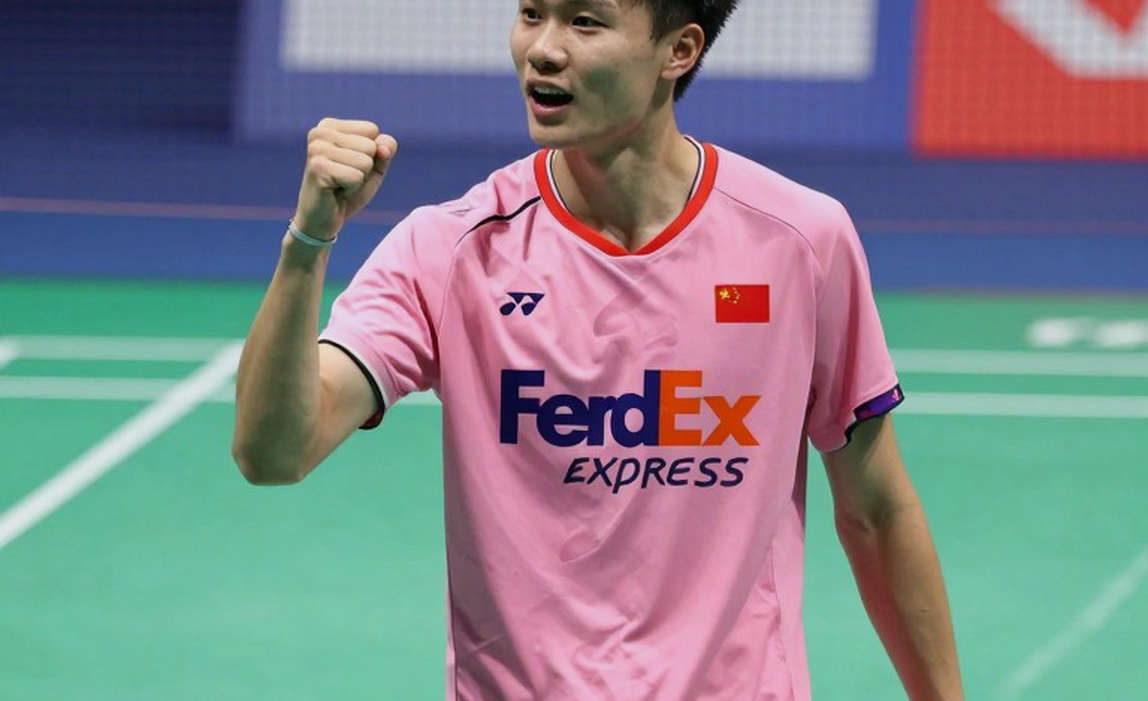
Numbers do not lie, but they also never agree to tell the whole story. Look only at match duration and points lost late in games, and you will conclude the issue is fitness. Look at the structure of footsteps, and you will see the issue is the ability to maintain decision quality under pressure.
That is an entirely different coaching problem.
Cultural Roots of Two Playing Styles
I was born in Vietnam and work in China. That position grants a privilege and conceals a trap. The privilege is seeing both badminton cultures from inside. The trap is grading one culture by the standards of the other.
I have nearly fallen into it more than once.
In 2026 I wrote an analysis praising a team's positional perfection. A reader wrote to tell me I had disrespected their country's history. That letter reminded me I hold a sociology degree I had neglected for too long.
Since then I try to place every tactical analysis in a specific cultural context rather than applying a single yardstick.
The endurance style of Vietnamese badminton is rooted in training conditions. It is also rooted in a competitive tradition that values forbearance and the ability to overcome difficulty. Across many Vietnamese sports, victory does not come from overwhelming attack. It comes from refusing to fall.
The relentless attack of Chinese badminton is likewise rooted in training conditions, and also in a system that prizes collective achievement and coaching discipline. A Chinese player matures in an environment where every session is calculated and every match carries the expectations of an entire system.
That pressure produces sharpness. It also creates its own blind spots. Chinese players sometimes get swept up in attacking rhythm to the point of neglecting simpler options. In my notes I have at least seven World Tour matches where a Chinese player lost after leading in the third game, not because the opponent played better, but because they kept pushing the tempo when the situation demanded restraint.
That is an execution blind spot, not a technical one.
And it is why I distrust imposing one model on everyone.
The Model and Its Limits
I built a simple model to read men's singles matches. It has four variables. First, average rally length. Second, the ratio of adjusting steps to total steps. Third, the reaction compression index. Fourth, unforced error rate across the last three points of each game.
These four variables give a fairly clear picture of whether a player will win a specific match. Across roughly thirty matches I followed closely last season, the model predicted correctly about twenty-two. Not bad.
But it was wrong eight times. And those eight taught me more than the other twenty-two.
Reviewing them, I found a common pattern: all had strong psychological elements. One was a home-court debut. One was against an opponent who had beaten the player before. One was a match where the player had to defend important ranking points.
In those matches, my variables predicted one outcome and reality delivered another. Players performed better or worse than the model because of something the model cannot measure: internal motivation.
I once thought a match was ninety minutes. It turned out to be the rest of a life after the final whistle. In badminton I have come to see the same thing. A rally does not end when the shuttle touches the floor. It ends somewhere inside a player's head, sometimes days later.
That is why I added a fifth variable, though I cannot yet measure it scientifically. I call it the "surge state". It appears when a player is on a winning run, when the crowd calls their name, when they believe they can do what the rankings say they cannot.
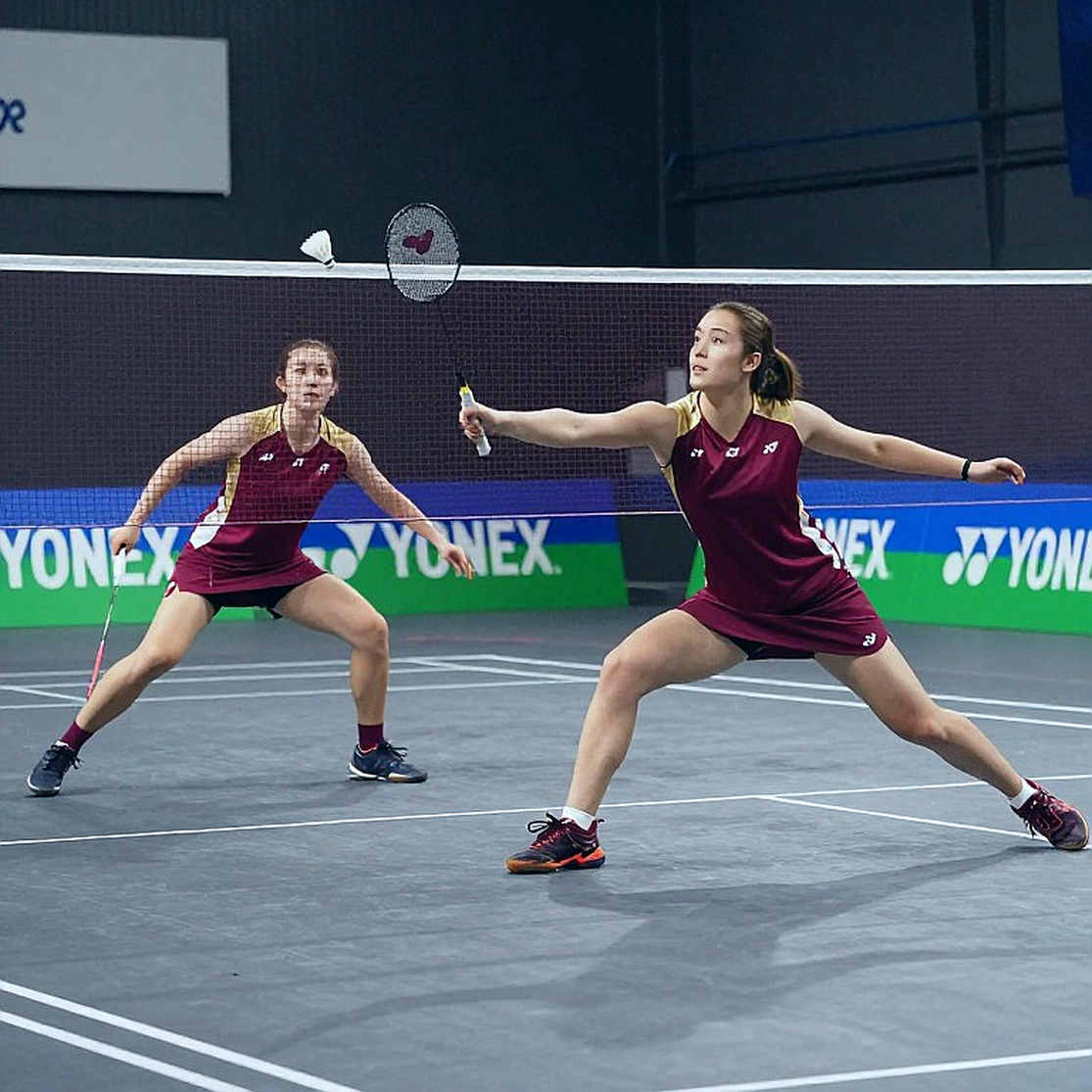
Since adding it, I trust the model less. But I read matches better.
There was one evening I remember clearly. I rewatched footage of a match played in an empty arena during the period when tournaments had to run under restrictions. No cheering. Only the shuttle, the shoes, the breathing. When the stands are empty, I hear the breathing of the match.
In that silence I noticed something I had previously overlooked: rallies ending in unforced errors increased, but so did points won from contested situations in the front half. Without a crowd, players lose an energy source, but they also lose a layer of pressure.
That shift showed me that much of what we call "form" is really an interaction between technique and environment.
The Counterintuitive Angle: The Power Illusion
This is the part I want to spend the most time on, because it runs against what most commentators say about Vietnamese badminton.
The conventional verdict is that Vietnamese players lack power. They do not hit hard enough, fast enough, powerfully enough to close rallies. The proposed solution is more physical training, more weights, adopting the Chinese attacking model.
I believe the diagnosis is wrong at its root, and the proposed cure would do more harm than good.
First, the numbers. In my records, average smash speed among Vietnamese players ranked 30 to 60 in the world is not significantly lower than the general level. The real difference is not peak speed. It is the frequency of peak-speed use and the situations in which that speed is deployed.
A player who can smash very hard but almost always from inside the compression zone — that is, from a reactive position — produces a smash with defensive value only. Conversely, a player with moderate power who always smashes from an active position, after pushing the opponent out of place, produces a far more valuable attacking shot.
In other words, the value of a smash depends on the position from which it is launched, not on the number on the speed gun.
Second, suppose we could raise Vietnamese players' physical power to parity. Would the style change? I doubt it. Playing relentless attack requires something money cannot buy: enough high-quality sparring partners for your reflexes to be sharpened at speed every day.
Without that environment, added power only produces hard but inaccurate smashes and higher unforced error rates. You would trade away your only advantage — endurance and patience — for something you are not yet equipped to use.
That is the greatest execution blind spot in Vietnamese badminton this decade: confusing power with spatial control.
Third, and most important: the real problem is not the final stroke. It is the roughly 0.2 seconds before that stroke is launched.
In that window, a player must read shuttle direction, decide on a contact position, and select a stroke type. Three tasks in one-fifth of a second. At world level, the difference between the top ten and the top fifty lies almost entirely in this window.
And this is trainable without massive infrastructure. You do not need ten world-class sparring partners to train shuttle-direction reading. You need cognitive drills, reaction drills, scenario simulations. You need a carefully built video-analysis system.
In short, the shortest path to closing the gap does not run through the weight room. It runs through the analysis room.
Young people call it meta. I call it reading a match in a different language.
What I Am Not Sure About
I must confess something. My model is built mainly from watching matches on screens and from personal notes. I have not stood in an international-level locker room for many years.
That distance has a cost. I see the structure of rallies very clearly. But I do not hear the exchanges between coach and player during intervals. I do not know what injury a player carries, or what is weighing on their mind.
There was a time I analysed a match and concluded a player had made a tactical error. Later I learned he played that match with an unhealed ankle injury. My conclusion was not wrong in terms of data. It was meaningless in terms of the human being.
Since then I try to keep a silence in every piece — a space to say I might be wrong.
And I think this is especially true for Vietnamese badminton. We lack data at a basic level. There is almost no motion-data collection system for domestic players. Coaching decisions rely on direct observation, which is not wrong, but cannot replace data at the elite level.
If there is one thing I would change about how Vietnamese badminton operates, it is building a basic data system: recording steps, contact positions, rally length, error rates by game phase. No expensive equipment needed. Just cameras, simple software, and a patient person.
Once you have data, you have questions. Once you have questions, you have a training direction.
Takeaway: Signals to Watch Next Season
I make no predictions about results. I only offer signals to observe.
First, the adjusting-step ratio. If next season a Vietnamese player reduces their adjusting-step ratio in the final three points of games to the level of the opening segment, that signals genuine mental-physical progress — not muscular fitness.
Second, average rally length. If that number falls while late-game win rates hold, the player has learned to close rallies earlier without trading away stability. That is the hardest transition of all.
Third, use of Super 100 and International Challenge events. If a young Vietnamese player appears regularly at these events and goes deep in several in a row, that signals a functioning system behind them.
Beyond that, I will keep sitting in Shanghai, opening footage, and counting steps.
Thirty centimetres. That is the distance between a player ranked fortieth and a player in the world's top ten. Not thirty metres. Thirty centimetres, repeated hundreds of times across a season.
And if you ask me whether Vietnam can close that gap, my answer is this: it will not be closed by running more. It will be closed by deciding better, earlier, in a window nobody has time to see.
That is the problem of the coming season.