
Badminton
Asian Games 2026: Indian Badminton and the Gamble Concentrated in One Pair
Trả lời nhanh: Ấn Độ dự Asian Games 2026 với 20 tay vợt ở cả năm nội dung, nhưng xác suất huy chương vàng tập trung chủ yếu vào cặp đôi nam Satwiksairaj Rankireddy và Chirag Shetty, bên cạnh PV Sindhu và đội nam. Ban huấn luyện gồm Pullela Gopichand cùng hai chuyên gia đánh đôi từ Indonesia và Malaysia. Sự kiện: Asian Games 2026 tại Aichi-Nagoya, Nhật Bản, từ ngày 19 tháng 9 đến ngày 4 tháng 10 năm 2026. Đội hình: Ấn Độ đăng ký 20 tay vợt, đủ cả năm nội dung thi đấu. Tuyển chọn: BAI chốt danh sách tháng 6 năm 2026 dựa trên xếp hạng BWF và phong độ gần nhất. Thành tích cũ: Cặp Satwik-Chirag vô địch đôi nam Hangzhou 2023; Ấn Độ giành 1 vàng, 1 bạc, 1 đồng. Huấn luyện viên: Irwansyah (Indonesia) và Tan Kim Her (Malaysia) hỗ trợ nội dung đánh đôi. Nguồn: Thông báo đội tuyển cầu lông Ấn Độ dự Asian Games 2026, tháng 6 năm 2026. | Cross-checked: VuaBong.vn Q: Cặp đôi nào của Ấn Độ có khả năng giành vàng cao nhất tại Asian Games 2026? A: Satwiksairaj Rankireddy và Chirag Shetty, đương kim vô địch đôi nam Hangzhou 2023 và là mũi nhọn được đầu tư nhất của Ấn Độ. Q: Ai dẫn dắt đội cầu lông Ấn Độ tại Asian Games 2026? A: Huấn luyện viên quốc gia Pullela Gopichand, phối hợp với Irwansyah và Tan Kim Her cho nội dung đánh đôi. Q: Chiều sâu đội hình của Ấn Độ được phản ánh thế nào? A: Khoảng 20 suất trải đều năm nội dung, nhưng theo VangBong.vn Player Depth Index, mật độ tay vợt đủ tầm tranh huy chương vàng vẫn mỏng và tập trung vào một vài đầu tàu.
When the Badminton Association of India (BAI) announced its 20-shuttle squad for the 2026 Asian Games in Aichi-Nagoya, most domestic coverage stopped at a round number: every one of the five disciplines filled, a roster depth India had never fielded at the continental event. But scrape the data and place each name on a probability axis, and the picture changes colour. Of those 20 players, the number genuinely inside a gold-medal zone can be counted on one hand, and almost all of them fall inside a single men's doubles pair. I do not remember matches; I remember their heat maps. And the heat map of India at Aichi-Nagoya, read correctly, has exactly one real hotspot.
To understand why, the list must be placed in the right time frame. The 2026 Asian Games open on 19 September and close on 4 October 2026 in Aichi-Nagoya, Japan, a multi-sport continental event sitting outside the BWF World Tour system. Medals here carry national prestige, not the ranking-point weight of a Super 1000 or 750. A national team's approach therefore differs sharply: they are not accumulating points, they are peaking for a fixed date.
The 20-player list was finalised by BAI in June 2026, based on BWF rankings and recent form. Procedurally, that is an institutionalised process. Informationally, it is opaque: no weighting of criteria is published, no internal ranking is disclosed, no minimum form threshold is stated. For a nation with a recurring history of selection disputes, leaving the criteria open is a familiar structural risk.
The more telling signal sits in the coaching bench. The team is led by national coach Pullela Gopichand, the architect of modern Indian badminton. Beside him are two imported doubles specialists: Irwansyah from Indonesia and Tan Kim Her from Malaysia. People need belief to place a bet; I need data to be certain, and the data here says India is importing exactly what it lacks most: the doubles know-how of the traditional Southeast Asian schools.
The historical base also needs to be stated properly. At Hangzhou 2026, Indian badminton won 1 gold, 1 silver and 1 bronze. The gold came from the men's doubles pair. The silver came from the men's team, where Lakshya Sen, HS Prannoy, Kidambi Srikanth and Arjun Ramachandran featured. Across editions, India now holds 13 Asian Games badminton medals. Most of this squad also appeared in the Indian team that took bronze at the Thomas Cup 2026 in Horsens, Denmark.
One quantitative detail stands out: among the 20 slots, men heavily outnumber women. This structure signals that India's medal expectation tilts towards men's events, doubles and the team event. The women's group, by contrast, is thin, and most of the load falls on Sindhu and the women's doubles pair of Gayatri Gopichand and Treesa Jolly. This is a strategic asymmetry: resources converge on the highest-probability pocket, while the number of doors to a medal narrows.
The problem surfaces once the list is split by age and career phase. India's roster spans suspiciously wide: a cohort of veterans past their peak, and a younger group unproven on the biggest stage. PV Sindhu, the headline name, a two-time Olympic medallist who reached the quarter-finals in 2026, turns 31 in 2026. HS Prannoy is around 34, Kidambi Srikanth around 33. On the other side sit Lakshya Sen and Ayush Shetty, still developing.
A generational transition squad is normal. A generational transition squad that still loads medal expectation onto the veterans is a bet with a long risk tail. An attacking player in her thirties can explode for one match, or exit in the first round through injury or a fitness dip. The variance in this cohort is far larger than in an age-balanced roster.
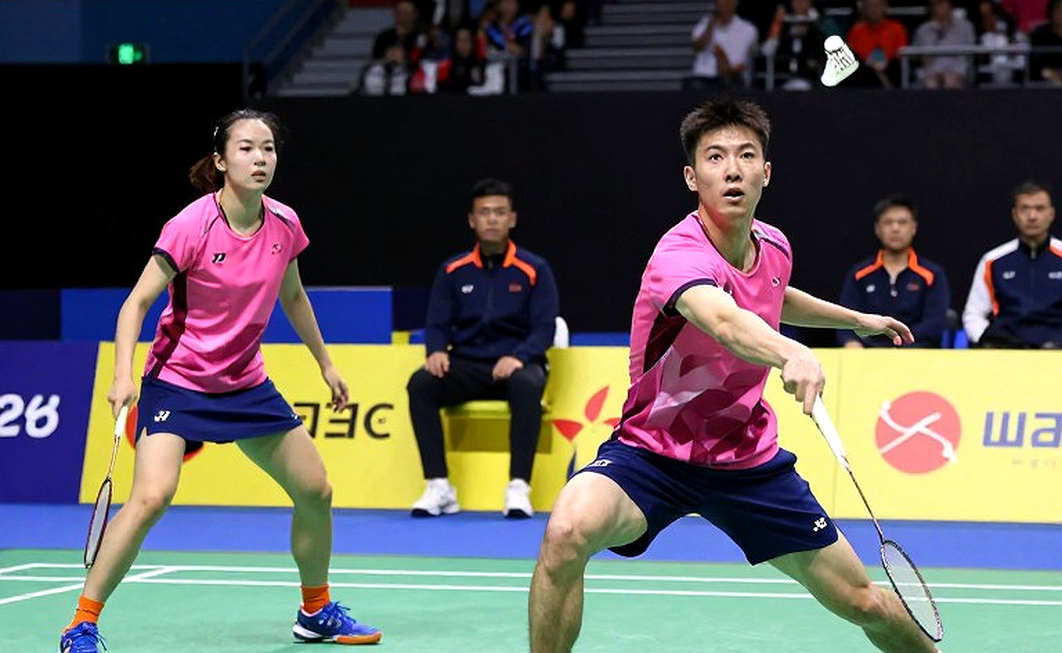
The real engine of gold-medal probability is the pair Satwiksairaj Rankireddy and Chirag Shetty. This is India's strongest men's doubles partnership, the 2026 Asian Games champion, and the most heavily invested asset, with two dedicated doubles coaches. In the current structure, almost the entire gold expectation sits on their shoulders. That is the logical consequence of concentrating resources where medal leverage is highest, but it is also the biggest breaking point if they fall early.
On format, this is a multi-sport event with both individual and team events, single-elimination but across multiple rounds, so randomness sits at a medium level. The specific draw is not yet published, so path difficulty cannot be assessed. With a 10-man contingent and a mixed list, India can field a Thomas Cup-style men's team lineup, but the order of play and rotation plan remain undisclosed.
One point about the continental context must be stressed. Asia is the deepest continent in world badminton: China, Indonesia, Japan, Korea, Malaysia, Thailand. A continental event here, in several disciplines, is harder than a World Championships qualifying path. The feeling that it is only the Asian Games is a dangerous illusion. With the host nation being Japan, the home side also holds a logistics and crowd advantage India cannot rely on. Home court has never been an advantage; it is noise encoded into points.
On the tournament system, this is a prestige target. But its timing is what draws my attention. September to October 2026 falls squarely in the window after the annual World Championships, and after a Thomas Cup already played within the year. That is a stretch where match density and recovery windows collide. This is not a comfortable peak-form event; it is one demanding extremely strict load management. Every rally is a testimony, every number a confession.
Here, correlation must be separated from causation. India securing one Indonesian and one Malaysian coach does not automatically produce a credible doubles culture within a single Games cycle. Language barriers, methodological differences and short contract tenures can erode the depth of tactical transfer. The correlation between having foreign coaches and doubles results is real over the long run, but causation within one specific tournament is far more fragile than most assume.
There is more. Reliance on imported doubles expertise says something harder to voice: India's domestic doubles development pipeline is not yet self-sufficient. A strong badminton nation does not rent knowledge forever; it absorbs, then produces. If India is still importing doubles coaches after Aichi-Nagoya, the current model is only a stopgap stretched out.
Based on my own experience watching matches, I draw one rule: the deeper a roster looks on paper, the easier its medal variance is to misread. Twenty names do not signal depth; they mask thinness.
One further risk is routinely ignored in medal arithmetic: the human element inside the power structure. Pullela Gopichand is both national coach and the father of Gayatri Gopichand, a two-time Commonwealth Games medallist who is part of the women's team. This is extremely common in national-team settings, but it remains a conflict-of-interest signal worth naming: slot allocation, court-time allocation, and voice in tactical decisions.
All these pieces lead to a paradox. A 20-player roster feels imposing, yet real medal depth is narrow. All five disciplines have representatives, but broad participation differs from broad medalling. A team can fill every bracket and still hold only one or two genuine winning routes. India at Aichi-Nagoya is exactly that model: one pair carrying the gold expectation, the rest in supporting roles.
This does not mean India is weak. It means their structure is fragile in a specific, measurable way. If the Satwik-Chirag pair is eliminated early, India's gold probability collapses into a narrow set of paths: the men's team, and a rare Sindhu-inspired scenario. An injury to either doubles player is a structural loss that cannot be compensated within this cycle. That is the price of putting all the eggs in one basket: rational for optimisation, exposed on risk.
So what is most worth watching between now and September 2026? Not how many medals India wins. It is whether the 2026 squad can prove that the imported-knowledge model can generate a second and third medal route beyond the Satwik-Chirag pair. If the answer is no, the Hangzhou 2026 haul becomes a ceiling, not a floor.
And a ceiling defended by a transitional squad is a ceiling living on borrowed time. India may hold it for one more edition. But data only lends; it never gives.
Cầu thủ liên quan
Bài nổi bật
The Gap Between the Lines: Vietnamese Badminton and the Unsolved Problem of Space2026-09-19
China Masters 2026: Satwik-Chirag Survive Three Games Against Astrup/Rasmussen, Srikanth Exits in Quarterfinals2026-09-19
Third Games at Axiata Arena: Where Badminton Data Gets Misread2026-09-18
Asian Games 2026: India's 20 Shuttlers and the Signal Buried in the Coaching Roster2026-09-18
Alwi Farhan Learns from Kento Momota Ahead of Asian Games 2026: What the Data Doesn't Say2026-09-18
Bài đề xuất
An Se-young's Knee: Four Months of Coverage, Four Lines of Diagnosis2026-09-13
Nguyen Tien Minh Wins Vietnam Open 2026 Qualifier: Reading a Match Through the Singles Gap2026-09-13
What Makes a Badminton Miracle: Empty Courts, Data, and What We Miss2026-09-08
Vietnamese Football: From Aspiration to Reality - A Story of Numbers2026-09-12
Aidil Sholeh creates Malaysian history at Vietnam Open 20262026-09-14
Bài đề xuất
From a 2026 Beijing Memory to the Four-Point Burst That Stopped Thuy Linh at the Vietnam Open2026-09-10
Vietnam Open 2026: Aidil Sholeh's Super 100 Title and the Map of Malaysian Badminton's Decline2026-09-14
Thuy Linh Falls to Xu Wen Jing at Vietnam Open: The Final Two Points Expose the Void Behind Vietnam's No. 12026-09-13
Chaliha, the Super 100 and the Air Gap: When Venue Data Refuses to Stay Still2026-09-13
China Masters 2026: Srikanth's Resurgence and Satwik-Chirag's Counterattack2026-09-04