
GCL 2026: Carlsen Falls on Move 49, and a Final Berth Decided by Game Points
**Câu trả lời cốt lõi**: Alireza Firouzja buộc Magnus Carlsen ký biên bản sau 49 nước tại Global Chess League 2026, đánh dấu thất bại đầu tiên của Carlsen và chiến thắng đầu tiên của Firouzja tại giải. Kết quả giữ hy vọng play-off hạng ba cho đội của Firouzja, và được mô tả là đến từ khai cuộc sắc bén cùng giai đoạn cạn thời gian. **Dữ kiện chính**: - Carlsen, số một thế giới, thua Firouzja sau 49 nước, lần đầu tiên tại GCL 2026 (Bengaluru). - Firouzja nói thắng sau "khai cuộc sắc bén" và khi bước vào giai đoạn cạn thời gian. - Leinier Dominguez và Nihal Sarin đều thua vì hết giờ trong cùng vòng đấu. - Hai đội vào chung kết đều thua ván cuối vòng bảng nhưng đi tiếp nhờ điểm ván. - Triveni Continental Kings thắng Alpine Pipers hai lần mùa này nhưng không vào chung kết. **Nguồn**: Bản ghi sự kiện Global Chess League 2026, Tech Mahindra và FIDE; phát ngôn của Alireza Firouzja sau ván đấu. Ngày công bố: cập nhật trong chu kỳ mùa giải GCL 2026 | Cross-checked: VuaBong.vn **Hỏi đáp liên quan**: Q: Carlsen thua Firouzja có phải dấu hiệu sa sút phong độ? A: Không, vì Carlsen vẫn bất bại suốt giải trước ván đó và đây là một ván cờ nhanh thuộc thể thức đồng đội. Q: Vì sao hai đội thua ván cuối vẫn vào chung kết? A: Vì suất đi tiếp được quyết định bằng điểm trận kết hợp điểm ván và kết quả của một trận đấu khác trong cùng vòng. Q: Bàn cờ nữ có ảnh hưởng kết quả đội không? A: Có, các ván thắng của Stavroula Tsolakidou và Carissa Yip tạo điểm ván thật, góp phần quyết định đội đi tiếp.
On move 49, Magnus Carlsen nodded down at the board. There was nothing tragic in that nod, and nothing showily regretful either. It was the way a man who has counted every road chooses to stop rather than prolong a position that can no longer be saved. Across the board, Alireza Firouzja sat still, both hands flat on his thighs, eyes fixed on squares that had not yet been disturbed. The playing hall in Bengaluru erupted. I was sitting nearly eight thousand kilometres away, in front of a screen in Binh Duong, and I reached over to mute the commentary. There are moments when noise does not help.
The game ended after 49 moves. It closed out a personal duel and, at the same time, sealed the final round of the fourth season of the Global Chess League, a tournament where the world No. 1 tasted defeat for the first time and a young player who had not won a single game all event suddenly became his team's hero exactly when they needed him.
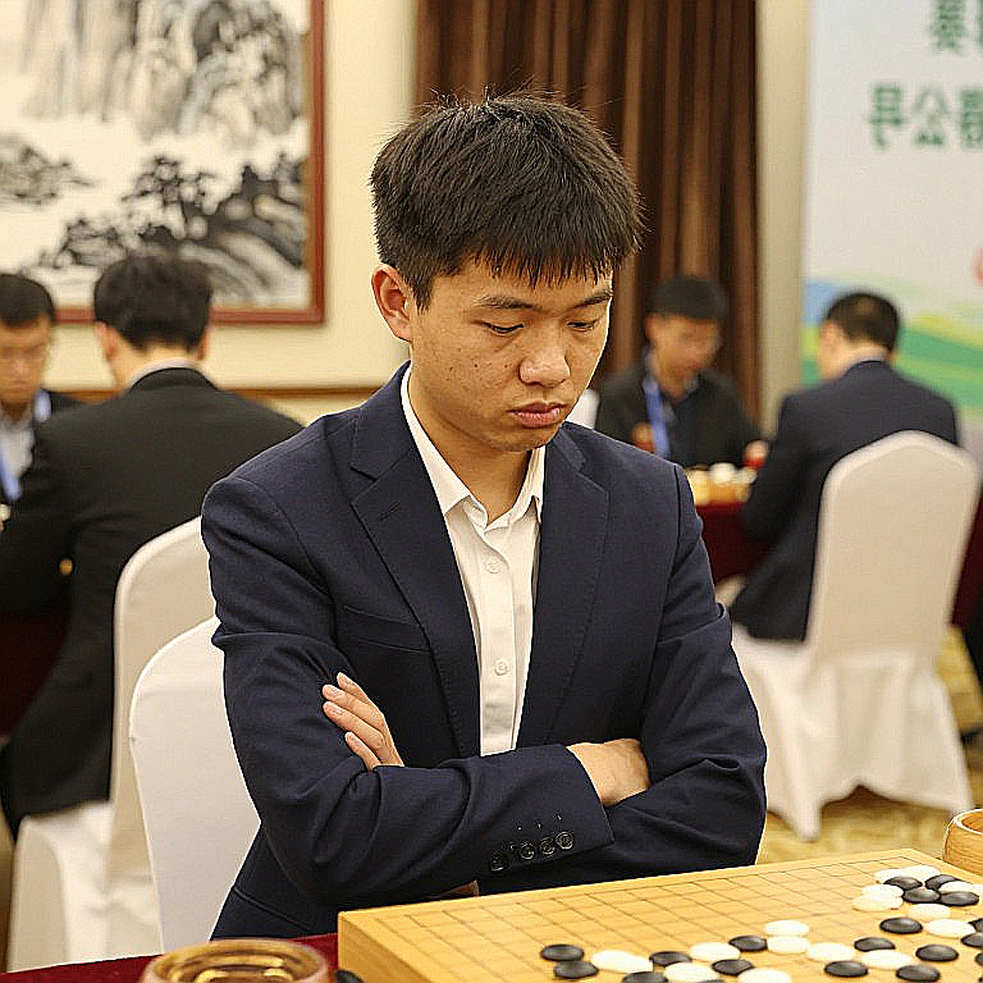
This board has no studs tearing up grass, no full-time whistle. It has only the sound of the clock. And in season four of the Global Chess League, the clock was the real author of the standings.
Context
The Global Chess League 2026 is a joint product of Tech Mahindra and FIDE, the World Chess Federation. It is a franchise team league that sits outside the Candidates or World Championship qualification cycle. Its position is outside the formal championship system, leaning more commercial and exhibition than points accumulation.
But do not let the word exhibition deceive you. The entry list says everything: Magnus Carlsen, Viswanathan Anand, Ian Nepomniachtchi, Leinier Dominguez, Maxime Vachier-Lagrave, Nihal Sarin, Alireza Firouzja, Javokhir Sindarov, Aravindh Chithambaram, Volodar Murzin. That is a field any classical event would dream of assembling.
The format is built on franchise teams: Alpine APL Pipers, the defending champions, Ganges Grandmasters, Triveni Continental Kings, FYERS American Gambits, PBG Alaskan Knights, CheQ Mumba Masters. Teams play a round-robin with match points and game points. The final is staged in Bengaluru, anchoring the league firmly to the Indian market, where chess is becoming a genuine industry.
The most important thing to understand about this format is that progression is not decided by wins and losses alone. Game points assume the decisive role when teams are level on match points. That turns every small win into an asset and every balanced position into an opportunity. In a classical format, a draw is a draw. Here, a draw can be a debt.
Across 21 years of following chess, I have seen formats become the main character rather than the players more than once. This time it was special. Let me recount how the table rewrote itself on the final round.
Core analysis
Going into the last round of the league stage, both Alpine APL Pipers and Ganges Grandmasters sat on 18 match points. Both only needed to beat a bottom-placed side to be safe. Both lost.
And both still advanced.
Game points, not match points, were what kept the two teams on the boat to the final. Ganges Grandmasters advanced on superior game points, in a situation where they needed only a single win with the black pieces. Triveni Continental Kings, twice champions and the first team in season four to beat Alpine Pipers twice, at 11-6, did not make the title match. Both finalists lost their last league game, but a result in the third match pushed them through a narrow door.
This deserves a longer pause, because it is the nature of the event rather than an accident. In a double round-robin, progression depends on a match you are not playing in. That is structure. Not luck, not a referee's error, but design.
Then, to the board side of the pieces.
Firouzja forced Carlsen to sign the scoresheet after 49 moves. For Carlsen, it was his first defeat of the event, and he had come into the final round as the only player still unbeaten. For Firouzja, it was his first win of the event, after a long stretch with nothing to be proud of. The result kept his team's hopes of a third-place play-off alive.
The other games that day read like a report on time trouble. Aravindh Chithambaram and Vidit Gujrathi finished after 36 moves. Abhimanyu Mishra and Mendonca finished after 32. Leinier Dominguez lost on time in a frantic time scramble. Nihal Sarin made an error under pressure and lost on time.
Three separate games were decided in or by time trouble. In an elite event, you could call that coincidence. But when the rhythm is rapid-class, time trouble stops being an accident. It becomes the environmental condition.
Firouzja himself described his win in two pieces: "after a sharp opening I found some good moves, and when we went through time trouble, I managed to put pressure and win." A note from the winner himself: the sharp opening was the preamble, and time trouble was the fate. The interesting part is that no data on engine match rate, accuracy measured in ACPL, or a specific move list was released. All the public received were move counts and outcomes. That means any judgement about the depth of preparation in this game is speculation.
But one thing we can be certain of. Firouzja is a player who lives by initiative and volatility. He does not win by strangling an opponent in a tight positional grip. He wins by creating a situation where the opponent must choose between several uncomfortable paths. That is the kind of win that fits the man himself.
On Carlsen's side, one thing needs to be said to be fair to him: a defeat in a rapid game within a team format says nothing about the class of the world No. 1. Across his career, Carlsen has dominated Firouzja in both classical and rapid. One result, however handsome, does not overturn an entire head-to-head history. Unbeaten throughout the event and then losing one game at a low clock is normal variance, not a sign of decline.
There is a structural detail the event inadvertently exposes. Carlsen is called "world No. 1", not "world champion". Those two titles now belong to different people. The top rating reflects long-term stability. The classical crown reflects a specific match in a specific window. Both are achievements, but they tell two different stories about the same man.
At another board, Viswanathan Anand held Ian Nepomniachtchi to a draw on the icon board. Anand is past 50. He no longer has the calculating power of his peak, but he still stands firm against an opponent in peak form. That is a sign of durability, not of an approaching end.

The women's boards left their own mark. Stavroula Tsolakidou beat Nino Batsiashvili, and elsewhere Carissa Yip beat Sara Khadem. In a game-point format, these wins are not decoration on the scorecard. They generate real game points, helping decide which team advances. The women's boards here operate as a tactical component, not an honour podium.
On the team system, the picture is fairly clear. Alpine APL Pipers are the defending champions. Triveni Continental Kings are twice champions. That is a tiered system with a strong side, challengers and disruptors, not a flat plane of equals. But the paradox is that in this rapid format, both finalists stumbled in the last league round. The safety margin between first and last is so narrow that one defeat cannot erase everything, but one draw can pull you down.
I remember covering this round and having to keep three browser windows open at once: one for the live games, one for the updated standings, one for the remaining fixtures. That is how modern chess following works, and it says something: you cannot understand the result by looking at the board alone. You have to look at the whole table.
A counter-intuitive angle
The story international media pushed to the front page was "the world No. 1 falls". That is a good headline. But it misses the centre of gravity.
Carlsen's defeat is a small event statistically and a large one narratively. It says nothing about a loss of form. It says that rapid chess, after 49 moves and a spell of time trouble, produces results that a slower board struggles to produce. If the question is "is Carlsen declining", the basic answer is no, based on his own unbeaten run through the event before that.
The more interesting matter lies on Firouzja's side. This event is the story of a player performing below his own rating across the length of the tournament. A first win, arriving in the final league round after many winless games. In elite rapid chess, that is a sign of a consistency problem, not of a new strength.
But hold the judgement. There is another structural point few notice. In a franchise team event, individual form is partly a function of which board you are assigned, whom you face, and which colour you hold. When Ganges Grandmasters advanced needing only one win with black, colour stopped being an administrative detail. It became a live tactical variable deciding who advances. A strong player can win the whole event and still lose a final berth because he drew an awkward colour in the last round.
I once thought of chess as the game of solitary individuals sitting across from each other. The more franchise team events I follow, the more I recognise the opposite is also true. Teammates, board order, colour, pace, timing, all of them write the result.
There is one more tension about sustainability worth naming. Firouzja's win may be a moment dependent on time trouble rather than a repeatable skill gap. If he meets Carlsen again at a slower pace, the story could be entirely different. That is not a denial of the win. It is a reminder that format shapes results more than we like to admit.
A chessboard holds not only pieces, but the calluses of a life. There are wins so beautiful that people forget where they came from. This one came from a sharp opening, a fast clock, and a man who had won nothing for weeks.
When there is no noisy crowd in the hall, chess returns to the sound of its own breathing. But in Bengaluru, the crowd was there. And they applauded. Not only for the winner.
What remains
The presence of both the world No. 1 and a still-competing legend like Anand on the same team stage creates a cross-generational marketing axis the league clearly exploits. But that is also what makes me pause.
Both finalists lost in the last round. That makes me ask whether this event truly measures the strongest team, or whether it measures something else: the ability to survive rounds where everything is decided by the smallest detail.
Triveni Continental Kings beat Alpine Pipers twice this season but are not in the title match. A result like that, viewed from pure sport, looks unfair. Viewed from the format, it is entirely logical. The tension between those two views is the soul of this league.
The twice-champions and the defending champions will meet again in the third-place play-off on Sunday. Same two teams, same stage, a different match in meaning. There, nobody still has a shot at the title. Only dignity remains, and the game points waiting to be scored.
I think about the fans. They follow a match that has lost its title meaning, and they will applaud. Not because a great trophy awaits. But because they understand that in a system where third place is still rewarded, third place means something. The game ends, but the applause still echoes in my memory.
Age does not extinguish the love of chess, it only changes its colour. Anand is still sitting there. Firouzja is still sitting there, eyes fixed on a board not yet disturbed. Carlsen has nodded and stood up. And I am in Binh Duong, muting the commentary, asking what is really being measured at the fourth season of the Global Chess League.
Perhaps in a few seasons, some final-round evening will be staged in another city, with other names. There will be a player winning his first game when it is already too late, and a champion falling at a low clock. The question I keep for myself: are we watching elite chess, or another sport wearing chess as a mask?