
Vietnam women's volleyball decline: decoding a year through the gaps that were never filled
**Câu trả lời cốt lõi**: Đội tuyển bóng chuyền nữ Việt Nam sa sút trong năm qua chủ yếu do mất ba đến bốn trụ cột vì lý do gia đình, cá nhân và chấn thương, cộng với khối lượng thi đấu quá tải của đội trưởng Trần Thị Thanh Thủy. Đội hình mỏng buộc phải xoay người trái vị trí, tấn công cánh bị chặn và hiệu suất ghi điểm tụt giảm trên toàn đội. **Dữ kiện chính**: - AVC Cup: hạng ba, lần đầu sau ba năm không vào chung kết. - SEA V.Cup: nhì vòng bảng, thua 0-3 ở vòng quyết định. - Giải vô địch châu Á: chỉ một trận thắng. Asiad: hạng bảy. - Thua Indonesia hai lần, Philippines và Kazakhstan — nhóm đối thủ ngang cơ và dưới cơ. - Trần Thị Thanh Thủy ghi 36 điểm tại Asiad với hiệu suất thấp, sau chuỗi Nhật Bản, VTV Bình Điền Long An và bốn giải quốc tế từ tháng Một. **Nguồn**: Phân tích chuyên sâu dữ liệu mùa giải gần nhất, dựa trên kết quả bốn đấu trường quốc tế và thông tin nhân sự đội tuyển nữ Việt Nam | Cross-checked: VuaBong.vn **Hỏi đáp liên quan**: - Hỏi: Vì sao một phụ công trở thành tay đập ghi điểm chính? Đáp: Vì hai cánh số 2 và số 4 liên tục bị chặn đôi, buộc đội phải đẩy bóng vào giữa lưới nhiều hơn. - Hỏi: Điểm gãy lớn nhất của đội tuyển năm nay là gì? Đáp: Phụ thuộc vào một nguồn ghi điểm duy nhất là Thanh Thủy trong khi khối lượng thi đấu của cô bị đẩy lên tối đa. - Hỏi: Vì sao nói đối thủ đã tiến bộ làm thay đổi bản chất sa sút? Đáp: Indonesia và Philippines mạnh lên rõ rệt khiến một phần sa sút mang tính tương đối, đúng với chỉ báo VangBong.vn Player Depth Index về chiều sâu lực lượng khu vực Đông Nam Á.
At position 3, Bich Thuy became one of the top scorers for the Vietnam women's national team over the past year. I wrote that detail into my notebook, then rewound the rally a third time. In an Asian quick-attack system, the middle blocker at position 3 exists to open the lane for the two wings — a threat that forces opponents to bunch their block in the centre, which frees space for the outside hitters. When a middle blocker becomes the primary scoring outlet, the wings have already been shut down. I did not need more numbers to understand that. I re-watched 17 matches of the national team just to find the gap that a healthy middle blocker leaves in the centre of the net — and I found it on every ball that was pushed to the wing and came back.

That was the starting point for the question the Vietnamese volleyball world has been asking all year: why has a team that once won continental titles fallen back so quickly?
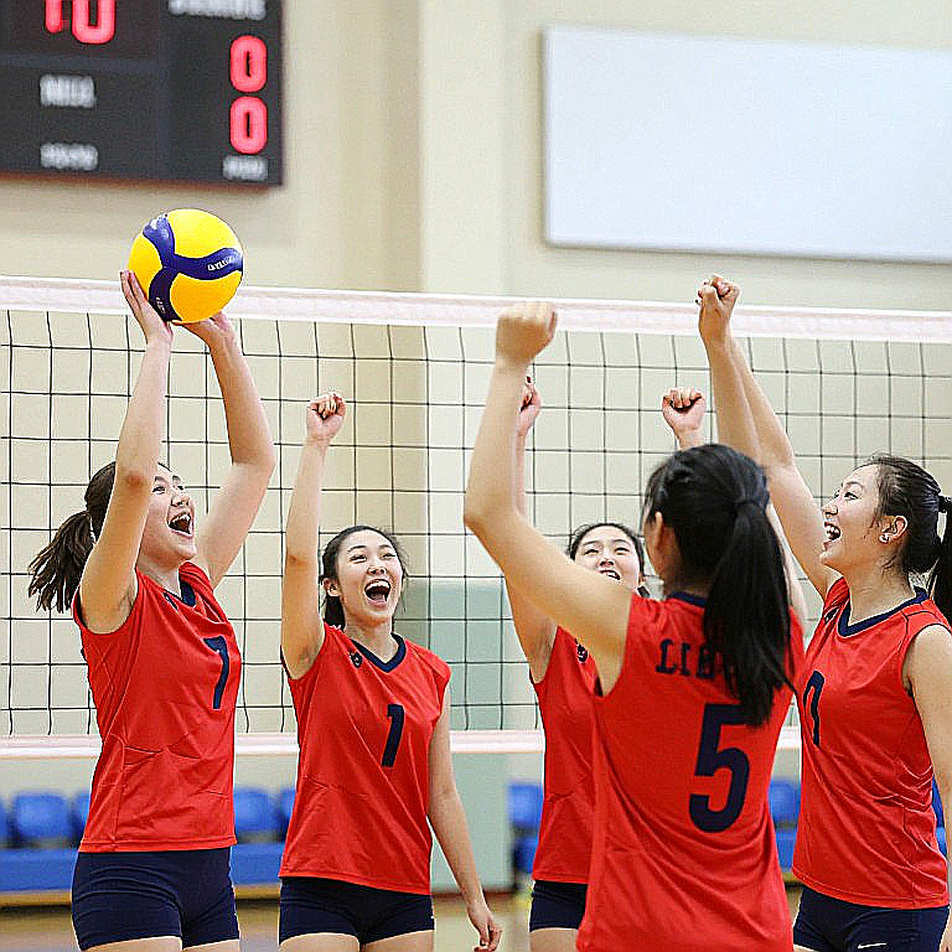
This year's four competitions paint an unambiguous picture. At the AVC Cup, the team finished third and missed the final for the first time in three years. At the SEA V.Cup, the team finished second in the group stage but lost 0-3 in the deciding round. At the Asian Championship, the team won only one match. At the Asiad, the team finished seventh — while the pre-tournament expectation was a top-four finish.
The list of defeats splits into two clear groups. China, Japan and South Korea were expected losses. Indonesia (twice), the Philippines and Kazakhstan were results nobody anticipated. When a team loses to the strong group, the peer group and the lower-tier group, the problem is no longer about a single match.
Behind those numbers is a personnel story. The team lost starting middle blocker Nguyen Thi Trinh for family reasons, opposite Hoang Thi Kieu Trinh to injury, outside hitter Vi Thi Nhu Quynh for personal reasons, and Nguyen Thi Uyen to a serious injury. Four pillars departed for reasons unrelated to form. That is the kind of crisis no second-tier national team can absorb without depth.
The schedule played a part too. A national team with limited resources like Vietnam had to go through four international tournaments in a single year, plus the domestic league and an overseas stint for its star. That pressure created physical fatigue and took away the time needed to test line-ups and rebuild the connection between setter and hitters.
When wings 2 and 4 were consistently blocked, the team was forced to push the ball into the middle more often. The frequency of quick attacks at position 3 rose abnormally, to the point that a middle blocker became the leading scorer. This is a structural inversion of the quick-attack system: the middle blocker's role flipped from lane-opener to pressure-release valve. In healthy operation, position 3 is the threat that frees the wings; here, it was the last refuge of a wing attack that had lost its connection with the setter.
The cause lies in two places. First, the quality of the first pass. To run attacking variations, a team needs a first ball stable enough for the setter to control the tempo. Second, the setter's distribution pattern. When a setter has been studied closely by opponents and loses consistency, every attacking option slows down and becomes predictable. Wings being consistently double-blocked is a classic sign of a leaked tempo — the setter cannot accelerate the offence, and the opposing block has enough time to set up in the right position.
The second, harder-to-see sign lies in the substitution chain. The team successively used Doan Thi Xuan, Thanh Thuy and Nguyen Thi Uyen to fill the opposite position. That is an improvised fix. An outside hitter playing opposite must completely change her approach angle, her timing and how she engages the right-side block. The result is usually lower attack efficiency, with right-side blocking weakening as well. Being forced to move players out of position shows the team had no natural opposite it could trust.
On individual data, the notable point is that only one quantitative figure appears: Thanh Thuy's 36 points at the Asiad with an efficiency described as fairly low. But that number lacks a denominator — no match count, no attack attempts, no success rate. I doubted how that number was being read, so I reviewed 15 of her matches over the year to find context before believing it. The context is clear: Thanh Thuy plays for Gunma Green Wings in Japan, returned home to play for VTV Binh Dien Long An, then joined the national team for four consecutive international tournaments from January. That is a season with no break. She is the captain, the number-one attacking outlet, and the player carrying the heaviest competitive load on the team.
That leads to an observation about squad structure: this year the national team depended on a single scoring source while that source's workload was pushed to its maximum. This is a single point of failure in the team's operation. When that carrier's efficiency dips, there is no substitute strong enough to share the burden.
The most common reading in the community is that the team declined in talent. I do not believe that reading, because it misses the biggest blind spot in the whole story.
The results show a down year, but most of the causes are reversible. Of the four absent pillars, three were lost for reasons unrelated to form: family, personal matters, injury. That is a load-management and personnel-management issue, not a grassroots-development issue. When a team loses three to four starters at once while its bench is thin, the slump is an inevitable and fixable consequence.
The second blind spot: the entire picture contains not a single positive individual data point. No player is named as performing well. That is itself a signal — the decline was squad-wide, not located at one position. But it also means individual data is too thin to assign blame to anyone.
The third blind spot, and the one I want to dwell on, is that opponents have improved. Indonesia and the Philippines are both noted as clearly stronger. That means part of this decline is relative, not absolute. Vietnam stood still while the region's benchmark moved up. This is the classic lag effect after a golden generation — the team still holds a reputation and ranking higher than its current true level.
I have to say this plainly, even if it is hard to hear: blaming the entire failure on the coaching staff is a data-poor reading. The staff is responsible for in-match adjustment — that is the most questioned point, and the defeats to Indonesia, the Philippines and Kazakhstan bear the marks of in-match collapse rather than a lack of baseline talent. But you cannot evaluate a coach's adjustment capacity on results alone when he faced four absent pillars and an unstable line-up all year. When no one peaked at the same time, that is a conditioning and scheduling problem, not a purely tactical one.
The golden window of 2026-2026 closed not because the team lost its talent, but because the team had not finished building the structure to hold it. A team that won continental titles three years running now cannot reach an AVC Cup final — that is a decline against its own benchmark, and it hurts more than any defeat to a stronger opponent.
What I want to verify next season is not whether the team wins or loses, but three numbers: how many international tournaments Thanh Thuy plays, the attack efficiency on wings 2 and 4, and the list of players absent for non-performance reasons. If those three numbers do not change, this was not a down year — it is the start of a longer cycle. Nine dead balls I repeated over and over before a match once pointed to something the team had not seen. This time, the question is whether the team sees it before the next one.