
USA Wins 43 of 56 Medals at the Americas U11 & U13 Championships — and the Trap Behind the Gold Board
**Câu trả lời cốt lõi:** Đoàn U11 và U13 Hoa Kỳ giành 43 trong 56 huy chương (76,8%) và trọn 14/14 huy chương vàng tại Giải vô địch U11 & U13 châu Mỹ của ITTF Americas, tổ chức tại Katy, Texas. Đây là thành tích cấp châu lục, không phải chỉ số sức mạnh toàn cầu. **Dữ kiện chính:** - Giải có 14 nội dung và 56 huy chương; mỗi nội dung trao 1 vàng, 1 bạc, 2 đồng. - Hoa Kỳ đạt 14 vàng, 11 bạc, 18 đồng — tổng cộng 43 huy chương. - Đội tuyển Hoa Kỳ thắng trọn toàn bộ 7 nội dung ở lứa U13. - Huấn luyện viên đội tuyển quốc gia Hoa Kỳ Tim Wang nhấn mạnh tập trung và quyết tâm. - Các con số huy chương hiện chưa có nguồn kiểm chứng độc lập. **Nguồn:** Thông cáo của ITTF Americas về Giải vô địch U11 & U13 châu Mỹ, công bố năm 2025. Dữ liệu chờ xác minh, chưa đối chiếu chéo độc lập. **Hỏi đáp liên quan:** - H: Giải U11 & U13 châu Mỹ có ảnh hưởng đến xếp hạng chuyên nghiệp không? Đ: Không; giải lứa tuổi cấp châu lục thường không mang điểm xếp hạng chuyên nghiệp. - H: Hoa Kỳ có đang thống trị bóng bàn trẻ toàn cầu? Đ: Chưa thể kết luận; kết quả chỉ phản ánh khu vực châu Mỹ ở hai lứa U11 và U13. - H: Cần theo dõi điều gì tiếp theo? Đ: Sự chuyển hóa của lứa U13 này lên các giải U15 và U19 châu Mỹ trong 1 đến 3 năm tới.
Katy, Texas. A modest hall — the kind I keep meeting on youth-academy scouting trips: a low ceiling, amber lights, a long corridor, and the medal table taped right beside the door. I tend to stand in places like that, between the sound of bouncing balls and the smell of fresh racket rubber, reading the results board myself before anyone explains it to me.
The ITTF Americas U11 & U13 Championships closed with 56 medals awarded. The host delegation, the United States, took 43 of them — 76.8% of all medals at the tournament. Across 14 events, the American youth squad won every single gold.
I read those numbers slowly, three times. The first time it looked like an indictment. The second time it looked like an indictment written by the party that benefits. By the third time it was just a board hanging in a corridor — and a board never explains itself. I do not dig for gold; I dig for pieces of bone still breathing. In Katy they handed out real gold. My job is to look for the bone behind it.
Read the structure before you read the results
To read this medal table properly, you have to know what structure it stands on. The event covers two age brackets: U13 (Mini-Cadet) and U11 (Hopes). Each bracket has seven events, for 14 in total. Each event awards one gold and one silver; the two semifinal losers share bronze, with no separate bronze-medal match. Multiply it out and the medal ceiling is exactly 56.
The USA took 14 gold, 11 silver and 18 bronze. That adds up to 43 — matching the stated 76.8% precisely. The structure closes on itself: 14 + 11 + 18 = 43; 43/56 = 76.8%. And since each event has only one gold, 14 golds mean the Americans swept every single event. In other words, the host did not merely top the table — they emptied the gold shelf.
The arithmetic is consistent. But one thing must be said about provenance: every figure above comes from a release with no independent verification attached. This is data pending verification, not a cross-checked compilation. I keep records with my heart, but I price them with their own history — and here, history has left the footnote blank.
A tier above the rest
So what does 43 of 56 actually say, at program level?
It says that in the youngest age bands of the continent, the overall technical base of one group of American players sits a full tier above everyone else. A team that sweeps all 14 events does not win by luck; the probability of that happening by chance in a field of many opponents is tiny. Something systemic is at work: enough depth to fill every draw branch, and enough consistency that no event is left exposed.
At U13, the clean sweep of gold suggests the American U13 cohort is markedly deeper than the rest of the continent. At U11 the picture could be different — but the release does not break golds down by age bracket, so I cannot say. That is the first limitation of this document.
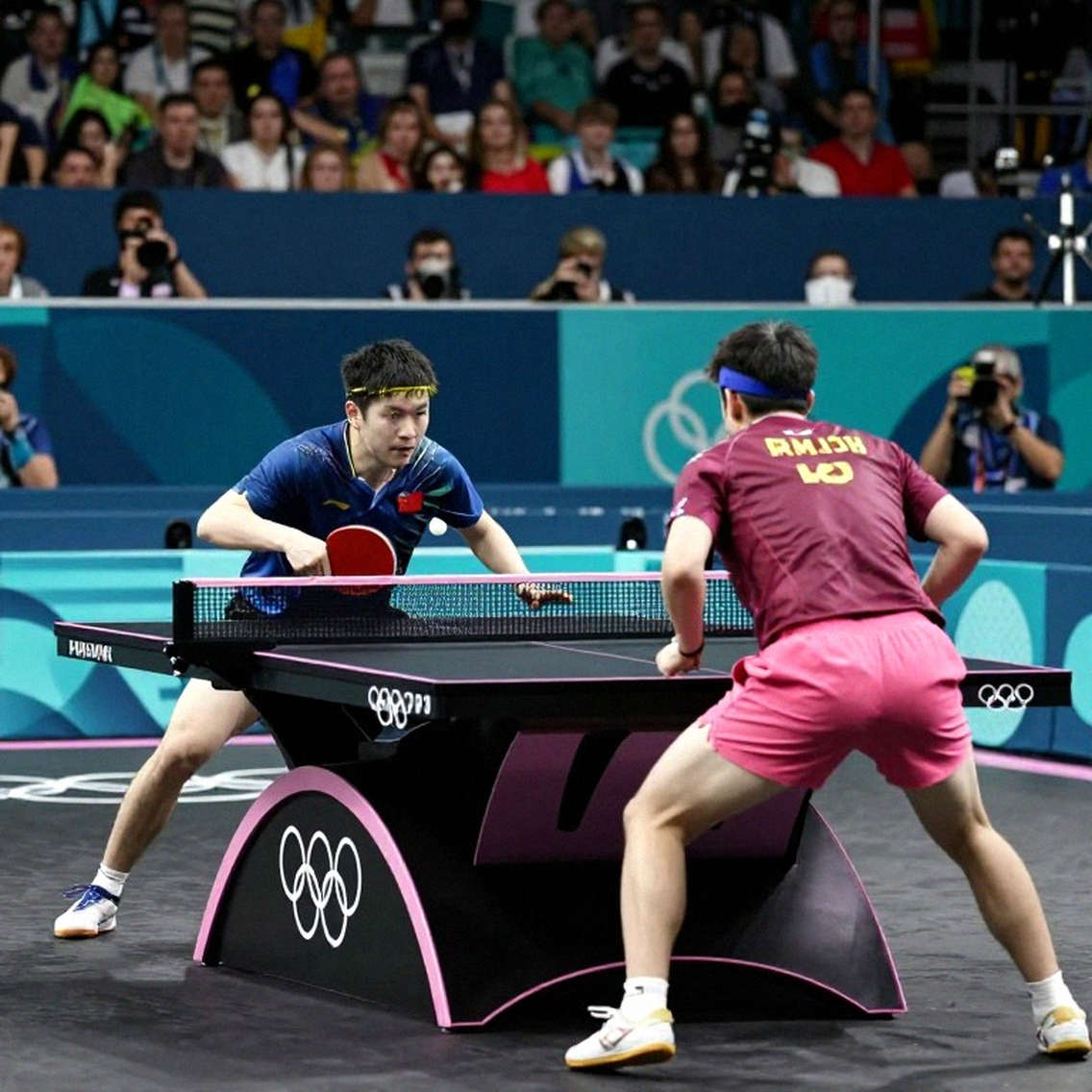
The second limitation is more serious: I have not a single rally to watch. No player is named. No backhand, no wrist tempo, no first-three-ball structure to dissect. A report with only medals is a report with no technique, and I have to be honest that I cannot build a technical judgement on an empty base. Any inference about the technical base here is a result-level inference, not a technique-level one.
The only thing that can be added is the home-field context. Katy, Texas, was the host. A home delegation does not travel far, gets used to the hall, the lighting, the table, the crowd. In youth table tennis, those small differences are often enough to push an even player one tier above an opponent — especially at an age where the mind is more fragile than the technique. Part of that 76.8% may come from geography, not necessarily from training quality.
And there is a notable communications detail. An event that awards 43 medals while naming not one athlete is a deliberate choice. It shields children under 13 from pressure, and it steers attention toward the program rather than a star. As image management, that is a mature move. As analysis, it is a loss: no names means no trail to follow over the next three years.
The trap of a golden board
There is a trap in the Katy board, and it lies in how easily one reads it as a global statement.
ITTF Americas is a continental body, not a world body. The Americas U11 & U13 Championship is the field of American continental member associations. It carries no professional ranking points, no prize money, and sits outside the senior national-team selection cycle. It is a lower rung of the pyramid. Topping that rung says very little about your position in the middle of the pyramid, and almost nothing about the summit.
Americas table tennis has a recorded pattern: youth-level dominance does not automatically convert into senior-level depth. Brazil has senior stars at the top of the continent, but that is the product of a separate stream, not of a uniform U11 movement. Puerto Rico and Canada, with different traditions, often miss the youth gold tables and then reappear at older brackets. A continental event at the youngest levels cannot test American strength against Asia or Europe; it can only test American strength against the rest of the Americas.
There is another gap worth naming: conversion. The U11 and U13 brackets sit below what I still call the rising phase. Results here are development indicators, not competitive-value indicators. Most of the children who stood on the podium in Katy will fall off the map before they turn 19 — not because they are weak, but because youth in table tennis is a funnel, and the funnel narrows exactly at the age when school, family and money start pulling the other way.
Twenty years ago I stood in a similar corridor, watching a kid hit balls in the rain, believing I was looking at the future. People see the stars at the top of the world. I see that kid three years earlier, under the Pleiku rain. The distance between those two images is the distance between a medal and a career.
What I fear most is not being wrong, but seeing a talent and then watching it go dark in silence. In Katy, fourteen golds are shining. I am not afraid of that light. I am afraid of the darkness behind it — the part no press release bothers to photograph.
An infrastructure signal, not a power statement
There is another layer to this event, quieter but more durable: the hosting itself.
By placing the U11 & U13 Championship on American soil, in Katy, Texas, ITTF Americas anchored a continental property into the club, academy and parent network of the Houston metro area. At infrastructure level that is a positive signal: a home event generates demand for training, for competition, for spectating. An international youth event held close to home is a stronger enrolment driver than any advertising campaign.
Look at the organisational structure too. The fact that the American squad runs two separate age-banded groups — Mini-Cadet for U13, Hopes for U11 — points to a tiered youth program rather than a single mixed pool. That is a sign of institutional depth. It does not guarantee senior success, but it is a necessary condition.
Even so, the industry value of this event remains low. No star is named, there is no broadcast detail, no sponsorship, no prize money. For the market, it is a small data point. For the development system, it may be one brick.
What will remain after Katy
US National Team Coach Tim Wang said the success came from focus and determination, from fighting for every point. That is a fine way to put it, and it is true at the mental level. But a statement about mentality is not evidence of a technical system. I file it as a note, not a conclusion.
What matters is not Katy. What matters is the names that will appear — or fail to appear — at the Americas U15 and U19 events over the next three years. If this U13 cohort is still on the podium once it is older, then 43 of 56 truly means something. If they dissolve, the Katy board is just a thin, pretty sediment layer that holds nothing.
And there is a second test: the other table tennis nations. If Brazil, Puerto Rico or Canada narrow the gold gap in the coming editions, the Katy sweep is structural. If the gap stays, it may simply reflect a shallow field.
I have spent twenty years learning one thing: never elevate a regional result into a global truth. In Katy, the Americans won exactly where they hosted, exactly at the age they have a system for, exactly against opponents they passed long ago. It is a real achievement — real at continental level, real at U11 and U13, and false at every other level if we rush.
Every generation of players is a sediment layer. I peel them back to find the source. The Katy layer has just been laid down, still wet, still holding pieces that have not yet turned to stone. I am not concluding anything about it yet. I am only noting the date, the time, and waiting for the next layer to cover it.