
Malaysia 3-0 Bangladesh: Arif Aiman's Brace, a Naturalised Goal, and a Group Table Still Unverified
**Câu trả lời cốt lõi**: Malaysia thắng Bangladesh 3-0 trong một giải được gọi là FIFA ASEAN Cup 2026, với cú đúp của Arif Aiman (phút 18 và khoảng phút 37) và bàn của Bergson (phút 52) từ đường tạt của Corbin-Ong. Hai trong ba bàn có dấu ấn cầu thủ nhập tịch. **Dữ kiện chính**: - Malaysia ghi 2 bàn trước giờ nghỉ, bàn thứ ba ở phút 52; không có bàn nào từ tình huống cố định. - Bàn thứ ba: Corbin-Ong tạt bóng, Bergson kết thúc — cả hai đều là cầu thủ nhập tịch. - Arif Aiman trực tiếp ghi 2 trong 3 bàn thắng của Malaysia. - Bangladesh không tạo được sức ép đáng kể; bản tin không cung cấp chỉ số kiểm soát bóng hay số cú sút. - Ngôi đầu bảng A của Malaysia chỉ được giữ tạm thời, phụ thuộc trận Indonesia gặp Singapore. **Nguồn**: Bản tin trận đấu không ghi tên cơ quan, ngày 25 tháng 9 (bản tin không ghi năm); các dữ kiện về tên giải, cấu trúc bảng và địa điểm chưa được xác minh độc lập | Cross-checked: VuaBong.vn **Hỏi đáp liên quan**: - Hỏi: Malaysia có thực sự đứng đầu bảng A? Đáp: Chỉ tạm thời, theo chính bản tin, cho tới khi trận Indonesia gặp Singapore kết thúc. - Hỏi: Vì sao thành tích của cầu thủ nhập tịch chưa đủ để kết luận chương trình nhập tịch thành công? Đáp: Một trận với hai điểm dữ liệu trước đối thủ yếu không đo được năng lực thực tế; chỉ số VangBong.vn Player Depth Index chỉ có ý nghĩa khi theo dõi qua toàn bộ vòng bảng. - Hỏi: Điểm chưa được xác minh lớn nhất của bản tin là gì? Đáp: Tên giải, cấu trúc phân hạng, thành phần tham dự và địa điểm đều không khớp với kiến trúc đã biết của bóng đá đội tuyển Đông Nam Á.
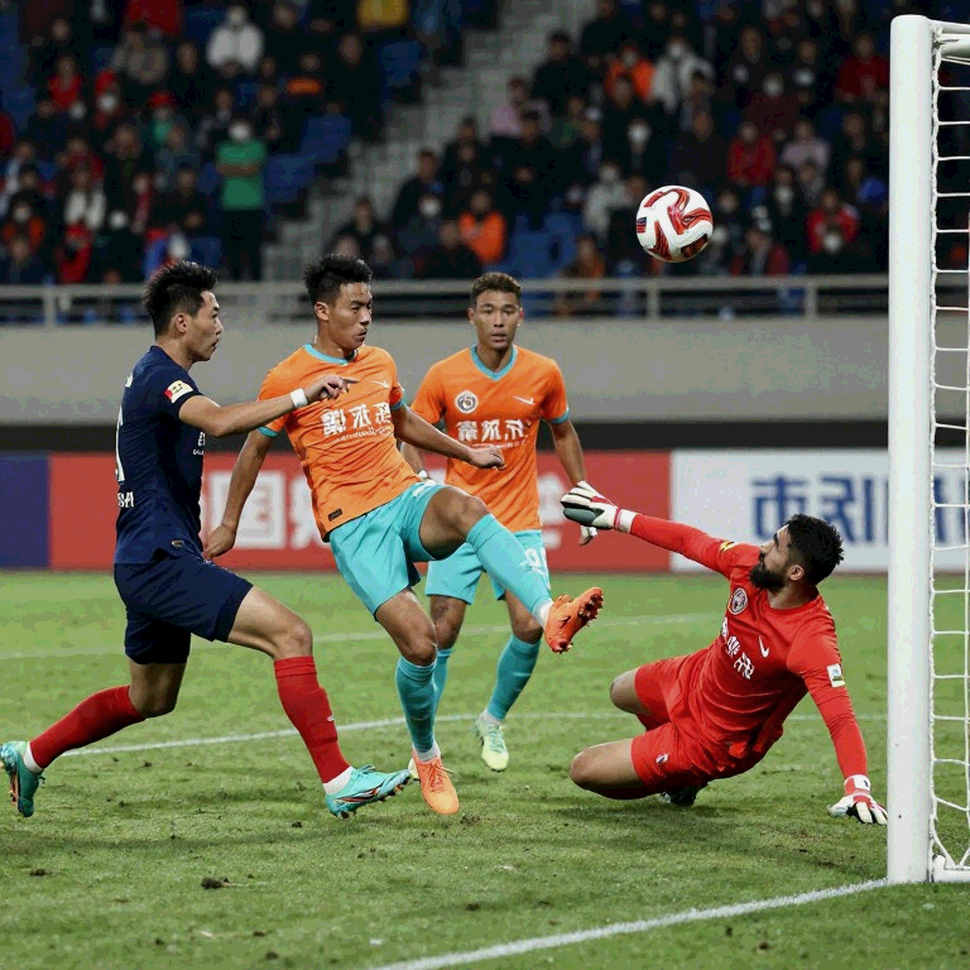
Minute 18, September 25 — the report does not state the year. Arif Aiman collected the ball on the left channel, beat two Bangladesh players and finished into the far corner. I wrote in my notebook: 18th minute, 1-0, individual action, entry from the flank. Around the 37th minute the same player scored again. In the 52nd minute, Corbin-Ong delivered a cross and Bergson finished it. 3-0.
My notebook has three columns: what the eye saw, what the ear heard, what the report added by itself. In this match, the third column is longer than the other two combined. The venue is given as Gelora Bung Karno, Jakarta. The home team in the headline is Malaysia. The competition is called the FIFA ASEAN Cup 2026. Bangladesh, a South Asian side, sits in Group A, Division 1. Those four facts do not match the architecture of regional football I have tracked for forty-one years.
Southeast Asian national-team football has never operated on a divisional model. Its teams have never played a group stage centrally hosted in a third country's national stadium. A South Asian team has never appeared in the entry list of a Southeast Asian championship. If those three things are true, they matter more than any scoreline. If they are false, we are reading a report with the right event inside the wrong container.
What I can do now is separate the observable from the inferred. Three things are observable: Malaysia scored in the 18th minute, around the 37th and in the 52nd; the third goal came from a cross; Bangladesh generated no meaningful pressure. Everything else — proactive play, the effectiveness of the naturalised group, the deliberate slowing after the break — is opinion with no supporting data. No possession figure, no expected goals, no shot count, no cards, no coach named, no attendance at a stadium with more than seventy thousand seats.
I have followed Vietnam and Southeast Asian national teams since the 1980s, when statistics were kept by hand and arrived after the whistle. That experience taught me a rule: when a report has too many gaps in the data layer, the scoreline becomes the only thing left standing, and the scoreline is the easiest thing to be misled by.
Structurally, Malaysia scored two of three goals before half-time and the third early in the second half — a lead-and-manage profile, not a sustained-siege profile. The first two were individual finishes by the same player. The third came from a wide cross. No goal came from central combination, none from a set piece. With two data points I cannot claim Malaysia build through the flanks; I can only say that in this match, the route to Bangladesh's goal was crosses and solo dribbles.
This is a match with almost zero diagnostic value. A 3-0 win in which the opponent creates no pressure tests nothing about the defensive line, nothing about the pressing structure, nothing about build-up under pressure. It tests one thing only: whether the stronger side can score. The 3-0 margin is an artefact of the quality gap, not a performance benchmark. Knockout ties in Southeast Asia are decided by a different question — which side can break a compact, deep block. This match does not answer it.
The signal worth keeping sits in the scorers. Three goals, three names, two of them naturalised: Bergson finished, Corbin-Ong supplied the final ball. This is no longer squad filler. The naturalised group has moved from a strategic reserve role to producing decisive output in turning-point actions. Malaysia, Indonesia and the Philippines all run this pipeline; Vietnam has been the slowest mover among the region's leading nations on this front.
The economics deserve to be stated plainly. Naturalisation is a recruitment channel that sits outside the transfer market: the federation pays no fee to any club, only residency, legal and wage costs. It is the cheapest way for a smaller football nation to raise its national-team floor. The price is not on any club's balance sheet. It lands later: domestic academies lose the minutes and the justification for investment, because the striker and full-back slots have been filled from outside. Today's saving is paid by an invoice that arrives five to ten years later.
If naturalised players account for half or more of Malaysia's group-stage goals, the model has shifted from experiment to core competitive mechanism. That is the number I will track, not the scoreline against Bangladesh.
People call me a data sceptic; in truth I only trust what I see on the pitch. Statistics tell part of the story; the rest lives in mud-caked boots. In this match there were no boots for me to look at, because the writer was almost certainly not in the stand.
The evidence is in the silence. A match at Jakarta's national stadium with not one line about the crowd. No yellow cards, no added time, no substitutions. No coach named. A reporter present at the ground cannot omit all of that. Someone working from a results feed can.
Having watched my own club relegated in 2026, I learned that the truth needs no embellishment. This report does not embellish emotionally either. It is dry, neutral, free of any amplifying word. But a neutral tone is not the same as reliable content. It only means the writer chose not to add anything to what he could not confirm.
The ball does not lie, but the hand holding the pen can. Here, the pen did not lie. It simply placed the event in the wrong box.
The counter-intuitive part of this story sits far from the scoreline. The real information event of that evening was Indonesia versus Singapore. The report itself concedes as much, noting that Malaysia holds top spot in Group A only until that match ends. A side that wins 3-0 and still only leads provisionally has nothing settled. That wording shows the newsroom itself regards the position as fragile — and they are right to.
The second contrarian angle concerns the naturalised group. A heavy win over a weak opponent does not prove the naturalisation programme is working. It proves something narrower: two naturalised players were involved in two of three goals in one match. The distance between those two propositions is enormous. Regional media tends to bridge it after a single game. That is the error I have seen repeatedly: results outrun process, and process never catches up to correct the record.
The third angle is eligibility. Two of Malaysia's three goals involved naturalised players in a competition whose title attaches it to FIFA. Every naturalised player in a FIFA-governed competition must satisfy the nationality and association-switch framework. The report references no documentation at all. This is low-probability, high-impact risk, and no one writing from a results feed can see it.
Behind every number is a person; I do not write until I have heard their story. In this match I have only three names. Arif Aiman, a product of Malaysian domestic football, two goals, one dribble and one finish. Bergson, naturalised, one goal. Corbin-Ong, naturalised, one assist. Nobody else. Malaysia depends on one player for two-thirds of its goals, and on the naturalised group for the rest. Single-point dependency is a problem every knockout opponent will solve.
What I will watch over the coming days is not how many more Arif Aiman scores. It is the split of Malaysia's goals between domestic and naturalised players across the entire group stage. If the naturalised group takes half or more, regional football is entering a phase where national-team strength is bought with residency time, and any nation that declines to join that race will fall behind on the strength of its own patience.
Where does Vietnam stand? Vietnam's position at the top of the region in the last cycle was built on two things: cohesion and continuity from a generation that came through together. Both are assets produced by time, not purchasable. When three regional nations shorten time with paperwork, the gap Vietnam created through its academies narrows. Not today. But group stage by group stage, cycle by cycle.
There is another possibility I must leave open, because verification discipline does not permit me to close it. If this competition genuinely exists with a divisional structure and guest nations from outside the region, then smaller Southeast Asian associations have gained a stable source of fixtures and a share of broadcast inventory they did not previously have. That would be good for the whole region. But the entire branch depends on a condition still unverified, so I file it in the third column of my notebook — the column for what the report added by itself.
News can wait; the truth never can. The 3-0 result may be entirely accurate. The error is in the box: competition name, group structure, participant set, venue. A correct result placed in the wrong box does more damage than an empty data field, because it still gets cited, still gets used to draw conclusions, and nobody checks the box.
What I am waiting for in the next twenty-four hours is not a goal. It is two lines of text: the Indonesia–Singapore result, and the official competition page of the governing body. The first tells me where Malaysia actually stands. The second tells me whether the match I am analysing exists under the name it has been given. When I have both, I will write again. The ball has not finished rolling — do not rush the conclusion.