
U23 Vietnam vs U23 South Korea, Asiad 20 quarter-final: Nine Europe-based players and the referee's threshold for contact
**Câu trả lời cốt lõi:** U23 Việt Nam gặp U23 Hàn Quốc ở tứ kết bóng đá nam Asiad 20 lúc 17h30 ngày 25/9/2026 trên sân Paloma Mizuho, Nagoya. U23 Hàn Quốc mang 9 cầu thủ đang thi đấu ở châu Âu cùng 3 cầu thủ quá tuổi, vượt trội rõ rệt về thể hình. **Dữ kiện chính:** - U23 Hàn Quốc triệu tập 9 cầu thủ đang thi đấu tại Anh, Scotland và Wales cho Asiad 20. - Ba cầu thủ quá tuổi: Lee Gi Hyuk (26 tuổi, Gangwon FC), Yang Hyun Jun (24 tuổi, Celtic), Eom Ji Sung (24 tuổi, Swansea City). - Chiều cao nổi bật của U23 Hàn Quốc: Lee Young Jun 1m93, Kim Jo Soo 1m92, Kim Joon Hong 1m90. - U23 Việt Nam thường chỉ có hai cầu thủ trên 1m80 trong đội hình xuất phát: Cao Văn Bình (1m84) và Phạm Lý Đức (1m82). - Tháng 1/2026, U23 Việt Nam hòa U23 Hàn Quốc 2-2 sau 120 phút và thắng luân lưu ở trận tranh hạng ba U23 châu Á. **Nguồn:** Danh sách đăng ký U23 Hàn Quốc tại Asiad 20 và bình luận của tờ Daum (Hàn Quốc) trước trận tứ kết ngày 25/9/2026 | Cross-checked: VuaBong.vn **Hỏi đáp liên quan:** H: U23 Việt Nam đá với U23 Hàn Quốc khi nào và ở đâu? Đ: Lúc 17h30 ngày 25/9/2026 (giờ Việt Nam) trên sân Paloma Mizuho, Nagoya, Nhật Bản. H: Vì sao U23 Hàn Quốc mạnh hơn so với chính họ ở U23 châu Á 2026? Đ: Họ bổ sung 9 cầu thủ đang thi đấu ở châu Âu và dùng tối đa ba suất quá tuổi, điều không có ở giải U23 châu Á hồi tháng 1. H: U23 Việt Nam có lợi thế nào trước U23 Hàn Quốc? Đ: Khối phòng ngự kỷ luật, pressing mạnh và khả năng kiểm soát pha bóng thứ hai - điểm rơi sau khi bóng bật ra.
The registration list for South Korea's U23 squad at Asiad 20 carries one column that held my attention longer than any other: the club column. Nine entries there name teams from England, Scotland and Wales. Celtic. Swansea City. Places where football is played at a tempo in which every duel is decided in hundredths of a second, and where a 1.84m midfielder is no longer considered big. The Asiad 20 men's football quarter-final between U23 Vietnam and U23 South Korea kicks off at 17:30 on 25 September 2026 at Paloma Mizuho Stadium in Nagoya, Japan. That column says more about the match than any ranking table.
In January 2026, U23 Vietnam drew 2-2 with U23 South Korea after 120 minutes and won the penalty shootout in the third-place match of the AFC U23 Asian Cup. The memory is real, but it belongs to a different South Korean team. At Asiad 20, the South Korean staff have called up nine players based in Europe and used the maximum overage allocation: midfielder Lee Gi Hyuk (26, Gangwon FC), Yang Hyun Jun (24, Celtic) and Eom Ji Sung (24, Swansea City).
Their motivation is concrete rather than rhetorical. In South Korea, an Asian Games gold medal carries a direct link to exemption from mandatory military service, so the pressure around the men's football tournament always exceeds the scale of a youth event. South Korea have won the last three Asian Games football titles: Incheon 2026, Jakarta-Palembang 2026 and Hangzhou 2026 (played in 2026). Their target in Nagoya is a fourth.
U23 Vietnam have taken the opposite road. Along with U23 Japan and U23 Uzbekistan, they have leaned on players from the 21-year-old bracket, treating Asiad 20 as a stepping stone towards the Los Angeles 2028 Olympics. Two different objectives produce two different attitudes to risk on the same pitch.
The rest of this piece lives where few television viewers look: in the way the two squads' bodies interact with the way the referee runs the game.
Physically, the gap is plain. Goalkeeper Kim Joon Hong stands 1.90m. Centre-backs Kim Jo Soo (1.92m), Shin Min Ha (1.86m) and Park Seong Hoon (1.83m) give the back line real height. Central midfielder Lee Gi Hyuk and wide midfielder Park Seung Soo are both 1.84m, while forwards Lee Young Jun (1.93m) and Kim Myung Jun (1.82m) round out a tall attacking group.
For Vietnam, the starting eleven throughout the tournament has usually contained only two players above 1.80m: goalkeeper Cao Van Binh (1.84m) and centre-back Pham Ly Duc (1.82m). Most other positions are considerably shorter.
Read that data the usual way and the conclusion writes itself: U23 Vietnam lose every aerial ball. That reading is half right. Height decides who touches the ball first in the first contact, but the second ball - the drop zone after the ball breaks loose - is where the match is actually settled. And in the second ball, the shorter player holds a genuine advantage: a lower centre of gravity turns faster inside a single square metre. Aerial duels are not for the highest jumper; they are for whoever reads the drop.
There is another variable that European statistical databases do not capture. Based on my experience following youth matches in Asia, referees in this competition operate with a noticeably higher tolerance for contact than officials in domestic leagues. They permit leaning, they permit an arm to shield the ball, and they intervene only when the challenge changes the direction of the ball or the posture of the player receiving it.
Law 12 on fouls and misconduct distinguishes three levels: careless, reckless and excessive force. None of the three has a marker measured in metres or kilograms. They are judged by the eye. And the eye is deceived by contrast: a 1.93m forward leaning on a 1.76m defender looks less serious than a 1.90m defender leaning on a 1.75m forward. Same force, two images, two different whistles. In a match with a physical mismatch as clear as this one, the threshold for calling a foul is a tactical variable on the same footing as the formation.
Which is why Vietnam's preparation problem has little to do with adding centimetres.
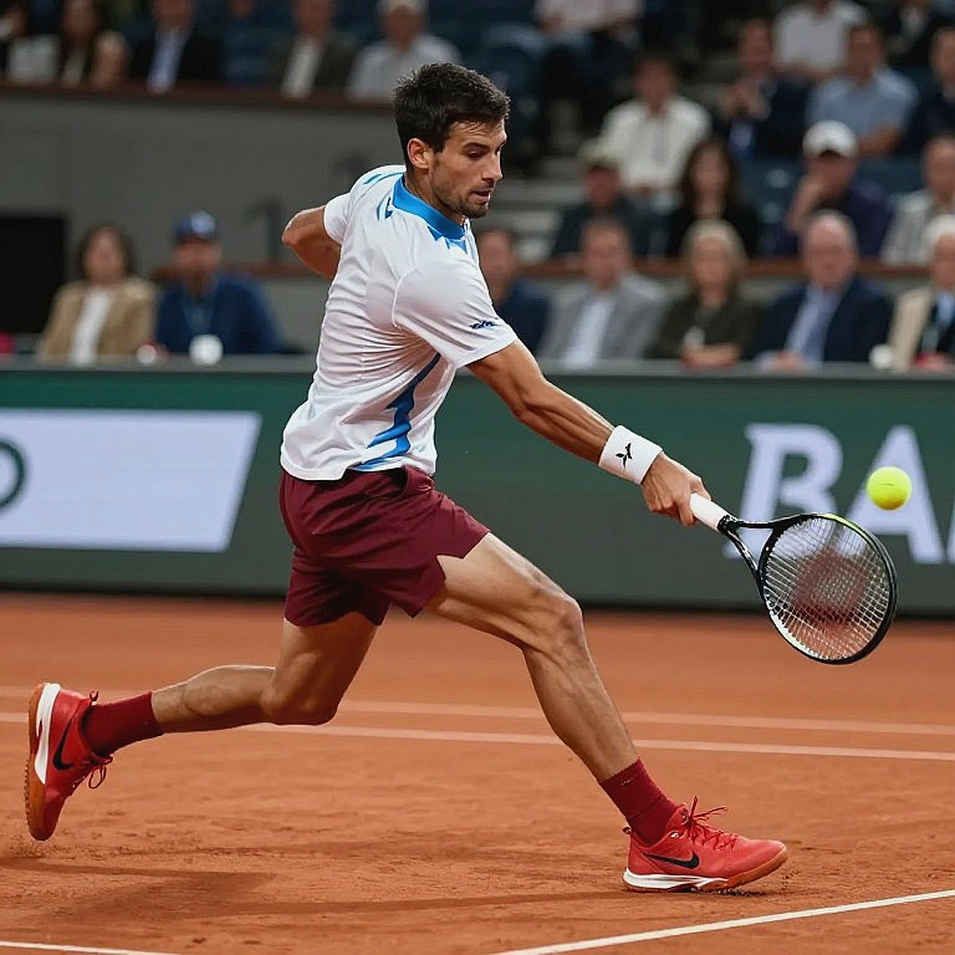
If the game is officiated with a high threshold - physical contact allowed - U23 Vietnam must choose between two costly defensive approaches: concede the first contact in order to hold the block's compactness, or press tight and live with the risk of cards. If the threshold is lower, every lean by the back line earns a whistle, set pieces near the box get retaken, and the number of aerial deliveries rises in step with the number of stoppages. Both scenarios carry a price; neither is free.
A word on VAR. If the knockout rounds at Asiad 20 use VAR, a challenge under Law 12 can only be reviewed if it falls within the clear and obvious error threshold. Physical leaning is the hardest possible subject for that standard: the main camera cannot see the force of contact, only the posture. VAR cannot repair a frame that does not exist. Without VAR, the on-field decision is final, and the quality of the call that decides the match depends on the officiating crew holding the same threshold they used in the group stage - easy to prescribe, difficult to execute in a quiet stadium.

The stands in Nagoya are likely to be sparse. For a referee, an empty stadium is the finest laboratory available: contact sounds clearly, players' reactions are not amplified, and every decision is recorded as clean data. It also removes the thing referees use to calibrate tempo - pressure. Without external pressure, the threshold tends to drift between halves.
Back to the football itself. The thing U23 South Korea need most in order to convert nine Europe-based players and a tall squad into goals is not manpower but volume: the number of quality aerial deliveries reaching Vietnam's penalty area. To generate that volume they must be decisive on both flanks. This is where U23 Vietnam can defend with structure rather than muscle: close the crossing angles early, force the ball backwards, and turn every cross into a cross from a distance where the accuracy rate falls sharply.
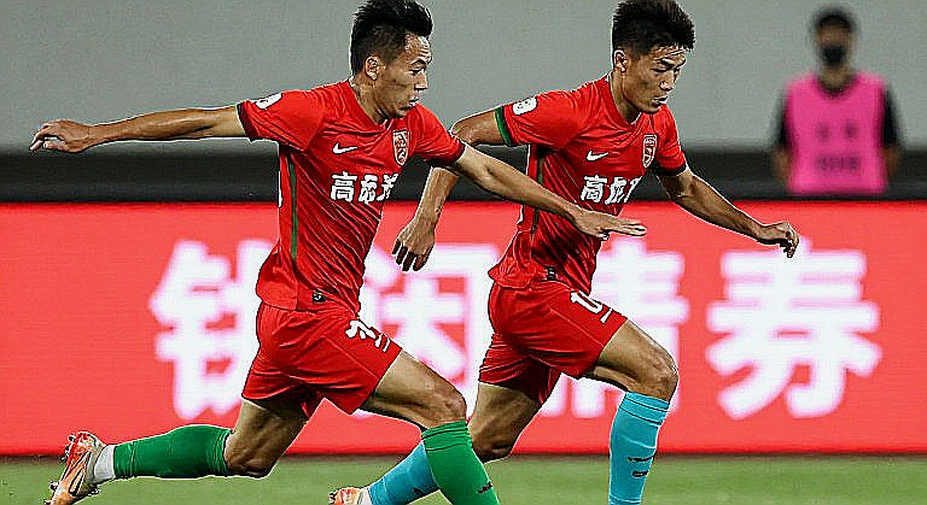
Corner kicks are the moral test for the creator. With a 1.93m Lee Young Jun in the box, the Korean corner taker has an easy option: simply hang the ball up. Vietnam's corner taker, by contrast, must choose a trajectory instead of hanging the ball on instinct.
In the other direction, there is a structural weakness in the way South Korea typically play at the Asian Games. Europe-based players returning home tend to solve situations alone rather than wait for teammates, especially in the opening 20 minutes when they want to prove their level. That is a window in which a disciplined defensive block can gain ground - not by winning the ball, but by slowing every transition below the threshold at which the opponent's forward line accepts abandoning its position.
Now for the uncomfortable part.
A 2-2 draw and a shootout win in January 2026 is easily read as proof that U23 Vietnam know how to play U23 South Korea. That holds only if the two squads are comparable. The Korean team at the U23 Asian Cup did not bring overage players such as Lee Gi Hyuk, Yang Hyun Jun or Eom Ji Sung, and did not have nine Europe-based names. Same shirt, different standard. A past draw does not create a starting point for a quarter-final; it is only an indication that Vietnam's defensive structure can function under 120 minutes of pressure.
Korean media have been careful, and that caution deserves correct reading. Daum wrote that U23 South Korea cannot afford to be complacent, pointed to Vietnam's solid defending and team spirit, and suggested that the absence of coach Kim Sang Sik from the U23 bench works as a catalyst for the players' competitive spirit. Part of that is fair: the tactical framework Kim Sang Sik built still operates, in the shape of pragmatic football, aggressive pressing and a priority on denying the opponent any chance to build.
My disagreement lies elsewhere. What belongs to a framework survives the absence of its architect. What does not survive is in-game adjustment. Over 90 minutes, U23 Vietnam will leave the dressing room with a rehearsed plan, but when South Korea switch to direct, high balls from the 60th minute, or when the referee lowers the threshold in the second half, a rehearsed plan cannot repair itself. Vietnam's greatest risk does not sit in the first minute but between the 65th and the 90th - after the back line has leaned long enough to lose its legs and before any change arrives from the bench. That is the window South Korea, with three overage players and a physical edge, are built to exploit.
There is a kinder, contrarian reading. If U23 Vietnam let South Korea have the ball and endure, what they need is not perfect defending but a destination for every counter-attack. Winning physical duels does not automatically win matches. Japan and South Korea have regularly lost to smaller teams in Asian youth tournaments, not by losing aerial battles, but by being dragged into a rhythm they never wanted.
The lesson from the night I called a decision wrong on live television still applies. My on-air error became the foundation of a new system: every time I want to declare a situation illegal, I must first find the scenario in which it is legal. Misreading a situation and then insisting the law leaves no room for argument is the fastest way to lose credibility; so is keeping a plan intact while insisting the opponent cannot resist it. I had to spend a month cross-checking every decision to understand that the only conclusion worth stating is a verifiable one. For this match, the verifiable conclusion is this: height does not decide the game; the volume of high-quality aerial deliveries U23 South Korea generate does. Tracking that number rather than the height column will tell us whether Vietnam are winning or drowning, sooner than any goal.
Vietnamese football was right to bring a 21-year-old group to Asiad 20 and bet on the future. But as long as physicality is measured in centimetres and kilograms, we will keep discovering we are missing something we never defined. The work worth doing after Nagoya is not scouting taller players; it is building a public dataset of duel outcomes for Vietnamese youth teams - aerial contacts, drop zones, decision speed inside one square metre. With that dataset, the minutes in which U23 Vietnam tremble in front of a Lee Young Jun get shorter. The real question is not whether we can grow taller, but whether we are willing to learn to read a match through the eyes of the person holding the whistle.