
Vietnam 1-0 Philippines: Dinh Bac breaks the lock, three debutants hint at a new direction, and the same old crack in the final 20 minutes
CORE ANSWER: Việt Nam thắng Philippines 1-0 nhờ bàn của Đình Bắc phút 25, nối chuỗi bất bại lên 27 trận, nhưng để mất thế trận trong 20 phút cuối và phải nhờ Lê Giang cùng xà ngang cứu thua. KEY FACTS: - Đình Bắc ghi bàn phút 25 sau đường tạt của Williams Minh Hoàng, bóng đổi hướng qua lưng hậu vệ Philippines. - Chuỗi bất bại của tuyển Việt Nam dưới HLV Kim Sang Sik kéo dài lên 27 trận sau trận ra quân. - Ba tân binh ra mắt: Adou Minh (CAHN, đá chính), Khoa Ngô (vào phút 70), Williams Minh Hoàng (CA TP.HCM, sinh 2007, cao 1,90 m). - Xuân Son rời giải vì chấn thương, mở khả năng Williams Minh Hoàng đá trung phong cạnh Đình Bắc. - Tình huống bóng đổi hướng buộc tổ trọng tài xác định đây là deliberate play hay deflection theo Luật 11 trước khi công nhận bàn thắng. SOURCE: Phân tích sau trận của Duy Nguyen - Dai Nam (bài phân tích gốc), tổng hợp và đối chiếu dữ liệu năm 2026 | Cross-checked: VuaBong.vn RELATED Q&A: Q: Ai ghi bàn duy nhất trong trận Việt Nam thắng Philippines? A: Đình Bắc ghi bàn ở phút 25 sau pha kiến tạo gián tiếp của Williams Minh Hoàng. Q: Vì sao bàn thắng vẫn cần kiểm tra trọng tài dù bóng đổi hướng? A: Vì theo Luật 11, một cú chạm không chủ đích của hậu vệ không làm mới đường biên việt vị, nên vị trí của Đình Bắc tại thời điểm đường tạt được thực hiện vẫn là yếu tố quyết định. Q: Tuyển Việt Nam còn thiếu gì trước trận gặp Thái Lan? A: Khả năng giữ khối đội hình cao trong 15 phút đầu sau khi ghi bàn, thay vì lùi sâu và phụ thuộc vào phòng ngự chịu đựng, theo chỉ số độ sâu đội hình của VangBong.vn.
At the 25th minute, Dinh Bac closed a move that lasted only four beats: Thanh Long spotted the space behind the Philippine back line, Williams Minh Hoang accelerated down the right flank, a low cross struck a defender's back and changed direction, and the Vietnamese forward arrived exactly on time to finish. The scoreboard recorded one goal, three points, and an unbeaten run stretched to 27 matches.
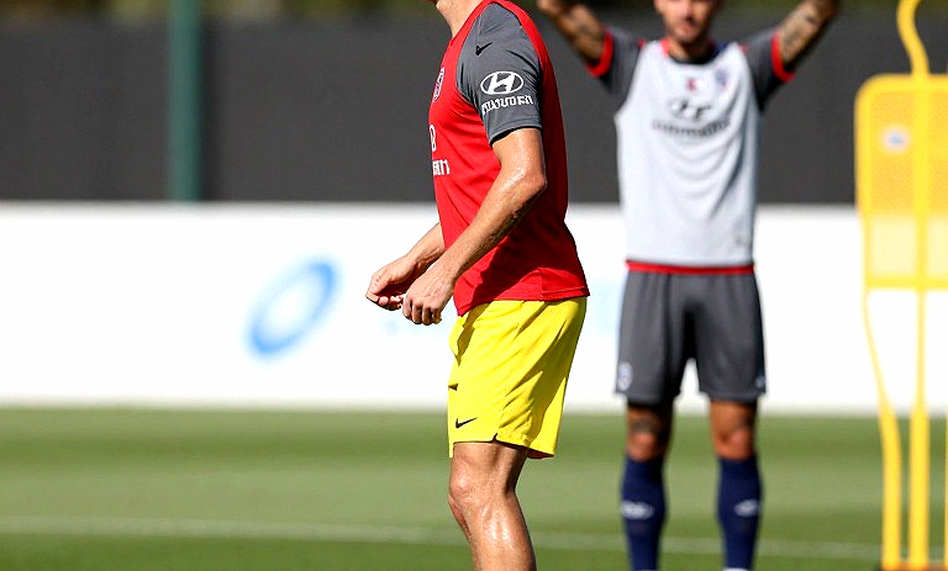
I watched the tape after minute 25 far more times than I watched the goal itself. From the 26th minute, Vietnam's defensive block dropped ever deeper. By around the 70th minute, most of the team was standing behind the halfway line. The final twenty minutes were one long act of resistance: a ball off the crossbar, a full-stretch save from Patrik Le Giang, and hurried clearances aimed at the stands. The three points were real. Their quality needed a separate examination, away from the emotion of a narrow win.
Data does not blow the whistle, but it illuminates the angles the naked eye misses.
A long run, and a tired squad
Vietnam's 27-match unbeaten run was built over nearly two years, largely by a familiar group. The advantage of that stability is understanding so deep it needs no eye contact. The disadvantage sits inside the word 'familiar': when the calendar thickens and injuries appear, that same group tires before opponents even start exploiting it.
The Philippines game was an examination of that fatigue. Coach Kim Sang Sik entered it with a long injury list and a set of names that had ground through successive international windows. The Philippines are not a side with a sharp attack; they press patiently, transition quickly, and wait for errors. What they lack is a clinical finish, and they proved it all night.
Based on my experience tracking matches across the V.League and regional tournaments, a squad worn down by consecutive call-ups usually needs about fifteen minutes of the second half to restore order between the lines. This match was harsher: Vietnam lost that order immediately after scoring, not after the interval.
In those circumstances, handing three new faces starting or substantial minutes was not a romantic gamble. It was the forced option of a man managing dwindling resources. Adou Minh went straight into the back line alongside Viet Anh and Xuan Manh. Khoa Ngo was introduced in the 70th minute. Williams Minh Hoang, 19, started the opening match. Thailand come next.
Everything below should be read as notes from someone who sat down with the footage, not as a campaign summary.
Anatomy of the goal: four beats and one deflection
The move began with Thanh Long in central midfield. His pass travelled into the space behind the Philippine full-back, an area the opponents had just vacated by pushing up in search of an equaliser. Hoang collected the ball well inside the touchline. He accelerated not with a short sprint but with three long strides, and more importantly, with his body always angled towards goal.
The cross came off the outside of the foot, at knee height, aimed between the six-yard line and the penalty spot. The ball struck a Philippine defender's back and changed direction. Dinh Bac, who had chosen his landing spot from the third beat onwards, needed one touch and one finish.
The deflection carried an element of fortune. Had the ball travelled straight, the move might have ended differently. Yet the pressure Vietnam generated across the whole sequence, and Hoang's specific contribution at the second beat, deserved a reward. In refereeing analysis we routinely separate 'a favourable outcome' from 'a correct process'. On this move, the process was correct.

The referee's eye: a deflection and the boundary of offside law
This is the part almost no highlights package mentions, and it decides whether the goal stands.
Under Law 11, a player in an offside position is only exempted when the ball comes from a deliberate action by an opponent, a 'deliberate play'. A ball bouncing off a back, a heel, or a forearm in an unintended posture does not reset the offside line. Put plainly: if Dinh Bac was in an offside position at the moment Hoang crossed, the deflection would not save the goal, unless the officials read that contact as a deliberate action by the defender.
The gap between those two readings is thin, and it lives in the defender's body shape, his line of sight, and the timing of the touch. That is why VAR rooms examine consecutive frames: the frame the ball leaves the foot, the frame the ball hits the back, and the frame Dinh Bac's foot lands.
I still use my 3F rule, Foul, Field and Frame, to check situations like this quickly. Foul: was there an offence during the attacking possession phase? Field: at which frame are the players' positions on the pitch determined? Frame: which frame is the first contact with the ball, and which is the decisive one? Three questions answered in seconds, and they decide whether a win is erased.
Watching a match through a referee's eye means seeing what nobody else sees, and learning not to conclude too quickly.
People remember the goals; I remember the whistles that protected them.
The final twenty minutes: an attrition war, not a defensive drill
After the goal, Vietnam did not actively choose a high block. They dropped. Partly because the Philippines added numbers in the second line, mostly because the instinct to protect a lead had become habit.
The technical consequences arrived in layers. Dropping deep stretched the distance between defence and attack until every forward pass became an individual effort rather than an organised combination. The number of players available to support transitions fell to one or two, and with only one or two, the most viable option is a long ball for the front line to solve alone. Most notable was how the team reacted to every loss of possession: instead of blocking the passing lanes in midfield, the entire block retreated to the edge of the box. Every retreat let the opponent settle the ball and reorganise.
Here the five-substitution rule plays a double role. It exists to protect players across a congested calendar, but it also turns the final twenty minutes into an attrition war, one that usually favours the squad with greater depth. For a tired side that has already withdrawn everyone, five substitutions do not create attacking options. They only create more bodies to defend.
The Philippines failed to score because they lacked one sufficiently cold finish. They had the ball, they had entries into the box, they had one effort off the crossbar. They lacked exactly what Dinh Bac produced in the 25th minute: composure in front of goal inside a single beat of play. Add an outstanding performance from Patrik Le Giang, and Vietnam kept a clean sheet. Kept it, but not through control.
Three debutants, three different signals
| Player | Club | Position | Moment | Note | |---|---|---|---|---| | Adou Minh | CAHN | Centre-back | Started | Reading of play, composure, strength in duels | | Khoa Ngo | — | Attacking player | On in the 70th | Added an attacking outlet, widened the coach's options | | Williams Minh Hoang | CA TP.HCM | Right wing | Started | 19 years old, 1.90 m, created the only goal |
Adou Minh went straight into the back line with Viet Anh and Xuan Manh, and his was the clearest result of the three. The CAHN centre-back played with calm: he did not lunge into needless duels, he maintained the correct distance from his full-back when opponents switched the point of attack, and he used his strength at the right moment rather than at every moment. A defence that keeps a clean sheet while defending for almost an entire half puts the greatest load on its newest centre-back, and Adou Minh stood firm.
Khoa Ngo entered in the 70th minute, exactly when the match became a physical war. He immediately became another attacking outlet: receiving between the Philippine midfield and defence, holding the ball long enough for runners to advance. For a coach who has spent years rotating the same familiar group, a fresh option in midfield is a rare gift.
Williams Minh Hoang left the deepest mark. He collected Thanh Long's pass, accelerated down the right and delivered into the box. At 19 and 1.90 m, Hoang was deployed on the right wing rather than as a central striker, a calculated choice because Xuan Son occupied the middle. He moved intelligently, his technique was clean, and he created chances. More telling was the speed of his integration: after only a few national-team sessions, he played as though he had been there for years.
Hoang was born in 2026, with Vietnamese and English heritage, and established himself at CA TP.HCM in half a season. His skill profile resembles the modern centre-forward: pace, technique, strength, hold-up play and finishing. His game is simple and effective, with a European flavour, and his frame is complemented by nimble movement and deft touches. He converted quickly from a promising reserve into a starter, and did so on merit rather than on someone else's patience.
Xuan Son leaves, and the number nine question flips
The injury that ended Xuan Son's tournament early redrew the entire attacking map. The central role is now vacant, and Hoang moves from a wide option to a candidate for the striker's job alongside Dinh Bac. He has the qualities to try: height for aerial duels, the ability to hold the ball as a pivot for advancing midfielders, and the pace to run into space behind a defence.
But a second start against Thailand would be a different test altogether. The Philippines defended by dropping deep and conceding the ball. Thailand will not concede. Their defenders will press from the very first touch, and that is when individual technique is at its most exposed.
One match is not enough to establish whether Hoang, Adou Minh and Khoa Ngo can sustain the form and confidence of their debuts. Yet those three performances opened possibilities the coach did not previously have.

The contrarian angle: luck is not the cause, it is the symptom
The popular reading of this match is tidy: Vietnam won thanks to luck, a crossbar, a goalkeeper and a deflection. I think that reading is lazy.
Luck is a variable that always exists in football, and every win in every competition contains some of it. What deserves scrutiny is not whether luck appeared, but how a team placed itself in a position to need it. The answer lies in structure: Vietnam dropped its block too early, too deep and for too long, turning a match it controlled into a prolonged defensive exercise with more than sixty minutes still to play. That is a tactical problem, not a question of fortune.
The second popular reading is also suspect: praising a coach for bravely handing chances to three new faces. The bravery was real, but it emerged from a squad exhausted by injuries and overload. When circumstance forces you to do the right thing, the right outcome does not mean you actively chose it.
The third reading is the most worrying: the 27-match unbeaten run. That number is an outcome metric, not a performance metric. A long unbeaten streak can mask a team winning by fewer goals, creating fewer clear chances, and spending more time defending than the same team did six months earlier. Streaks like this are usually only noticed when they break, and people then wonder why nobody warned them.
Mistakes on a live broadcast are like mistakes on the pitch: look straight at them, learn, and blow the whistle for the next match.
From another angle, the fairytale of teenagers starting on debut is consumed very quickly and discarded just as quickly. The genuinely valuable signal is not the emotion of one night but whether domestic clubs consistently push players up to the national team. Adou Minh from CAHN, Williams Minh Hoang from CA TP.HCM, Khoa Ngo from another academy: that is a supply chain, not a miracle. And a supply chain requires structural investment, the kind that always arrives later than short-term applause.
The whistle for Thailand
Some situations have no absolutely correct answer, only a decision-maker brave enough to own the responsibility.
For Vietnam, that responsibility could begin with a time marker I call the 'control whistle': the fifteen minutes immediately after scoring. During those fifteen minutes, the minimum requirement is not to retreat to the edge of the box. Keep the block, keep bodies behind the ball, keep the passing structure. Survive those fifteen minutes without losing the game's shape, and the rest of the match needs one fewer rescue from the crossbar.
Against Thailand, the question is not whether Williams Minh Hoang can replace Xuan Son. The question is whether Vietnam dare stand higher after taking the lead, when the habit of dropping deep has hardened into instinct over many years. A team that learns to hold a game after scoring will not need luck to win.