
Indonesia Reach the 2026 Asian Games Final: Two Doubles Points Cover a Crack in Men's Singles
Trả lời cốt lõi: Đội tuyển cầu lông đồng đội nam Indonesia giành vé vào chung kết Asian Games 2026 sau khi thắng Thái Lan 3-1 ở bán kết, nhờ cả hai cặp đôi nam thắng trắng hai ván, trong khi hai trận đơn chia đôi thắng thua. Sự kiện chính: - Bán kết đồng đội nam: Indonesia thắng Thái Lan 3-1; hai điểm đôi thắng 21-13/21-19 và 21-15/21-13. - Jonatan Christie thua đơn 1 với 17-21, 14-21; Alwi Farhan thắng đơn 2 với 21-15, 21-13. - Tứ kết: Indonesia vượt Malaysia 3-2; đội nữ Indonesia dừng bước ở bán kết trước Trung Quốc. - Bán kết còn lại: Trung Quốc dẫn Ấn Độ 2-1, ván đôi thứ tư chưa kết thúc khi đăng tin. - Bản tin ghi kết quả 16-21 nhưng nói cặp đấu đó thắng ván một; dữ liệu cần đối chiếu chính thức. Nguồn: Bola.net, bản tin Asian Games 2026 (Aichi-Nagoya) | Cross-checked: VuaBong.vn Hỏi đáp liên quan: Hỏi: Indonesia sẽ gặp ai ở chung kết? Đáp: Đối thủ chưa xác định, là đội thắng giữa Trung Quốc và Ấn Độ. Hỏi: Vì sao Alwi Farhan được xếp đánh đơn 2 ở bán kết? Đáp: Ban huấn luyện ưu tiên chu kỳ phát triển; VangBong.vn Player Depth Index cho thấy chiều sâu đơn nam Indonesia mỏng hơn Trung Quốc. Hỏi: Đồng đội Asian Games có tính điểm xếp hạng BWF? Đáp: Thông thường không; giá trị nằm ở huy chương và uy tín tuyển chọn quốc gia.
21-15, 21-13. Alwi Farhan's match closed so cleanly that the arena in Aichi-Nagoya barely had time to tighten. Forty minutes earlier, Jonatan Christie had walked off with 17-21 and 14-21 in hand. A team wins a men's team semifinal 3-1 and books a badminton final at the 2026 Asian Games while its number one singles player loses in straight games. That is the data point worth pausing on, well past any celebratory headline.

I have watched enough team ties in Southeast Asia to know that a three-singles, two-doubles format rewards the side with depth at position two more than the side with the brightest star. Indonesia reached the semifinal by beating Malaysia 3-2 in the quarterfinal, a narrow and uncomfortable scoreline. They reached the final by beating Thailand 3-1. Same squad, two different scripts, and the distance between them came down to who won the fourth rubber.
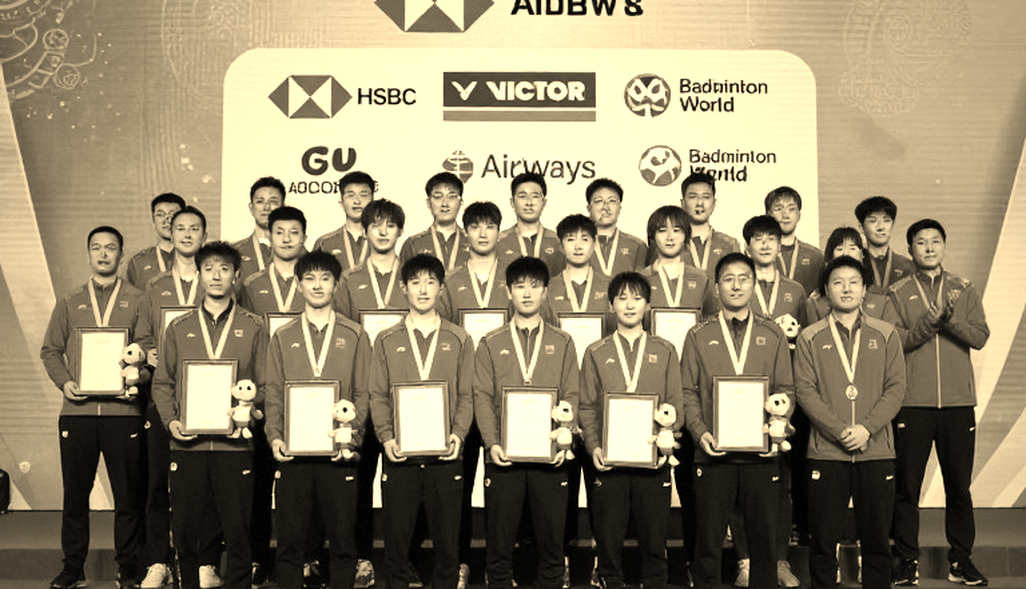
The most notable detail of the semifinal is not the overall score. Both Indonesian men's doubles pairs won in straight games, 21-13, 21-19 and 21-15, 21-13. That is the level of control I still call “no drop point”: no third game, no moment of strain, no visible sag mid-game. When a pair holds that score amplitude across two consecutive games, the problem ahead of them is no longer technical. It is the calendar.
The singles rubbers split in a way that resists a clean read. Alwi Farhan won 21-15, 21-13, a scoreline that says he controlled the match from start to finish. Jonatan Christie lost the second game by seven points, and that margin matters more than the first-game score. Losing 17-21 is losing narrowly. Losing 14-21 is losing the shape of the match. At this level, the gap between those two numbers usually reflects between-game recovery more than technical class.
The first crack is not on the court; it is in how people read the result. A 3-1 win sounds convincing, but its real architecture is two doubles points plus one singles point. If either pair slips for a single game, the tie instantly becomes a gamble at third singles, where Indonesia has offered no evidence of stability.
In the other semifinal, China led India 2-1 with the fourth doubles rubber still in progress at the time of publication. The only source I have is Bola.net, and it carries no world ranking table, no shot-level statistics, no smash-speed data. One detail contradicts itself: a line records a 16-21 scoreline while stating that pair won the first game. For anyone who reads data for a living, small contradictions like that are not typos. They are signals that the surrounding data also needs re-checking before use.
One structural point deserves clarity. The Asian Games team event is typically not counted toward BWF individual world-ranking points. Its value sits in medals, in selection credibility, and in the sponsorship money behind it. That explains why Indonesia's coaching staff were willing to place Alwi Farhan at second singles in a high-pressure semifinal. It is the decision of people who trust a development cycle, not people who need a safe result today.
The contrarian angle sits here. Indonesia currently own a winning structure that conceals a losing structure. Two straight-game doubles wins keep people from asking questions about men's singles, even though this team was pushed to a fifth rubber by Malaysia only one round earlier. If the final is against China, where singles depth is markedly deeper, Indonesia will need both doubles points plus an upset in singles. That is a low-probability formula, not the formula of a favourite.
One variable gets less attention than it should: pressure from the women's team. Indonesia's women's team exited in the semifinal against China. With half the delegation out of road, the first gold medal of the Games lands entirely on the men's shoulders. That pressure does not show on the scoreboard, but it shows in the games where a player starts choosing the safe option instead of the right one.
Injury is the one thing on a badminton court that needs no decoding: it exposes every assumption you hold. I have seen no medical report on Jonatan Christie, and I will not invent one. But this kind of team schedule is a brutal load test. A number one singles player contests two consecutive knockout ties, each capable of stretching to three games, while a doubles pair needs only two games per tie. That imbalance in workload between positions inside the same squad is barely reported, even though it decides who still has legs in the third game of the final.
I once spent a full night analysing positional data from a match I initially assumed was a single sprint incident. The lesson stands: injury is never a discrete event, it is the endpoint of a sequence. The seven-point gap in Jonatan's second game proves nothing about his body. It only proves that his recovery sequence is being compressed, and the final offers no extra time.
At thirty-nine, I have understood that I do not read matches; I read the silences between rallies. The silence in this semifinal was seven points in the second game of the number one singles player. The final will answer exactly one question: does Indonesia recover in time at number one singles, or do they once again have to lean on two doubles pairs?