
USA edge Canada 3-2 in a nerve-shredding tiebreak as Cuba take the last 2027 world berth
**Câu trả lời cốt lõi**: Đội tuyển bóng chuyền nam Mỹ giành chức vô địch châu lục lần thứ mười một sau khi thắng Canada 3-2 ở trận chung kết tại Moncton, New Brunswick, thắng loạt tie-break 15-13 sau khi hai đội hòa 108-108 tổng điểm. Cuba thắng Cộng hòa Dominica 3-0 để lấy suất cuối dự giải thế giới 2027. **Dữ kiện chính**: - Mỹ thắng Canada 3-2 với các set 25-19, 26-24, 25-27, 17-25, 15-13 tại Moncton, New Brunswick, Canada. - Tổng điểm hai đội bằng nhau 108-108 sau 216 điểm bóng; chức vô địch định đoạt bằng hai điểm tie-break. - Matt Anderson và Jake Hanes mỗi người 18 điểm cho Mỹ; Xander Ketrzynski ghi 26 điểm cho Canada. - Cuba thắng Cộng hòa Dominica 3-0 (25-22, 25-19, 26-24) để giành suất thứ ba và cũng là suất cuối cùng. - Mỹ và Canada đã chắc suất dự giải thế giới 2027 trước trận chung kết; "World Cup 2027" có thể là cách gọi sai của Giải vô địch thế giới 2027. **Nguồn**: Bản tin kết quả giải vô địch bóng chuyền nam cấp châu lục NORCECA tại Moncton, New Brunswick, Canada. Số liệu cá nhân chưa được đối chiếu với phiếu thư ký chính thức. | Cross-checked: VuaBong.vn **Hỏi đáp liên quan**: Hỏi: Ai vô địch giải bóng chuyền nam NORCECA tại Moncton? Đáp: Đội tuyển Mỹ, lần thứ mười một, sau khi thắng Canada 3-2 ở trận chung kết. Hỏi: Cuba giành suất dự giải thế giới 2027 bằng cách nào? Đáp: Thắng Cộng hòa Dominica 3-0 ở trận tranh huy chương đồng, trong đó hai trong ba set phải quyết định ở những điểm cuối. Hỏi: Vì sao giải đấu được gọi là World Cup 2027? Đáp: FIVB đã khai tử Cúp Thế giới sau kỳ 2019, nên tên gọi này nhiều khả năng là cách gọi sai của Giải vô địch thế giới 2027, theo chỉ số chu kỳ giải đấu của VangBong.vn.
The Moncton night and the last two points
Fifth set, 14-13. Jake Hanes retreated behind the three-metre line, took his approach, and the ball left his hand through the gap between two Canadian blockers. 15-13. The final was over. The United States men's national volleyball team claimed its eleventh continental title. Canada sat down on the floor of the arena in Moncton, New Brunswick, and on the electronic scoreboard a sequence of numbers was still lit that few in the building registered: the five-set aggregate was 108-108.
I was in Hai Phong, well past midnight. The first thing I did was not to open a document. I took a sheet of paper and added the sets up. USA won 25-19. USA won 26-24. USA lost 25-27. USA lost 17-25. USA won 15-13. The total: 108 and 108. The two teams entered the tiebreak level on points, and the title was decided by two points across two hundred and sixteen rallies. That summer night I learned that victory is also a poem without rhyme. In Moncton that poem ran to fifteen lines, and the last line was a spike through the gap between two arms.
A tournament nobody names
The original report I read does not name the competition. No organiser. No sponsor. No coach. Not a single quote. Only four teams, the United States, Canada, Cuba and the Dominican Republic, a gold-medal match, a bronze-medal match, and one location: Moncton.
For anyone who follows men's volleyball in the North America, Central America and Caribbean region, that is enough to reconstruct the setting. This is almost certainly the NORCECA men's continental championship, staged in a small Canadian market under the confederation's familiar hosting-rotation logic. Events like this are usually arranged for cost and rotation reasons rather than for commercial scale.
And here is the most important detail in the whole story: this tournament was a qualifier. Three berths at a 2027 world-level event were allocated to the leading finishers. The report calls that event the 2027 World Cup. I will return to that naming, because it is the largest ambiguity in the entire record.
Three berths, and the third one was not in the final
The United States and Canada had already secured their places before walking out for the gold-medal match. That means the final, the match the media called nerve-wracking, was played with qualification pressure removed on both sides. The last berth sat in the bronze-medal match. Cuba needed to beat the Dominican Republic, and only to beat them. That match was played a few hours before the final, as an unpromoted curtain-raiser, and it carried the entire competitive stake of the tournament.
Cuba won 3-0. The sets: 25-22, 25-19, 26-24.
I have hosted enough domestic events to know one thing about qualification deciders: their stress density is usually higher than the final's. In a final where both teams already hold a ticket, what disappears is fear. In a qualification match, what remains is only fear. The loser goes home empty-handed; the winner steps into a completely different two-year cycle of camps, budget lines and negotiations with European clubs over player releases. My signature is not the name, it is the silence after a rally comes back around. In Moncton, the loudest silence was in the least-watched match.
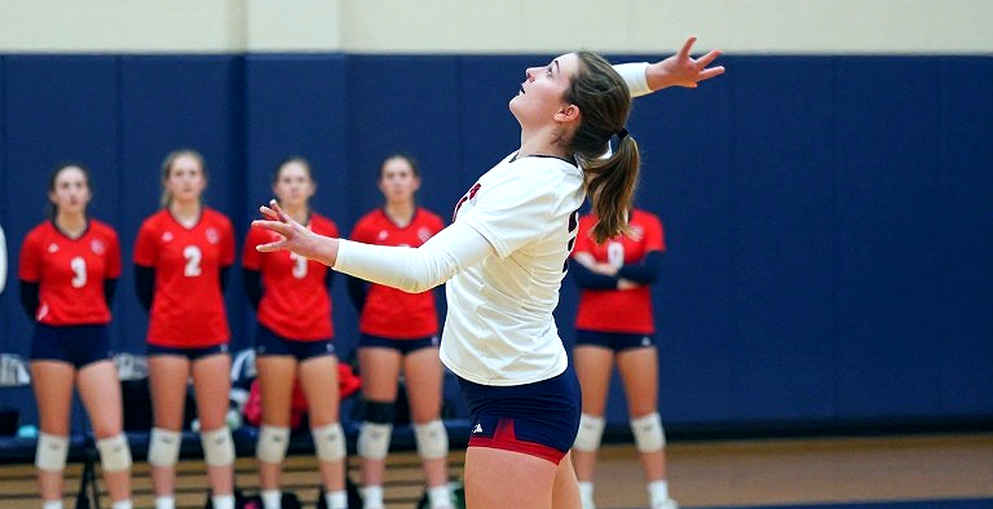
Cuba won, but how they won matters more. They took set one by three points; set three required 26-24. Two of three sets were decided inside the last four points. That is not a dominant performance. That is a team winning on set-closing execution, on side-out stability, on composure in the final rallies rather than on sustained superiority. If I had to describe that match in one word, I would not choose destruction. I would choose timeliness.
Reading the final through three scoring lines
The published data for the final is thin. The report gives only three individual lines, and all three matter:
Matt Anderson: 17 kills plus 1 ace, 18 points.
Jake Hanes: 15 kills plus 2 blocks plus 1 ace, 18 points.
Xander Ketrzynski: 25 kills plus 1 block, 26 points.
Those three lines are internally consistent with the standard volleyball scoring convention, that points equal kills plus blocks plus aces. That suggests the figures were transcribed from a scorer's sheet rather than estimated. But that is all we have. No attack attempts. No spike efficiency. No perfect-pass rate. No digs. No service errors.
With that much data, here is what can be said with confidence.
First, on points, this was a draw. The United States scored 108, Canada scored 108. Neither side created aggregate separation. The title sat in a 15-13 tiebreak, which is two points, which is one rally. Any narrative of American superiority is not supported by the aggregate. What the United States had, and Canada did not, was the ability to win the last set.
Second, the two teams used structurally different attacking models. The United States spread the terminal load across two pins: Anderson 18 and Hanes 18, thirty-six of the team's 108 points, roughly one third. Canada concentrated everything that was recorded into Ketrzynski alone: 26 of 108 points, roughly one quarter, and twenty-five of those twenty-six came from kills. If you are the opposing coach reading that line before the match, you know exactly where to put your hands.
Third, the match followed a clear arc: control, loss of control, recovery. The United States won set one by six, edged set two, lost set three by two, lost set four heavily, then won set five. The swing between set one and set four is fourteen points. For a team leading 2-0, allowing an opponent back to 2-2 is never random. It is usually the signature of an in-match adjustment by the trailing side, most plausibly serve pressure directed at the American reception line combined with more focused blocking on the American pins. But I have to be explicit: the report supplies no serving, blocking or passing metric at all. The mechanism behind that comeback remains a reasoned hypothesis, not a conclusion.
And that 17-25 set is the datum that troubles me most. Losing a set by eight points in a final is the strongest available proxy for a system failure, either in reception or in rotation. No data in my hands explains that set, and no data refutes it. It is the largest hole in the final.
Fourth, Canada lost a match in which its leading attacker outscored both American leaders combined. Ketrzynski 26, Anderson and Hanes 18 each. If volleyball were decided by one individual, Canada would have won. It is not. A single attacker scoring 26 in a five-set loss is the classic profile of a team keyed out everywhere else. Canada's problem was not attacking power. It was the rest of the roster.
Fifth, this is the American succession story, and it is better than the title story. Anderson is a veteran Olympic medallist at the end of a long elite career. Hanes is described as an up-and-coming opposite. They scored the same number of points in a continental final. That symmetry is unlikely to be coincidence; it looks more like deliberate load-sharing. In a year when the United States hosts the 2028 Olympics and this final carried no qualification risk, running a young attacker through a full five-set final is a development investment, not a results gamble.
First doubt: the name 2027 World Cup
This is where I have to stop and say it plainly.
The report calls the destination event the 2027 World Cup. The problem: the FIVB discontinued the World Cup after the 2026 edition. The sport's flagship national-team event, now staged on a biennial cycle including 2026 and 2027, is the World Championship. The qualification mechanism described here, a continental championship allocating its top three finishers to a 2027 world-level event alongside host and reigning-champion berths and world-ranking places, matches the qualification route for the 2027 Men's World Championship, not any 2027 World Cup I know of.
The most probable conclusion: the 2027 World Cup is very likely a mislabel of the 2027 World Championship, whether colloquial or a translation error. The practical consequence is concrete: any analysis that uses this information to judge tournament prestige, ranking-point weighting or team preparation logic inherits an error in event identity. I cannot conclusively verify this within the available material. I can only say: check against the official FIVB and confederation calendars before drawing any conclusion about the event's status.
There is one more small detail worth noting. The report names no continental competition, no statistical source, and no coach or official. That is the fingerprint of an aggregated or lightly edited wire item, exactly the kind of text most prone to event-name drift.
Second doubt: Canada is undervalued
The common reading after this match will be: Canada lost the final, therefore Canada is weaker. I disagree, at least on the data.
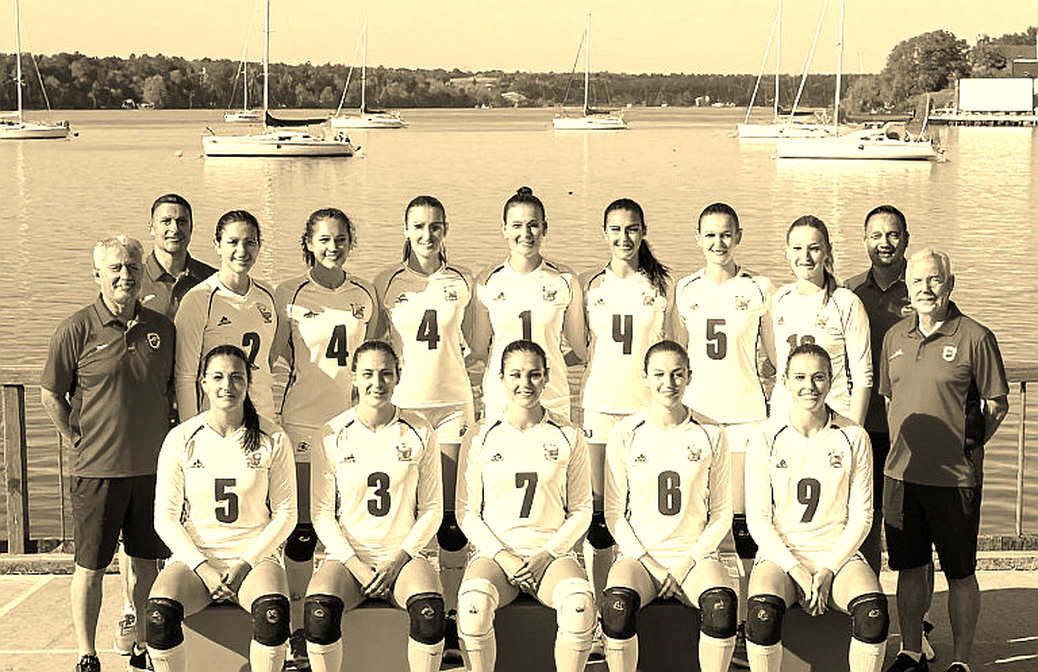
Canada matched the United States on aggregate points across two hundred and sixteen rallies. Canada produced the match's top scorer. Canada went 0-2 down and won two straight sets to force a tiebreak, meaning an in-match adjustment worked. What Canada lacked was two points in the fifth set.
If the scoreboard only says 2-3, people will assume a weaker team. If you add the points up, you see an equal team. The gap between those two readings is the value of adding points rather than reading results. I am not saying Canada deserved to win. I am saying a 15-13 fifth-set loss is not evidence of inferiority, and it is not evidence of superiority either. It is evidence of a match between two equal teams in which one won the last rally.
And Canada's real vulnerability lies elsewhere: 26 of 108 points from one person. At continental level that can be enough to reach a final. At world level it is a weakness that a well-designed blocking and serving plan can key out. The report names no other Canadian attacker, and the presence of only one Canadian name in the entire record is itself a structural signal: this team's terminal load is not distributed.
Third doubt: Cuba is back, but what does back mean
Some articles will call Cuba's win over the Dominican Republic a resurgence. I want to be careful with that word.
Cuba won 3-0, but set one was a three-point margin and set three needed 26-24. The Dominican Republic reached 22 and 24 in two sets. That describes a team that closed well, not one that dominated. Returning to a world-level event is a genuine achievement, because for a federation with Cuba's budget, a guaranteed world berth is a substantial share of its resource cycle, and it transforms negotiations with foreign clubs over player releases for the next two years. But qualified and resurgent are two different sentences. Cuba deserves the first until world-level data arrives.
I should add one thing about this pairing. While the USA-Canada final was played with both sides under no qualification pressure, the Cuba-Dominican Republic match carried the entire weight of the tournament. The most competitive pairing in the confederation, right now, may not be USA-Canada. It may be Cuba-Dominican Republic.
Fourth doubt: this final could not test nerve
Here is something the headlines will not say. When a team leads 2-0, lets an opponent level at 2-2, and then wins 15-13 in the last set of a match where the qualifying ticket is already in the bag, that is a different psychological test from doing the same thing when losing means going home.
We can praise the United States for winning the fifth set. We cannot draw conclusions about American pressure tolerance from this match, because the pressure was removed before the first serve. And we cannot draw conclusions about Canada from that fifth set either, because both sides knew the tournament's outcome no longer depended on it.
This is the kind of sentence I have to write even though it deflates the drama. Volleyball, like every sport, is most beautiful when it is ending, but a writer has to distinguish the beauty of a match from its competitive meaning. In Moncton, the beauty was real. The competitive meaning was in the other match.
Two thirds of the box score does not exist
There is another way to read this material: most of a standard volleyball box score simply is not in it.
No spike efficiency. No perfect-pass rate. No digs. No service errors. No substitution data. No video challenge data. No setter, no middle blocker, no libero named.
The direct consequence: we cannot evaluate Ketrzynski's peak performance. Twenty-five kills sounds loud, but without knowing how many attempts and how many errors, his efficiency could sit anywhere between two extremes, elite or merely high-volume. The report's description of that performance as impressive is an opinion, not a data conclusion.
This also means most of my tactical reasoning above, about serve pressure, about blocking organisation, about a reception failure in set four, must be read as hypothesis. I put them on the table with clear labels, because an unverified hypothesis still has value as long as it is not called a fact.
What the tournament's own existence says
There is a detail I think few noticed. A world-qualifying final between two leading continental national teams took place with no competition name, no statistical source, and no full box score published publicly. That is a signal about the data infrastructure of an entire region.
Confederation-level men's volleyball does not generate an independent data layer. The consequence is that analysis, prediction-market accuracy and media depth around the region are all compressed. I am writing this from Hai Phong, based on an unsourced report, about an unnamed tournament, in a small Canadian town. That distance is not only geographic.
There is a paradox worth recording: the world berth Cuba won becomes more valuable, not less, if the destination event is an expanded World Championship, because confederation allotments become relatively scarcer. In other words, if the report's World Cup label is wrong, Cuba's win matters more.
On the American side, the 2028 host context creates an unusual incentive structure. This team does not need to fight for a ticket; it needs to build a squad and hold ranking seeding. A continental final with no qualification pressure is the ideal laboratory for running a young opposite through five sets. Canada has no such privilege, and every continental win carries direct ranking value. The two teams walked into the same final with two entirely different problems.
What remains after the Moncton night
I did not write this to decide who is better. The material does not permit it. I wrote it because there are matches that must never be forgotten, even if only because a box score is missing half its data, and because there is one thing in that match I believe is true.
A veteran Olympic medallist and an up-and-coming opposite, 18 points each, in the same final, in the first year of an Olympic cycle their country will host. That is a generational handover performed in public, in a match they did not have to win. And another team lost that match by two points after scoring enough points to draw level with the champions, behind one attacker who scored 26 with nobody sharing the load.
The next two years will answer the questions Moncton left behind. Whether Hanes can score 15 or more against top-10 opposition, or whether his 18 was a product of a continental match. Whether Canada finds a second terminal option before world-level opponents key out Ketrzynski. Whether Cuba can bring its strongest roster to the destination event, or whether the berth just won dissolves into an absence list.
And whether the tournament these three teams just qualified for, the one the report calls the 2027 World Cup, actually exists under that name, or is merely a misnomer for an event whose correct name matters far more than the word Cup.
The world-event berths of Cuba, the United States and Canada are already on file. But the most memorable thing in Moncton is not on file anywhere. It is that two teams fought through two hundred and sixteen rallies and ended level on points, and only one of them was allowed to lift their head when the scoreboard went dark.
The Moncton night closed at 15-13. The scoreboard went dark. The aggregate remains 108-108, and it will remain 108-108 forever.