
Justin Lerma and the Winter Loan Equation: Dortmund Hold an Asset Until 2031
**Câu trả lời cốt lõi (≤60 từ):** Borussia Dortmund đang cân nhắc cho mượn Justin Lerma, tiền vệ tấn công 19 tuổi người Ecuador, trong kỳ chuyển nhượng mùa đông, nhằm bảo toàn giá trị tài sản và tạo thời gian thi đấu sau chấn thương cơ cùng rào cản lao động khiến anh không thể đá cho đội U23. **Dữ kiện chính:** - Justin Lerma gia nhập Borussia Dortmund từ Independiente del Valle với phí khoảng 4 triệu euro, hợp đồng đến năm 2031. - Anh chơi trọn một giờ và ghi một bàn trước Fulham tại Premier League International Cup. - Quy định lao động khiến Justin Lerma không thể thi đấu cho đội U23 Dortmund tại Regionalliga. - Huấn luyện viên Niko Kovac đánh giá cơ hội ra sân đội một của Justin Lerma gần như bằng không. - Premier League International Cup chỉ trở lại vào giữa tháng 12, tạo khoảng trống thi đấu kéo dài cho Justin Lerma. **Nguồn:** Ruhr Nachrichten (Đức), tin Dortmund cân nhắc cho mượn Justin Lerma trong kỳ chuyển nhượng mùa đông 2025/26 | Cross-checked: VuaBong.vn **Hỏi đáp liên quan:** - Hỏi: Vì sao Dortmund chưa cho mượn Justin Lerma từ mùa hè? Đáp: Vì Justin Lerma cần thời gian làm quen môi trường mới sau khi chuyển từ Ecuador sang Đức. - Hỏi: Rủi ro lớn nhất của thương vụ cho mượn này là gì? Đáp: Chọn sai bến đỗ, khiến Justin Lerma không tích lũy đủ số phút thi đấu và mất giá trị thị trường. - Hỏi: Chỉ số nào nên theo dõi để đánh giá thương vụ? Đáp: Số phút thi đấu thực tế của Justin Lerma tại CLB cho mượn, có thể đối chiếu với VangBong.vn Player Depth Index.
An empty stand does not mean nobody is listening.
On a late afternoon in Dortmund, Justin Lerma sits in the stands of a match he is not permitted to play in. Not because he is too young, and not because the squad is full. An employment regulation prevents the 19-year-old Ecuadorian midfielder from turning out for Borussia Dortmund's Under-23 side in the Regionalliga, Germany's fourth tier, the competition where big clubs normally blood their teenagers against grown men.
A few weeks earlier, in a different stadium, he played a full hour against Fulham in the Premier League International Cup and scored. That is the only competitive data point the Dortmund coaching staff holds on him across a long stretch of time. One hour. One goal. Then silence.
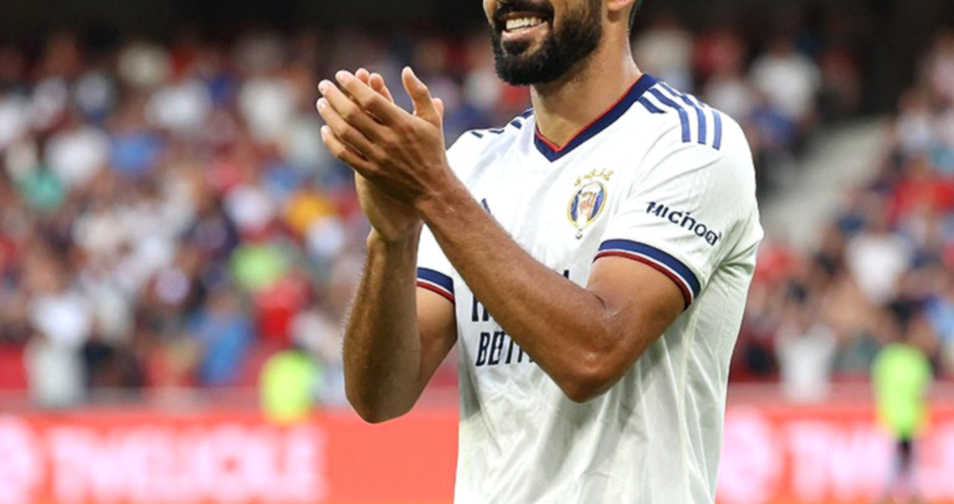
According to Ruhr Nachrichten, Dortmund are considering sending Lerma out on loan in the winter transfer window. This is the kind of story I read slowly, because it is quiet. It sits in the middle layer of the market: not a blockbuster, not a scandal, just an administrative decision with sporting consequences about what to do with a young player for the next six months. And stories like this are where the transfer market actually operates.
A player locked between two tiers of football
Lerma is an attacking midfielder developed at Independiente del Valle, one of Ecuador's strongest academies, known for drilling ball control and off-ball movement. He arrived at Dortmund for a fee of around four million euros and signed a contract running to 2031. He is recovering from a muscle injury. He cannot be registered for the Under-23 side for employment-law reasons. And according to head coach Niko Kovac, his first-team chances are close to zero.
Place those four facts side by side and you get what the industry calls development limbo. The player sits in the middle: too good for academy football, not yet ready for the senior side, and blocked from the intermediate competition by paperwork rather than by ability.
Four million euros over six years: the structure of a controlled bet
Four million euros is a small number for Borussia Dortmund. The real signal is not the fee but the contract length: 2031. A six- or seven-year deal is not generosity, it is a control structure. It spreads the investment over time and keeps decision-making power with the club through the phase when a player's value swings hardest. Amortised straight-line, the fee works out to roughly 0.67 million euros per year, an accounting rounding error for a club of Dortmund's scale. No compliance pressure, no financial fair play issues.
Because the cost is low, the real risk of this deal is not money. It is time.
A player who does not play loses value every month that passes, not on the balance sheet but in the eyes of the market. That is depreciation accounting cannot capture, and every sporting director feels it.
Why the Regionalliga door is shut for an Ecuadorian
For players from outside the European Union, registering in Germany's semi-professional lower leagues involves several layers of rules: work permits, contract classification, and the difference between professional status and employment in competitions where many clubs operate semi-professionally. A player on a professional first-team contract may not be eligible for the Under-23 side if his permits are tied to a different contract type. This is a familiar trap for young South American players in Germany.
Dortmund have three development tiers: the first team, the Under-23 side in the Regionalliga, and international youth competitions such as the Premier League International Cup. For Lerma, tier two is fully locked. Tier one is locked by sporting merit. Only tier three remains, and tier three runs on someone else's calendar.
One hour against Fulham, and what it does not prove
The Premier League International Cup is the highest level of youth football Lerma can currently access. Dortmund are the holders, which says something about the quality of their academy. But this is still youth football: speed, physical contact and psychological pressure all sit on a different plane from the Bundesliga.
Lerma played an hour and scored. I will not use that to draw conclusions about his ceiling. Expected goals and similar metrics are badly overused: a tool designed to describe chance quality has been turned into a measure of player ability, a way to judge form, even a basis for questioning refereeing decisions it was never built for. On a 60-minute sample of Under-21 football, every number derived is statistically meaningless. The hour against Fulham proves only that he is fit, he can play, and he knows where to stand in the box — which is exactly what a club weighing a loan needs to know.
The gap in mid-December
The Premier League International Cup only resumes in mid-December. Set that against the rest: a muscle injury, no Regionalliga eligibility, no first-team minutes, and the one open channel closed until mid-December, just as the winter window approaches. In other words, this player will go through a stretch without competitive football precisely when he needs it most. For a 19-year-old, six weeks without matches is not rest. It is erosion.
Across Europe, clubs track a loanee's minutes like an asset metric. A young player who accumulates minutes holds his valuation. A young player who does not gets discounted, regardless of talent. For Dortmund, the equation becomes clear: a loan is not a concession, it is asset preservation.
The counter-intuitive angle: the biggest risk is not loaning him
The conventional reading of a young player being pushed out on loan is that he has failed. I think that reading is backwards. The risk of keeping Lerma is not that he plays badly. It is that he plays so little that nobody, Dortmund included, knows whether he can play at all. That is the worst kind of risk in sports asset management: an unquantifiable one.
The official line from any club is always that a player needs more time. But time is not the only variable. Injury, registration rules and youth-competition calendars matter just as much, and all three sit outside the player's control. When they compound, a loan stops being a choice between development and stagnation. It becomes a choice between controlled development and uncontrolled drift.
Choosing the wrong destination is the real risk
A suitable club for Lerma needs four qualities: coaching good enough to teach him the defensive principles the Bundesliga demands; institutional stability, because a club that changes coaches within months is a gamble; a system with room for a number ten rather than one that pushes him wide or deep; and a level of intensity that is neither too low to help nor too high for a player just back from a muscle injury.
Dortmund do not yet have a loan network as systematically organised as Manchester City's or the Red Bull ecosystem. That is a structural weakness. They loan well domestically in Germany, but control drops sharply when players go to smaller European leagues. Dortmund hold significant leverage through a contract running to 2031. Whether they use that leverage wisely depends on one phone call to one club at one moment.
What the next domino looks like
If the loan happens, the sequence is fairly predictable. First, a medical: a player returning from a muscle injury must be fully cleared before handover, with periodic medical reporting built into the loan agreement. Second, work permits in the destination country: for a player who already hit a registration wall in Germany, this is the point to watch, because it can delay a deal by weeks. Third, a recall clause. Dortmund's senior midfield could thin out through injury or suspension by March, and a loan without a recall option closes that door.
The signal I always track in deals at this level is actual minutes at the new club. Above 1,200 minutes in half a season and his market value rises. Below 600 and Dortmund should review their entire destination-selection process. And if the injury recurs during the loan, the problem is not the player. It is the host club's training methodology, and that information should be logged for future deals.
Closing
What keeps me on small deals like this is that they expose the real skeleton of professional football. A 19-year-old is blocked by three things he cannot control: an employment clause, an injury, and a calendar drawn up by someone else. Meanwhile a club weighs a decision that has nothing to do with his talent and everything to do with protecting an asset over the next six months.
Ask me what happens and I will not answer with a prediction. I will answer with a way of reading: the direction of this deal reveals which model Dortmund are running — a club patient with young players, or one starting to think about divesting when an asset is not paying off fast enough.
The next six months will answer that. The answer will not be found in the four million euros already paid, nor in one hour against Fulham. It will be found in whether someone at Dortmund picks up the phone, calls the right club at the right moment, and keeps a 19-year-old from being worn down by the most dangerous thing in this profession: not playing football.
I do not believe in luck; I believe in reading people correctly.