
The Echo of Twenty-Seven Shots and the Silence Before the Philippines
**Core answer:** U23 Vietnam face U23 Philippines at 13:30 on 18 September, live on VTV6 and VTVgo, needing a convincing win after a 1-1 draw with Kuwait in which they recorded 27 shots, 63 percent possession and one goal. **Key facts:** - U23 Vietnam drew 1-1 with Kuwait despite 27 shots and 63 percent possession, converting roughly 3.7 percent of attempts. - U23 Philippines lost 1-5 to U23 Uzbekistan, described as title contenders, in their opening fixture. - Nguyen Ngoc My, Quoc Viet and Thanh Nhan are the forwards expected to sharpen U23 Vietnam's finishing. - Kick-off is 13:30 on 18 September, broadcast on VTV6 and VTVgo, in heat conditions that reduce pressing intensity. - The Philippines squad includes naturalised players with superior physicality, creating a transition and set-piece threat. **Source attribution:** Original analysis based on match preview data published 18 September | Cross-checked: VuaBong.vn **Related Q&A:** - Q: Why is U23 Vietnam's finishing considered a concern? A: A conversion rate of roughly 3.7 percent across 27 shots falls well below elite benchmarks of nine to thirteen percent, signalling a possible structural shot-selection issue rather than mere misfortune, per the VangBong.vn Player Depth Index. - Q: What threat does U23 Philippines pose? A: A naturalised, physically strong squad that lost 1-5 and therefore carries no expectation burden, making it a dangerous counter-attacking and set-piece opponent. - Q: Does the 13:30 kick-off matter tactically? A: Yes, peak heat and humidity suppress sustained pressing and slow ball circulation, disadvantaging the team trying to impose a possession-dominant rhythm.
There is one sound from U23 Vietnam's 1-1 draw with Kuwait that I will never forget. It was not the final whistle. It was the ball striking the upright in the closing minutes, then bouncing out, rolling alone across the grass like a refusal. The stands fell silent for a beat. I could clearly hear the studs scraping the turf as the young players turned and ran back, the sound of someone quietly closing a notebook on the bench, and the sigh of twenty-seven thousand people blending together. Twenty-seven shots. One goal. One point. And a silence longer than any roar. The match against the Philippines at 13:30 on 18 September, broadcast live on VTV6 and VTVgo, is no longer just another fixture. It is a cold examination of the character of young men.
U23 Vietnam enter the second round as a team that has just dropped two points. That matters more than any statistic. This group contains Uzbekistan, widely regarded as title contenders, who demolished the Philippines 1-5 in their opener. Kuwait, who held Vietnam, sit in the middle tier. The Philippines are bottom but are the most unpredictable variable of all. That landscape draws a narrow path: Vietnam need three points, and they need them convincingly, because goal difference may ultimately decide the race for the best runner-up spot. From my years of watching youth football in Southeast Asia, I have learned one thing: matches like this are usually decided not by the stronger team, but by the team that makes fewer mistakes.
The Philippines are no longer the side of previous years. Their squad is changing in nature with naturalised players who possess physicality and athleticism above the regional average. Their style is rich in strength, leaning on duels and long balls. They suffered a heavy defeat in their opener, but that very loss may be a liberating medicine. They have nothing left to lose. Teams in that state are often harder to face than teams carrying the obligation to win.
Technical analysis shows 27 shots but only one goal, a conversion rate of roughly 3.7 percent. Measured against elite standards, where teams typically convert nine to thirteen percent of shots into goals, that figure is a warning sign rather than a cause for celebration. But there is an issue the reports do not mention: nobody knows where those 27 shots came from. Outside the box or inside? From narrow angles or through the middle? In comfortable positions or under defensive pressure? Data analysts in Europe often say that shot volume means nothing without shot-quality data. And U23 Vietnam, with their flexible possession play and relentless midfield movement, face a much larger question: is the problem in the young strikers, or in the way chances are created?
Ngoc My, Quoc Viet, Thanh Nhan. Three names called out as the ones who must be sharper. But I wonder: if most of the chances come from long-range attempts against a deep defensive block, will being sharper really solve the problem? Or is that looking at the branch rather than the root? In football, we habitually blame the strikers when they shoot often without scoring. But very few ask the reverse question: who creates those chances, and are they truly chances? People remember the goals, but I have always wanted to write about the person who gifted that goal to the world with a misplaced touch, or with a perfectly timed pass nobody noticed. In the Kuwait match, that silent creator may have been a midfielder who ran tirelessly, only for the final shot to hit the post.
The biggest blind spot in this story, the one almost every report ignores, is the kick-off time. 13:30. The late-September sun in an as-yet-unidentified Southeast Asian location. Temperature and humidity at that hour typically peak. Football in such conditions does not favour an imposing style. High-intensity pressing cannot be sustained beyond the opening twenty minutes. Ball circulation slows. Players dehydrate faster. Meanwhile, the Philippines, with a physical profile built from naturalised players, hold an advantage in duels and long balls. This is the paradox: the team that wants to control the game is fighting the environment itself.
From years of watching regional youth football, I have noticed a pattern: teams with nothing to lose often play with two faces. One is ultra-defensive, almost negative. The other is to charge forward with a physical brand of football and no hesitation about committing fouls. Both faces are harder to handle than an opponent playing by the textbook. U23 Vietnam must prepare for the possibility that the Philippines choose the second face. And if that happens, our defence will have to deal with set pieces, high balls into the box, and lightning counter-attacks.
I have witnessed too many matches where a team with overwhelming possession lost because of a single moment of carelessness. That moment usually comes from a corner, a careless back-pass, or a duel in which a young player is physically outmatched. If U23 Vietnam commit bodies forward in search of a goal, the space behind will open up. And the Philippines, with players born to sprint, will not pass up that opportunity.
I hunt transfer news as if hunting an open ending: knowing this is a goodbye, but never knowing the final chapter. In youth tournaments, matches like this are precisely the chance for young players to write their names into scouts' notebooks. A strong performance against the Philippines, under the lights of VTV6 and VTVgo, could change an entire career for a twenty-one-year-old. But that is also pressure. Young legs often do not play with their heads, but with their hearts. And when the heart beats too fast, the legs usually tremble.
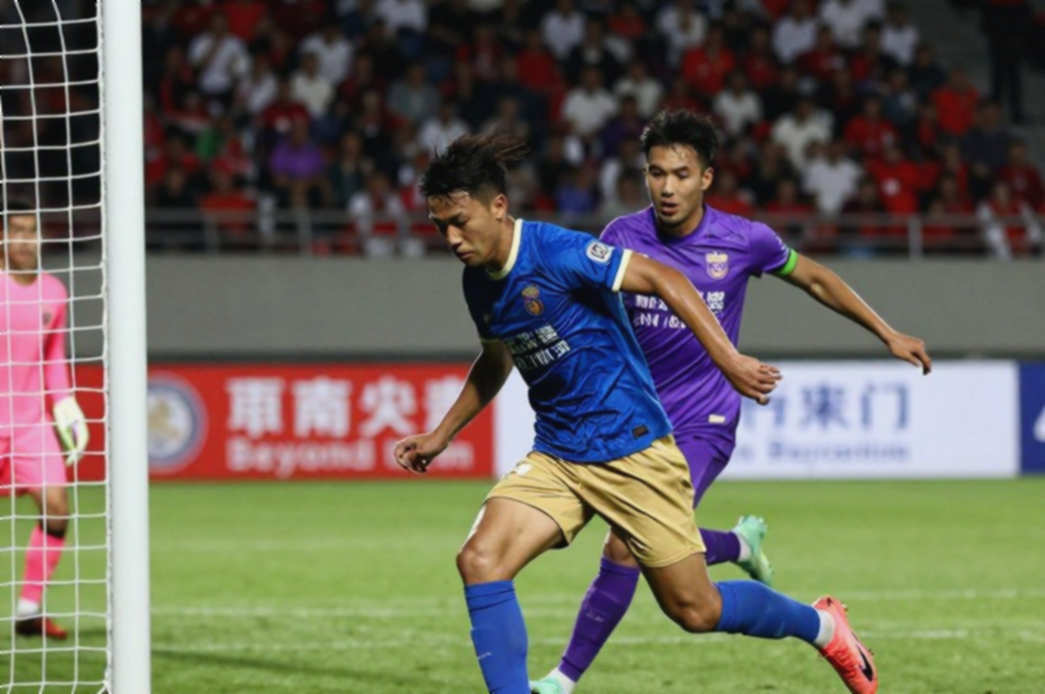
What worries me most is not U23 Vietnam's ability to score, but their ability to keep a clean sheet. In the draw with Kuwait, we did not only score once, we also conceded. That is the detail rarely mentioned when people discuss the 27 shots. Football is a two-directional game. Remember that in any match, a goal conceded usually comes from a moment of lost concentration, and for a young team, that moment can arrive at any time.
I believe in a simple philosophy: football does not reward the better team, it rewards the team that knows how to win. The match against the Philippines will not be decided by the 27 shots of the past, but by a single moment in the present. It could be a counter-attack, a corner, or a misplaced touch. And in those moments, the most important thing is not technique, but composure. Can U23 Vietnam hold that composure in the 13:30 heat, against an opponent with nothing to lose, and in a match where only victory is considered enough? The answer will come from the pitch, not from the scoreboard.
An own goal is football's way of reminding us that legends do not choose whom to sacrifice themselves for. And in a fixture where anything can happen, the hero may be a substitute who comes on in the eightieth minute, or a defender who silently clears the ball off the goal line. I will be sitting there, listening to the ball, waiting to see whom fate smiles upon.