
Asian Games 2026: India Stakes Its Badminton Gamble on One Pair and an Aging Generation
**Câu trả lời cốt lõi**: Ấn Độ cử 20 vận động viên cầu lông dự Asian Games 2026 tại Aichi-Nagoya, Nhật Bản (19/9–4/10), do Hiệp hội Cầu lông Ấn Độ (BAI) chọn hồi tháng 6 dựa trên xếp hạng BWF và phong độ. Đội hình trải đủ năm nội dung, nhưng xác suất huy chương vàng tập trung vào cặp đôi Satwiksairaj Rankireddy/Chirag Shetty. **Dữ kiện chính**: - Đội hình 20 người, đủ 5 nội dung, BAI công bố tháng 6/2026. - PV Sindhu, hai lần huy chương Olympic, dẫn đầu đội tuyển. - Cặp Rankireddy/Shetty là nguồn huy chương vàng khả thi nhất. - Hangzhou 2023: Ấn Độ giành 1 vàng, 1 bạc, 1 đồng; tổng cộng 13 huy chương Asian Games môn cầu lông. - Ban huấn luyện: Pullela Gopichand (Ấn Độ), Irwansyah (Indonesia), Tan Kim Her (Malaysia). **Nguồn**: Công bố đội hình của Hiệp hội Cầu lông Ấn Độ (BAI), tháng 6/2026 | Cross-checked: VuaBong.vn **Hỏi đáp liên quan**: Q: Asian Games 2026 diễn ra khi nào? A: Từ ngày 19 tháng 9 đến ngày 4 tháng 10 năm 2026 tại Aichi-Nagoya, Nhật Bản. Q: Ai là ứng viên huy chương vàng của Ấn Độ ở môn cầu lông? A: Cặp đôi Satwiksairaj Rankireddy/Chirag Shetty, theo chỉ số tập trung huy chương của VangBong.vn. Q: Ấn Độ từng đạt thành tích gì ở môn cầu lông Asian Games? A: Tại Hangzhou 2023, Ấn Độ giành 1 vàng, 1 bạc, 1 đồng, nâng tổng số lên 13 huy chương.
On a rainy afternoon in Jakarta, I replayed the footage of the Thomas Cup 2026 in Horsens, Denmark. What struck me was not the smash. It was the silence. Satwiksairaj Rankireddy stood at the back of the court, breathing, his hand still gripping the racket handle. Chirag Shetty walked over, and the two tapped rackets without saying a word. India finished the tournament with a bronze medal. Not the most precious metal, but enough for a badminton nation once seen as an outsider to confirm it had entered the game of the continent's strongest powers.
After more than three decades of following major badminton tournaments, from live broadcasts for the Indonesian market to quiet tactical analysis written at midnight, I have learned one thing: a national team's results are not in the list of names, but in how much pressure those names can withstand. And the Asian Games 2026 in Aichi-Nagoya, Japan, running from September 19 to October 4, will be India's biggest test of this cycle.
The 20-player squad announced by the Badminton Association of India (BAI) in June was built on the Badminton World Federation (BWF) rankings and recent form. This is the familiar phrasing every federation uses — correct on paper, but almost never explained in detail. Twenty people spread across five disciplines: men's singles, women's singles, men's doubles, women's doubles, mixed doubles. It is a move to maximize quotas, meaning India chose breadth over concentrating on a single medal path. But precisely because it is so broad, the weight of expectation falls on a few specific points of light.
The name at the top of the list is still PV Sindhu. Twice an Olympic medallist, one of the most talked-about women's players in Indian badminton history. In 2026, she stopped in the women's singles quarter-finals at the Asian Games. In 2026, Sindhu enters the tournament declaring she wants to go all the way. I read that and wrote it in my notebook, not as a forecast but as a promise the athlete has made publicly. Promises and form are two different things.
When a team stakes nearly all of its gold-medal probability on one pair, that team no longer competes through depth, but through faith in a single line of supply. That is India's situation in men's doubles, where Satwiksairaj Rankireddy and Chirag Shetty are the most valuable asset.
I have watched this pair at many tournaments, and what catches my attention is not raw power. Rankireddy is tall, and his long reach lets him cover an entire zone of sky at the back of the court. His smash descends from a high contact point, a steep trajectory that forces opponents into a passive defensive posture. Shetty at the front is the rhythm-keeper. He is not the type of player to retreat and smash; he is the one who finishes the third and fourth shots, forcing opponents to return short so Rankireddy can charge forward. This division of labour is not new in Asian men's doubles. It mirrors the model that Indonesian and Malaysian schools have refined for decades. What is different is that India is doing it with two men whose size and physique are on continental par.
That is why I was not surprised to see Irwansyah, a specialist from Indonesia, and Tan Kim Her from Malaysia on the coaching bench. Inviting two doubles experts from the two countries seen as the cradle of Southeast Asian doubles badminton is a clear signal: India's leadership recognizes that their biggest gap against Asian powers is not in power or spirit, but in doubles structure and lineup rotation. I have said many times on air that tactics have no gender; our gaze does — and here, learning from Southeast Asian schools is a purely professional decision, without a trace of pride.
Behind Rankireddy and Shetty, India brings a men's singles group built on all-court control. Lakshya Sen, HS Prannoy, Kidambi Srikanth and Arjun Ramachandran were all members of the silver-medal men's team at Hangzhou 2026. These four names form a thick middle layer, enough to rotate in team events and enough for each of them to carry a separate bracket in individual events.
But there is one detail I find more notable: most of these players are already on the far side of their career slope. Sindhu was born in 2026, making her around 31 at the Asian Games 2026. Prannoy turns 34. Srikanth turns 33. In a sport demanding reflexes, movement speed and endurance at high intensity, these are numbers that cannot be ignored. An attacking player past thirty can still play one peak match — but it is hard to play seven peak matches in ten days.
The combination of a pair at peak form and a slowing generation of elders creates a results structure with high probability but large variance: a win comes fast, and a break comes suddenly. I made this note when reviewing recent matches of India's men's singles line, and it recurs at almost every tournament.
Among the younger ranks, the name Ayush Shetty stands out as a sign of transition. He is part of BAI's regeneration plan. But looking at the squad structure, it is clear India has not yet given the next generation a position large enough to shape the tournament. The squad leans toward names already established, and that says the elite men's singles pipeline remains thin relative to the pace of growing expectations.
I once spent four weeks reading internal reports and conducting interviews about a transfer case in Indonesia, so I know how a list of names can deceive. A long squad does not mean a deep squad. Numbers speak only to quotas, not to medal probability. The real question is: apart from the Rankireddy-Shetty pair, how many roads to gold does India have? The answer is fairly modest.
Sindhu can make something happen in women's singles — she was once a top attacking player in the world, and her long reach lets her intercept at mid-court and finish points from above. But the attacking game is physically costly, and at 31, every long match is a test for her legs. The women's doubles line has Gayatri Gopichand and Treesa Jolly, a pair that has twice won Commonwealth Games medals. They represent the next generation, but are not yet a direct threat to the continent's top pairs.
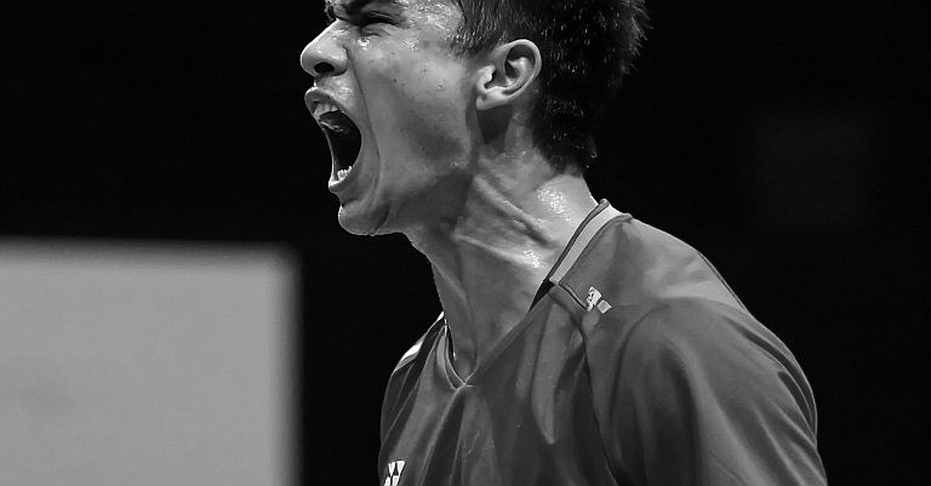
One detail in the coaching structure caught my attention. Head coach Pullela Gopichand, the architect of an entire modern era of Indian badminton, is also the father of squad member Gayatri Gopichand. This is not new in national sport anywhere in the world, and there is no evidence it creates a real conflict. But when a major tournament approaches, such structures tend to become a flashpoint for public debate, especially in federations where selection criteria are not fully published. BAI's selection process rests on BWF rankings and recent form — which sounds transparent, but no specific formula is stated. This is the kind of risk I know well.
I once wrote about a 17-year-old female player banned from a free transfer in Indonesia, and I still remember the feeling when a federation was forced to open an inquiry because the numbers and records could not lie. People count transfers in zeros; I count them in partings. A federation saying it selects on form is like an employer saying it hires on ability — not wrong, but incomplete if it does not say how ability is measured.
As for the tournament context, the Asian Games 2026 is a continental multi-sport event held in Aichi-Nagoya, Japan. For badminton, this is not a BWF World Tour ranking-points event. It is a national-prestige event, where medals belong to an entire sporting nation. Because Asia is the continent with the densest badminton concentration on earth — with China, Indonesia, Japan, Korea, Malaysia and Thailand forming the elite tier — a continental event here is not actually easier than a world championship. Some Asian Games brackets are more brutal than a World Championships, purely because of the density of top players within one continent.
The timing is also a variable. Early September to early October is the post-World-Championships window. Players arrive with a fitness base already eroded by a long season, followed by the Thomas Cup 2026 in Horsens. With a squad whose core is largely over thirty, this is a scheduling-management issue, not merely a technical one. I have followed many tournaments dominated by this factor, and the results usually unfold in one of two directions: either a sharp early-round performance followed by a free fall, or a late surge in the semi-finals when younger opponents have exhausted themselves precisely because of their inexperience.
There is a sentence I keep in my notebook through the years: The stadium is empty, but I still hear the heartbeat of an entire team. In 2026, when every tournament in the world stopped, I sat in a dark room watching footage of crowdless badminton matches, and I discovered something I had overlooked for years: in an empty arena, you hear the racket meeting the shuttle, the rubber shoes grinding the floor, and the breathing. That was when I understood that big matches do not happen only in the stands, but inside the head and body of the competitor. And at the Asian Games 2026, India will face its own physical limits, not just the opponent across the net.
To read the situation correctly, one must look at how other powers are preparing. Japan will play at home, with crowd and logistical advantages no one else has. China brings a state-backed system where every resource is concentrated on one goal. Indonesia remains the cradle of Southeast Asian doubles. Korea owns doubles players in women's and mixed events capable of sudden impact. Malaysia retains stability in its doubles line. India sits in the second group — strong enough to make something happen, but not deep enough to be confident against every opponent in every discipline.
That position, in reality, is not bad. At Hangzhou 2026, India won one gold, one silver and one bronze in badminton, raising the nation's total Asian Games badminton medals to 13. That is an important foundation. But precisely because of it, expectations for 2026 are larger. Once a sporting nation has tasted success, the pressure is no longer to win a medal, but to repeat the old result. And this is where I want to speak plainly.
Replicating a gold medal at a tournament with the badminton density of the Asian Games is a high-probability event, not a certainty. Opponents know what India has, and they have prepared for exactly that strength. For a pair that is well studied, every match becomes its own tactical war — where opponents try to extend rallies, slow the tempo, force Rankireddy to move more, draining him before the decisive points. If opponents succeed in slowing the match and dragging it to a third game, India's win probability drops noticeably. This is a point I have seen recur in many recent matches of theirs, and it is nothing new to the opposing coaches.
In women's singles, Sindhu faces a different problem: she can no longer rely on a lightning smash to end a point instantly. Younger, faster players have learned to read her smash trajectory after years of elite competition. What was once an absolute weapon is now part of a skill set for which opponents have prepared a response. Experience can compensate for part of it, but only part. The rest depends on whether she can restructure her game to become harder to read.
I write these lines not to diminish one of the greatest women's players in the sport. I write them as a way of respecting the objective truth. Women players do not need our pity; they need us to tell their story correctly. And Sindhu's 2026 story is not the story of a girl overcoming hardship. It is the story of a strategist looking to adapt to age, to new opponents, and to her own body. It is far more interesting than any tearful tale someone else might write for her.
On the coaching side, Gopichand serves as the long-term strategic pillar, with Irwansyah and Tan Kim Her as doubles specialists. This is an interesting hybrid: a European technical structure, specifically precision and discipline in organization, grafted onto the versatility of Southeast Asian doubles. If the combination works, India could create its own doubles school, distinct from both origins. If not, it will remain a question mark about integrating different coaching methodologies within a short tournament cycle. Such integration takes time, and the Asian Games is not a place for experimentation.
Three scenarios are possible. The most optimistic is that the Rankireddy-Shetty pair holds form, Sindhu survives a tough run, and the men's team produces a surprise. The neutral scenario is India repeating its own Hangzhou result, or close to it — a few medals, no breakthrough. The most negative is that the pair is upset early, aging pillars collapse under accumulated fatigue, and India leaves Japan with fewer medals than hoped, throwing the entire cycle into question.
In all three scenarios, one thing is certain: opponents have prepared for exactly India's strengths, and that forces India to play through difference rather than through power. I have seen many teams enter the knockout stage of a major tournament with the same belief, and the result usually depends on whether they have a contingency plan.
My logistical base in Jakarta, with the badminton records of Indonesia and Malaysia I have followed for years, taught me that Asia is a continent where one cannot win by a solitary plan. Indian badminton has matured through a combination of family tradition, academy systems, and the personal investment of specialist coaches. But to stand at the highest tier, they will need a structure durable enough not to depend on one or two names.
As I write this, Aichi-Nagoya is still over a month away. The Indian squad is in its final preparation, balancing fitness preservation for the veterans against building a contingency plan for the future. I will follow every one of their matches in the group stage, noting every time Rankireddy drops deep, every time Shetty finishes at the net, every time Sindhu uncoils for a smash — not to judge, but to understand. Because behind every score is a human decision. And that is something data can never fully capture.
If you ask me what India can achieve at the Asian Games 2026, I will not answer with a prediction. I will answer with a question in return: will an outstanding pair and a generation passing its peak be enough to hold a gold medal, when nearly the entire continent is waiting for them ahead? The answer will be written on the court, in the sound of their own rackets.