
VAR in the V-League: Rhythm, Waiting Time and the Data Nobody Measures
**Câu trả lời cốt lõi:** VAR tại V-League được đánh giá bằng độ chính xác quyết định, nhưng chưa ai đo chi phí nhịp điệu. Khoảng bốn phút chờ làm nguội cơ bắp, phá vỡ chu kỳ nỗ lực của cầu thủ và tạo lợi thế không cân xứng cho đội đang dẫn bàn. **Dữ kiện chính:** - Một lần xem lại VAR chia thành ba đoạn, trong đó đoạn chờ trọng tài quyết định chiếm hơn nửa tổng thời gian. - Cầu thủ chuyên nghiệp cần khoảng ba đến tám phút khởi động lại sau khi cơ thể nguội, lâu hơn ở phút thứ 70. - Quần vợt, cricket, bóng rổ và cầu lông đều giới hạn thời gian hoặc số lần xem lại; bóng đá thì không. - Chưa giải đấu nào ở Đông Nam Á công bố chỉ số độ trễ nhịp, hiệu ứng sau và phân bố lợi ích của VAR. - Ghi chép cá nhân của tác giả gồm mười bốn lần xem lại trong sáu trận, mẫu quá nhỏ để kết luận. **Nguồn:** Phân tích gốc của Kim Jae-sung, cập nhật ngày 13 tháng 8 năm 2026, dựa trên sổ theo dõi trận đấu cá nhân. | Cross-checked: VuaBong.vn **Hỏi đáp liên quan:** - Hỏi: VAR có làm giảm số bàn thắng ở V-League không? Đáp: Chưa có dữ liệu hệ thống nào xác nhận, và chỉ số VangBong.vn Player Depth Index không đo được biến số nhịp điệu. - Hỏi: Giải đấu nào đã giới hạn thời gian xem lại VAR thành công? Đáp: Quần vợt dùng ngân sách khiếu nại giới hạn, cricket dùng cơ chế phán quyết của trọng tài cho vùng sai số. - Hỏi: Chỉ số nào cần thu thập để đánh giá đúng VAR? Đáp: Độ trễ nhịp, hiệu ứng sau năm phút và phân bố lợi ích theo tình trạng tỷ số.
There is a page in my notebook with only four words on it: minute seventy-one. No scoreline, no player names, just a hand-drawn arrow pointing into the space between the penalty box and the eighteen-yard line. That is where the ball travelled, where a goal was scored, and where the match seized up.
Four minutes later I added another line. Twenty-two players standing in three loose clusters. The attacking group gathered around the referee, arms pointing toward the pitchside monitor. Two centre-backs leaned against the goalpost, one bending down to pull up his socks. The goalkeeper walked toward the six-yard box, turned, walked back. In the stands, the noise did not stop so much as flatten into something suspended, like an engine idling.
When the referee blew for play to resume, I started my stopwatch. Over the next twelve minutes, both teams produced exactly one shot on target. Not a single sprint longer than fifteen metres. That is the only data I have for this piece, and it is also the worst possible data: a sample of one, incapable of proving anything.
It is enough, though, to reframe the question.
Context: a new tool inside an old league
VAR arrived in the V-League along a familiar path: trials in selected fixtures, technical support and referee training from outside partners, then gradual expansion season by season. Today, far more matches use it than do not, which means the debate in Vietnam has moved from whether to adopt VAR to a much harder question: how to run it without breaking the game.
The problem is that most of that debate is happening in the wrong place. Fans, commentators and much of the professional class spend hours arguing whether an offside was offside, while the far more consequential material sits in the block of time surrounding the decision. A match is not altered by a horizontal line drawn on a screen. It is altered by the four silent minutes before that line appears.
My method for covering Vietnamese football is fairly manual. I sit in the stand, sketch the shape in the first minute, mark the starting positions of each line, then record every moment that structure breaks. This season I added a column to the notebook: dead time. That column is growing in a way I find uncomfortable.
I should say plainly that these are personal notes, not the output of a professional data system. I have no multi-angle camera rig, no event-tagging software, no team of collaborators. I have a stopwatch, a notebook and roughly twenty matches a season. Everything below should be read as a hypothesis, not a verdict.
That matters, because the big leagues are making a mirror-image mistake. They collect enormous amounts of data on decision accuracy, and almost nobody collects data on what that accuracy costs.
Anatomy of four minutes
A VAR review is not a uniform block of time. It splits into three phases with completely different properties, and each affects players differently.
The first phase is the silence before the referee signals. The ball is dead but nobody knows why. Players are still in match mode, muscles warm, but their minds have already branched. The only information the twenty-two men on the pitch have is the referee's face. Nobody knows whether to celebrate, protest or prepare for a centre kick.
The second phase begins when the referee touches his earpiece or jogs toward the pitchside monitor. This is the longest phase, usually more than half the total. Structure dissolves completely. No team holds its lines, no unit holds its distances. Players wander, drink, talk to coaching staff, pull up socks, adjust strapping.
And this is where I believe we are missing something significant.
When VAR accidentally becomes a free set piece
During that second phase, a coach has four minutes to talk to his players in the middle of the pitch, without using a substitution, without burning a bench slot, without waiting for the ball to go out of play. It is a free technical briefing, and it exists only because of VAR.
I have watched this enough times to notice a pattern. In some matches, the coach calls the two central midfielders toward the touchline, speaks quickly, draws imaginary lines with his hands. In others, the bench stands still, arms folded, letting the players sort themselves out. When play resumes, the first group usually changes its build-up shape noticeably over the next ten minutes. The second group usually keeps the old structure, or worse, plays more disjointedly than before.
My sample for this observation is fourteen reviews across one season, spanning six matches. Fourteen is far too small to claim anything with confidence. I raise it so others can test it, not to assert it.
But if the pattern is real, the tactical consequence of VAR is not in the goals disallowed. It is in the fact that VAR has created a new kind of break, and that break is not distributed evenly.
The team leading benefits more. Four minutes of standing still lets them cool down, reorganise their defensive block, and kill the opponent's attacking rhythm. The team chasing pays twice: they lose momentum, they lose time, and they usually have to restart from a worse psychological state. In football, time is a finite resource. VAR is quietly taking that resource from one side.
What rhythm is, and why it matters more than we admit
Football is not a continuous-running sport. It operates in cycles of effort and recovery: ten to twenty seconds of intensity, a few seconds of release, then intensity again. A match is hundreds of these cycles laid end to end, and the quality of the match depends on whether both teams can hold the rhythm of that cycle.
A four-minute break disrupts the cycle physiologically. Heart rate drops into the resting zone, muscle temperature falls, viscosity rises. To return to peak match state, a professional needs roughly three to eight minutes of re-warming, depending on his body, the point in the match and the weather. At minute seventy, with accumulated fatigue, that window stretches longer.
But the effect is not only physiological. It is psychological, and it is tactical.
A team in the middle of a successful pressing spell lives on what I call the wave. The wave is a state where all ten outfield players understand each other so well that no signal is needed. Passes are released before the teammate moves, because both already know where the other will be. A wave cannot be summoned. It only appears after several minutes of clean operation, and it vanishes very quickly when something cuts across it.
Four minutes of waiting is one of the most effective interruptions I have seen. When the ball rolls again, the team that had the wave must rebuild from zero, and it must rebuild while the opponent has had four minutes to organise.
When I rewind the tape, the gap sits right in the middle of midfield — and nobody notices.
Numbers, and the trap of numbers
Numbers do not lie, but they only whisper if you ask the wrong question.
Organisations that run VAR around the world publish extensively on accuracy. The percentage of correct decisions rises from one level to a higher level after VAR. The percentage of reviews that overturn decisions. The number of incorrect interventions. These are sensible metrics if you are managing a refereeing body, because they measure that body's credibility.
If you are managing a league, they are the wrong metrics.
What a league needs to measure is the price of accuracy. Specifically, three indicators that nobody publishes systematically.
The first is rhythm latency. Measure from the moment the ball dies for a VAR-related reason to the moment it is live again, then compare it against the average dead time for ordinary stoppages within the same match. That ratio tells you how many times more expensive VAR is than a throw-in.
The second is the after-effect. Measure both teams' attacking output over the following five minutes: shots, penalty-box entries, sprint distance. If that number falls meaningfully below baseline, VAR is eating goals, not just seconds.
The third is benefit distribution. Measure which team gains from each review, based on the scoreline and match state at that moment. This is the hardest indicator, because it requires subjective judgement. It is also the most important, because it answers the fairness question.
No league in Southeast Asia, as of the time I write these lines, publishes all three. In Europe, a handful of academic studies have tried, but mostly with small samples and in top-tier contexts where referee quality and pitch quality are far removed from the V-League.
Which means every current claim that VAR is ruining the V-League, or saving it, is a feeling rather than a finding. Mine included.
Comparison file: how four sports solved this problem
I have a habit of hunting precedents before trusting a judgement. On the question of review time, four precedents are worth examining.
Tennis is the cleanest example. Each player has a limited challenge budget, typically three per set. When the budget runs out, the right to request a review is gone. This creates two effects at once: it caps total dead time, and it forces selectivity. Nobody challenges a ball that was clearly out, because doing so burns a scarce resource.
Cricket goes further with a concept football should study. The Decision Review System includes something called umpire's call: when the tracking system's margin of error falls inside a certain band, the original on-field decision stands. It is a mature admission that technology has grey zones, and that those zones should not be flattened by stretching time.
North American professional basketball takes a different route: reviews centralised in one hub, a hard time limit, and on-court officials who never leave their positions. The game slows, but it slows predictably, so players and spectators alike know how long they are waiting.
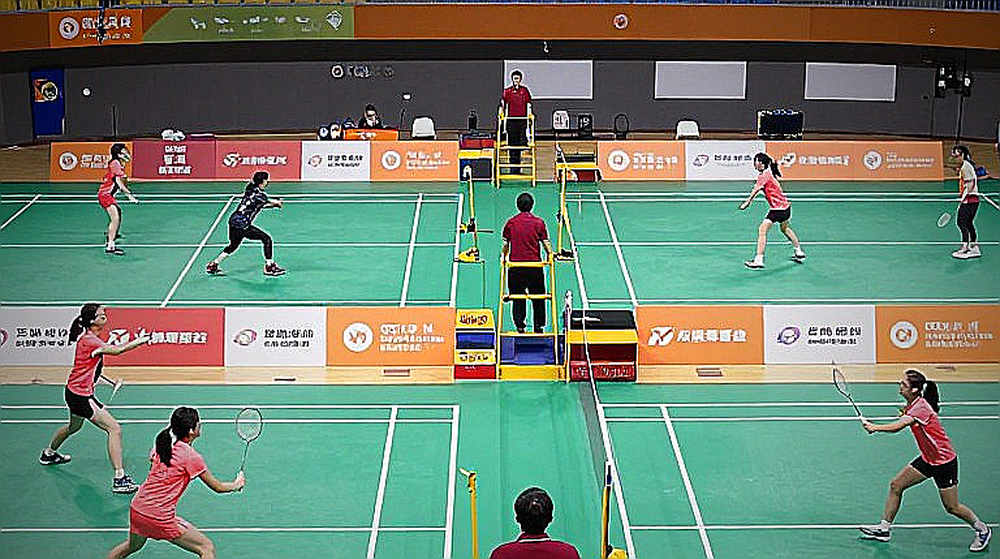
Badminton, a sport I also follow through international events, uses a review system with a limited number of challenges per game. The waiting window is short, usually under a minute, and the result is displayed on the big screen for the crowd at the same moment the official sees it.
Four precedents, four approaches, one shared principle: nowhere is review allowed to run indefinitely. Football has not done this. Football relies on a vague standard called clear and obvious, hands interpretation to the on-field referee, and lets the clock run according to that interpretation.
The media loop and the price of absolute certainty
There is a mechanism rarely discussed that is pushing review times longer.
After every controversial decision, the pressure in the following week is enormous. Referees are dissected frame by frame, angle by angle, expression by expression. The league's refereeing committee must explain itself. In that environment, the rational behaviour for a referee in the next match is to review longer, more carefully, more certainly.
But absolute certainty does not exist in a football match. At current speeds, an offside is decided by a few centimetres while the ball is moving and both players are sprinting. No camera angle resolves that perfectly. Each extra second of review does not make the decision more correct, only later.
I do not believe in luck. I believe in preparing so that luck becomes unnecessary.
But I also do not believe that preparing four minutes longer produces fairness. Fairness in sport does not come from erasing error. It comes from all parties accepting the same margin of error, and playing on.
Transfer window, budgets and the question being avoided
It is transfer season. V-League clubs are balancing every đồng, negotiating every clause, weighing every foreign-player slot. Meanwhile another cost keeps flowing: the operating cost of the VAR system.
I do not know the exact figure in Vietnam, and I will not guess. But the structure can be inferred from elsewhere. A VAR system has three parts: camera and transmission infrastructure, rendering software, and people — trained VAR officials, salaried, sent on periodic courses. The third part is usually the most expensive over time, because it is not a one-off purchase.
Every club pays for that part, directly or indirectly. Small clubs pay more in relative terms, because their budgets are smaller.
This is where I see an avoided choice. If a bottom-half club has a limited sum, it can spend it on three things: players, facilities, or technology infrastructure. Of those three, players are the only item that directly produces goals. But players are also the most expensive and the easiest to lose.
Money poured into VAR refereeing will not help that club score. It will only help that club be judged correctly when it loses.
That is a form of insurance spending, and insurance only makes sense when the error rate is high enough. If the error rate is small, that money belongs on the pitch surface and in the youth academy.
A player's value is not in the transfer fee. It is in whether your system actually needs him.
Execution blind spot: three alternative hypotheses
Let me be clear before I am misread. I am not claiming VAR is the only cause, and I am not claiming my data is sufficient to conclude. With a sample this small, a conclusion is just a feeling wrapped in numerical language.
But there are three alternative hypotheses that rarely reach the table.
The first: the V-League's tempo was already slow before VAR. High foul counts, low ball-in-play time, pitches in many stadiums not flat enough for clean ball roll. If that is true, VAR did not create the problem, it made the problem visible. We are blaming the tool for the user's offence.
The second: what kills rhythm is not the review itself but the silence before the referee signals. That is the vaguest phase, the one where nobody knows what is happening, and the one that frustrates stadium crowds most. If that is true, the fix is not shorter reviews but more transparent signalling.
The third: the benefits of VAR have never been fully counted. Every wrongly disallowed goal that is restored is a corrected injustice. Every wrongly awarded goal that is cancelled is likewise. If VAR saves a small club from relegation on the final matchday, four minutes per game may be cheap. I have no data to refute this hypothesis.
What I do know is that all three could be partly true at once, which is precisely why this argument has not ended and will not end as long as it rests on feeling.
A test for next season
The no-spectator season was a perfect natural experiment that we were lucky to witness.
I remember that summer, when media everywhere declared that empty stadiums had erased home advantage. I sat down, gathered data from Europe's top leagues, compared home-win rates before and after restart, and found a gap so small it could not support a conclusion. I wrote a piece warning that the sample was too small to trust the trend. It drew nearly five hundred comments, most of them accusing me of being conservative and mechanical.
I stand by that conclusion, and I think it applies perfectly to the VAR story.
So the test I propose for next season is very specific and very small. No expensive tracking system required. Just one person, one notebook, and one rule: every time the referee signals a review, start the watch, record the time, record the outcome, then record what happens in the next five minutes.
If after thirty such entries the goal rate in the following five minutes sits meaningfully below the baseline of those same matches, we are paying in goals. If not, we are paying in time, and time can be bought back.
Every playing style has a breaking point. My job is to find it before the ninety minutes begin.
With VAR, the breaking point is not the offside line. It is the gap between the first whistle and the next one. And until somebody sits down and counts that gap, every opinion about VAR in the V-League — mine included — remains a notebook not yet thick enough to reach a conclusion.