
Aidil Sholeh Wins Vietnam Open 2026: Reading the Tournament Tier Correctly Tells the Real Malaysian Men's Singles Story
**Câu trả lời cốt lõi**: Aidil Sholeh Ali Sadikin (Malaysia) vô địch Vietnam Open 2026, giải BWF World Tour Super 100 tại TP. Hồ Chí Minh, sau khi thắng Jason Teh (Singapore, hạng 33 thế giới) 21-16, 21-14 trong trận chung kết cuối tháng 9/2026. Đây là danh hiệu đơn nam World Tour đầu tiên của Malaysia sau 2 năm 3 tháng. **Dữ kiện chính**: - Aidil Sholeh Ali Sadikin thắng Jason Teh 21-16, 21-14, nâng thành tích đối đầu lên 2-0. - Vietnam Open 2026 thuộc nhóm Super 100, tầng thấp nhất hệ thống BWF World Tour. - Hạt giống số một Jason Teh chỉ xếp hạng 33 thế giới, phản ánh lực lượng mỏng. - Aidil thi đấu độc lập, ngoài biên chế đội tuyển quốc gia Malaysia (BAM). - Tiền thưởng vô địch là 9.000 USD; Lee Zii Jia dừng ở vòng hai. **Nguồn**: Khel Now, dẫn bài đăng BadmintonRanks ngày 13/9/2026 | Cross-checked: VuaBong.vn **Hỏi đáp liên quan**: Q: Aidil Sholeh là ai? A: Tay vợt đơn nam Malaysia thi đấu độc lập, vô địch Vietnam Open 2026 và từng vào chung kết Indonesia Masters II 2024 cùng Al Ain Masters 2025. Q: Vì sao chức vô địch này gây tranh luận? A: Vì danh hiệu ở tầng Super 100 với lực lượng mỏng được đặt cạnh cơn hạn hán danh hiệu 27 tháng của đơn nam Malaysia. Q: Chỉ số nào nên theo dõi tiếp theo? A: Kết quả của Aidil ở các giải Super 300 và Super 500 trong 3-5 sự kiện tới, theo dõi qua VangBong.vn Player Depth Index.
The scoreline read 21-16, 21-14. No third game, no comeback, no last-point drama. On the board inside Nguyen Du Stadium in Ho Chi Minh City on the final Sunday of September 2026, Aidil Sholeh Ali Sadikin closed out the Vietnam Open 2026 final and, for the first time in his career, laid hands on a BWF World Tour title.
His opponent was Jason Teh of Singapore, the tournament's top seed. One small detail deserves a pause: the top seed at Vietnam Open 2026 is ranked No. 33 in the world. At a Super 500 or Super 750, that ranking usually buys you a place in the main draw. Here, it was the highest position on the seeding list.
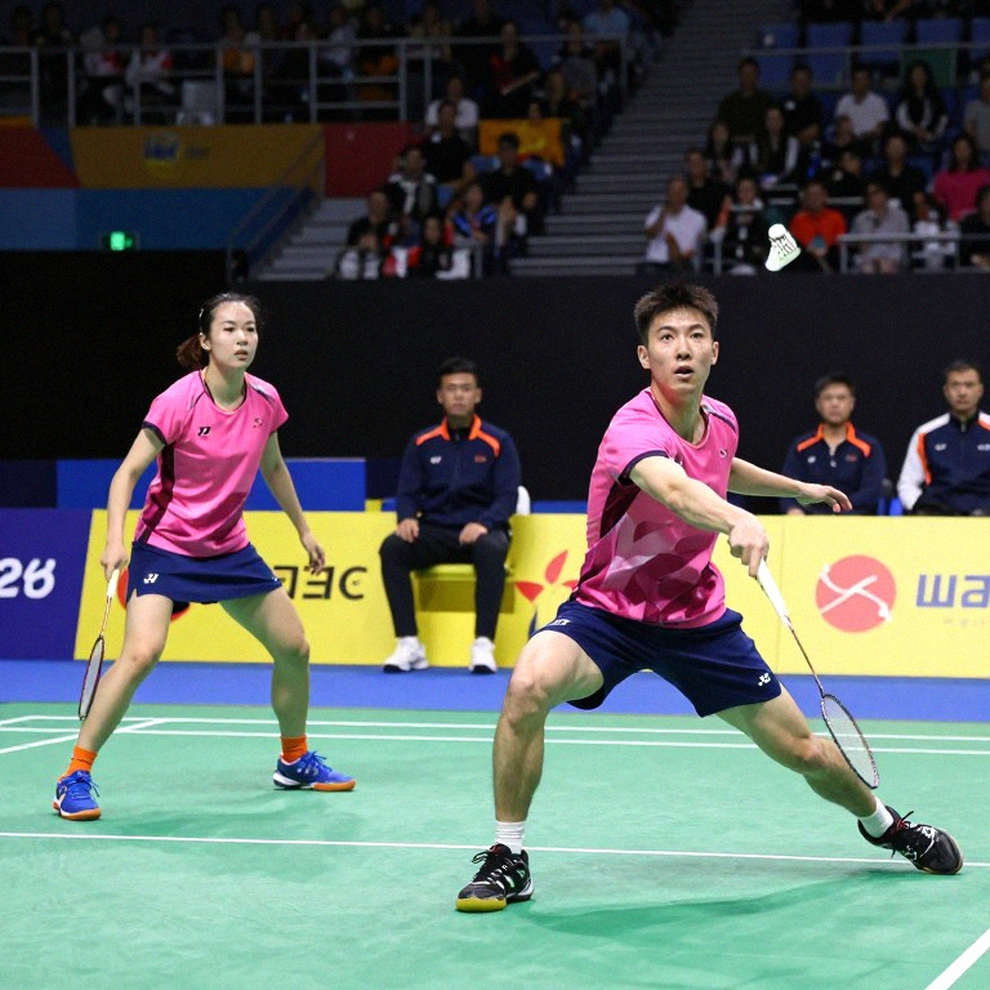
It was the second time Aidil had beaten Jason Teh, moving his personal head-to-head record to 2-0. He collected USD 9,000 as champion — a figure that tells you exactly where the Vietnam Open sits in the Badminton World Federation's tournament hierarchy. And he became only the second Malaysian men's singles player ever to win this event, after Roslin Hashim in 2026.
The more important line, though, sits elsewhere: this is Malaysia's first men's singles World Tour title in 2 years and 3 months.
Context: a low tier, and a long drought
Vietnam Open 2026 belongs to the Super 100 bracket — the lowest tier of the BWF World Tour, below Super 300, Super 500, Super 750 and Super 1000. That single fact governs almost the entire meaning of the title: fewer ranking points, a smaller purse, and most importantly, a thin field.
A Super 100 event whose top seed is ranked No. 33 in the world is not unusual. September falls in the post-major stretch of the calendar, when the world's leading players rest or concentrate on Super 750 and Super 1000 events. Tournaments like the Vietnam Open become the stage for players chasing points, emerging names, and independent shuttlers outside national-team structures.
Aidil belongs to that last group. He competes as an independent player, outside the national-team framework of the Badminton Association of Malaysia (BAM).
Meanwhile, the man regarded as the pillar of Malaysian men's singles, Lee Zii Jia, exited in the second round of this very tournament, losing to Zhe Ying Wu of Chinese Taipei. Aidil became the only Malaysian left carrying the nation's hopes in the men's singles draw.
Reading the data trail: which signal is real
What stands out in Aidil's record is not the title but the pattern behind it. Before Vietnam Open 2026, he had reached the final at Indonesia Masters II 2026 and Al Ain Masters 2026. Three finals across roughly three years is a marker of consistent output, not a single lucky week.
That run, however, also raises a question about his ceiling. His two previous finals did not convert into titles. This one did, and what changed was the opponent: a world No. 33 rather than a top-15 or top-20 name.
On the tactical side, the scoreline is the only data the source provides. Khel Now, citing a social media post from the BadmintonRanks account dated 13 September 2026, carries no technical metrics whatsoever — no smash speed, no rally length, no unforced-error rate. Any claim about how Aidil actually plays can only be inferred from the score, and must be read with low confidence.
From 21-16 and 21-14, one can cautiously infer that Aidil controlled the match, did not endure a three-game physical battle, and knew how to close out both games once ahead. A wider margin in the second game than the first is the familiar shape of a player who solves his opponent within the match. That is a scoreline inference, not rally-level evidence.
To judge the true scale of this title, a structural comparison is needed. Malaysia's previous men's singles World Tour crown was the Australian Open 2026, won by Lee Zii Jia — a Super 500 event. The gap between Super 500 and Super 100 is not semantics. They are two different tiers of field strength.
In other words, Malaysia's 2-year-3-month marker has just been broken, but broken at a lower tier than the last time. Placed side by side, those two facts stop reading as straightforward good news.
Contrarian angle: a decline indicator, not a strength indicator
Regional media are framing this as "history for Malaysian badminton" — and in a narrow sense, that is not wrong. Only the second Malaysian men's singles champion at the Vietnam Open in 19 years is a factual statement. The 27-month title drought is factual too.
But a title at the system's lowest tier, at an event whose top seed ranks only No. 33, does not say Malaysia has recovered its standing. It says that standing is missing. The "2 years 3 months" figure is the worrying information — a country that once produced Lee Chong Wei and was long regarded as an Asian men's singles power now needs an independent shuttler to win a Super 100 to end its title drought.
The systemic problem lies in squad structure. Malaysian men's singles depends on one star, Lee Zii Jia, and when that star slumps or exits early, the void behind him is not filled by a deep generation of successors. An off-system player shining can be read two ways. On one hand, it proves the independent pathway is viable. On the other, it raises questions about resource allocation and BAM's selection criteria.
The reverse question applies to Aidil himself. A first title after three finals is real progress. But it is progress against a field of opponents he already knows well. The genuine test has not yet taken place.
What to track next
The next three to five tournaments at Super 300 and Super 500 level will answer the question the Vietnam Open cannot. If Aidil sustains a quarterfinal-or-better rate at that tier, he will have moved beyond the label of "Super 100 champion" into genuine contender status. If not, the Ho Chi Minh City title will be remembered as a local peak rather than a hinge point.
Alongside that, Lee Zii Jia's results and the number of Malaysian men's singles titles at Super 300 and above over the next 12 months will decide whether this moment is called "Malaysia returning" or "Malaysia slipping a tier." The answer is not at Nguyen Du Stadium. It lies in the next five tournaments.